

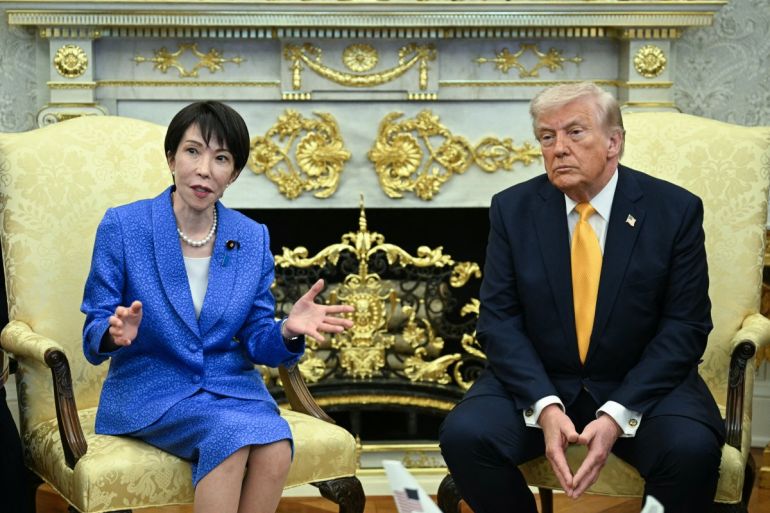
Japan has embarked on a significant shift in its foreign policy, easing its long-standing arms export rules and moving away from eight decades of pacifism. This pivotal decision comes at a time when Washington’s allies are substantially increasing their military expenditures, partly due to a perceived decline in trust in US security commitments under former President Donald Trump, especially concerning conflicts in regions like the Middle East and Ukraine.
This policy change also follows Japan’s announcement of a record-high defense budget just months prior. The question now is: how will this new direction impact Japan’s arms industry?
Japan’s Growing Defense Investment
Late last year, the Japanese government approved an unprecedented defense budget exceeding 9 trillion yen ($58 billion) for 2026. This reflects a determined effort to bolster military and coastal defenses amidst escalating global tensions. This budget is part of a larger 122.3 trillion yen ($784 billion) national budget for the fiscal year starting in April 2026. It also marks the fourth year of Japan’s five-year plan to increase defense spending to 2 percent of its gross domestic product (GDP).
A substantial portion of this new budget, over 970 billion yen ($6.2 billion), is specifically allocated to enhance Japan’s “standoff” missile capabilities. This includes 177 billion yen ($1.13 billion) for the acquisition of domestically produced and upgraded Type-12 surface-to-ship missiles, which boast an estimated range of approximately 1,000 km (620 miles).
Last November, Japanese Prime Minister Sanae Takaichi indicated that a primary reason for the increased defense budget was the potential need for military involvement if China were to invade Taiwan, a self-governing island claimed by Beijing. These remarks strained relations between Tokyo and Beijing, leading China to expand its military drills near Japan and across the Asia-Pacific region, further prompting Tokyo to advance its defense capabilities.
Expanding Arms Sales Globally
Beyond the increased defense budget, Tokyo recently announced it would relax restrictions on arms sales, ending decades of isolation from global arms markets since World War II. This new policy will enable Japanese defense companies to supply arms to other nations.
Key defense contractors such as Toshiba and Mitsubishi Electric are reportedly hiring new staff and expanding their capacities to meet anticipated demand for arms, according to a Reuters report. Countries like the Philippines and Poland are expected to become significant customers for Japanese arms.
In recent years, Japan and the Philippines have strengthened military ties, with Tokyo already agreeing to provide patrol boats and radio equipment to Manila. Japanese officials suggest that one of the initial deals likely to be approved by Takaichi’s government could involve the export of used frigates to the Philippines, which is currently engaged in maritime disputes with Beijing in the South China Sea.
Meanwhile, Mariusz Boguszewski, deputy chief of mission at Poland’s embassy in Japan, informed Reuters that Japanese arms could help Warsaw address gaps in its arsenal and foster cooperation in anti-drone and electronic warfare systems.
The Drivers Behind Japan’s Policy Shift
Following World War II, Japan largely adopted a pacifist stance, with the US playing a leading role in its military, economic, and political reforms. A March report by the Stockholm International Peace Research Institute (SIPRI) indicated that the US accounted for approximately 95 percent of Japan’s defense imports between 2021 and 2025.
However, in recent years, Japan has been actively working to shape its own security policy and reduce its military reliance on the US, particularly as Washington has been engaged in conflicts in the Middle East and Ukraine. To achieve this, Japan aims to establish defense supply chains in Asia that are entirely independent of the US, as stated by a governing party official involved in drafting security policy.
The foundation for these changes was laid in 2014 when then-Prime Minister Shinzo Abe lifted a near-blanket ban on arms exports, which had been in place since 1976, allowing limited transfers for humanitarian assistance and international cooperation. In 2023, Japan also joined the Overseas Security Assistance (OSA) mechanism, providing military aid to like-minded countries in Southeast Asia and the Pacific, including the Philippines, Sri Lanka, and Bangladesh. These defense reforms have primarily been driven by the need to counter growing threats from China in the Asia-Pacific region.
Industry Readiness and International Welcome
With the new arms export rules, many Japanese companies are eager to boost sales by offering their products internationally. Toshiba, a manufacturer of air defense systems, plans to hire around 500 new employees over the next three years and is constructing new testing and manufacturing facilities. The company has also established a dedicated department for handling defense exports.
Kenji Kobayashi, vice president in Toshiba’s defense division, noted to Reuters that “Reputational risk is not what it used to be.”
In January, US Secretary of Defense Pete Hegseth welcomed Japan’s initiatives to increase defense spending and take greater responsibility for regional security. He stated, “We see the strength and the investment that Japan is making, and we think that’s a really important step and welcome and appreciate that.” This sentiment aligns with a consistent demand from the Trump administration for allies, particularly NATO members, to increase their defense budgets. Last June, NATO also committed to raising its defense spending target to 5 percent of GDP, a move lauded by Washington as a success.
#JapanDefense #ArmsExports #PacifismShift #MilitarySpending #AsiaPacificSecurity #DefenseIndustry #GlobalGeopolitics #USJapanAlliance #TaiwanStrait #NationalSecurity




Leave a Reply