


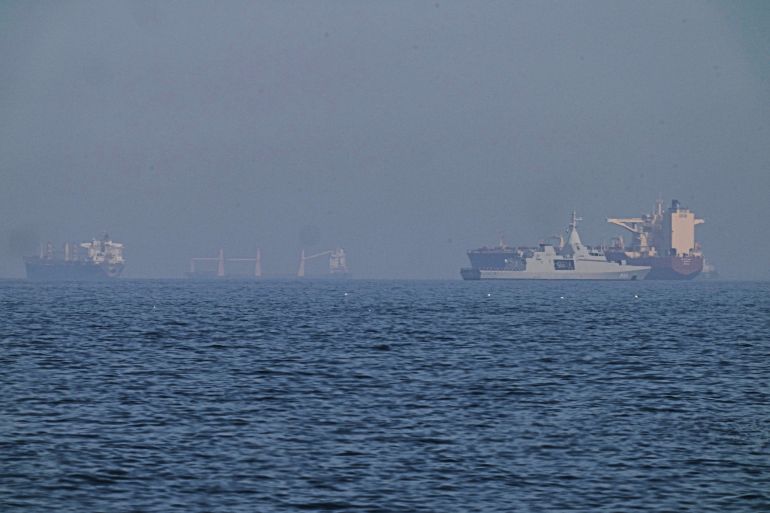
The Strait of Hormuz, a critical maritime chokepoint through which approximately a fifth of the world’s oil passes, has once again become a focal point of escalating tensions between the United States and Iran. A standoff between Washington and Tehran is complicating efforts to de-escalate the broader conflict.
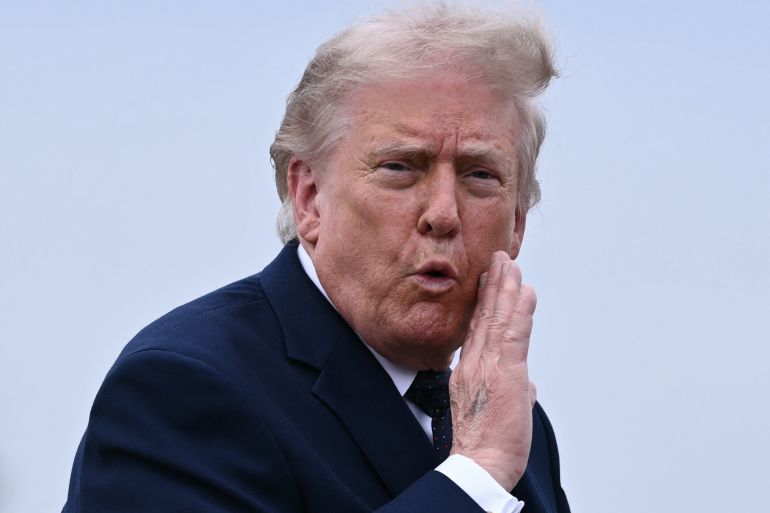
Iran recently reversed its decision to reopen the strait, with its military reportedly opening fire on a ship attempting to traverse the waterway. This action followed a statement by US President Donald Trump, who affirmed Washington’s continued blockade on Iranian ports. Trump has indicated that the blockade will remain in effect until a deal is finalized, despite acknowledging “very good” discussions, while asserting that Washington would not be “blackmailed.”
Following a brief surge in transit attempts, ships in the Persian Gulf have again halted movement amidst reports of vessels coming under fire mid-passage and being forced to retreat. This pullback has effectively restored the strait to its pre-ceasefire status, raising concerns about a worsening global energy crisis and an increased likelihood of renewed hostilities.
**Iran’s Position and Actions**
Initially, Iranian Foreign Minister Abbas Araghchi stated on Friday that the strait would be open for commercial vessels during a truce, set to end on April 22, in alignment with a ceasefire in Lebanon. However, Iran’s Islamic Revolutionary Guard Corps (IRGC) subsequently announced a clear reversal, declaring that the Strait of Hormuz would not return to its “previous state” due to the ongoing blockade of Iranian ports.
The IRGC’s joint military command accused the US of “continued acts of piracy and maritime theft under the guise of a so-called blockade.” Consequently, they stated, “control of the Strait of Hormuz has returned to its previous state, and this strategic waterway is now under strict management and control by the armed forces.” Iranian broadcaster IRIB cited the statement, which further added, “Until the United States restores full freedom of navigation for vessels travelling from Iran to their destinations and back, the status of the Strait of Hormuz will remain tightly controlled and in its previous condition.”
Mohammad Bagher Ghalibaf, Iran’s Speaker of Parliament and chief negotiator with the US, emphasized that it would be “impossible for others to pass” the strategic strait without Iran’s consent. He condemned Washington’s blockade as “ignorant” and “foolish,” warning that Tehran would not permit transit through the strait if its own ships were blocked. On Saturday, he noted that significant differences persist despite some progress toward a deal.
**The US Perspective**
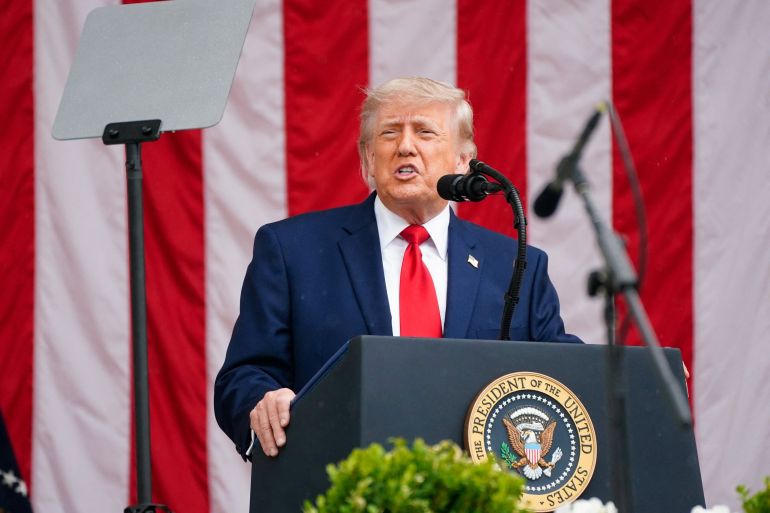
In a Truth Social post on Sunday, President Trump accused Iran of violating the ceasefire agreement. However, he also announced that US negotiators would travel to Islamabad, Pakistan, on Monday to pursue a deal. Trump stated, “We’re offering a very fair and reasonable deal, and I hope they take it because, if they don’t, the United States is going to knock out every single power plant, and every single bridge, in Iran.”
Iran responded on Sunday by tightening its control over the waterway, citing the US blockade of Iranian ports, which began on April 14, as a violation of ceasefire terms. Trump reiterated on Saturday that while the US was having “very good conversations” with Iran, Tehran’s desire to close the vital oil corridor again amounted to an attempt to blackmail the US, which he said would not be tolerated.
**Current Developments in the Strait**
Lloyd’s List, a maritime firm, reported that traffic in the Strait of Hormuz had ceased after Iranian forces reportedly fired upon several ships on Saturday. The United Kingdom Maritime Trade Operations agency confirmed receiving a report of a tanker being fired upon by what it identified as two gunboats linked to the IRGC. India, meanwhile, summoned the Iranian ambassador in New Delhi to express deep concern after two Indian-flagged ships reportedly came under fire in the strait.
Abas Aslani, a senior fellow at the Centre for Middle East Strategic Studies in Tehran, observed that both sides are “engaging in war rhetoric ahead of any possible escalation and military conflict.” He told Al Jazeera, “It seems that they are pressuring each other to win concessions – and we are not there yet.” Aslani also noted speculations of potential limited US strikes against Iran, but warned that Iran has vowed strong retaliation, which “might end again in a wider conflict.”
**Other Key Sticking Points**
Beyond the Strait of Hormuz, several other critical issues fuel the US-Iran standoff:
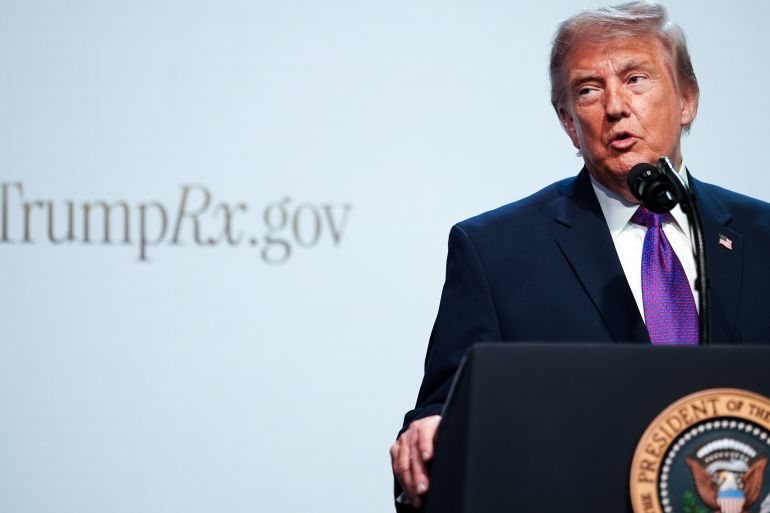
* **Nuclear Enrichment:** A primary contention revolves around hardening positions on Iran’s nuclear program, particularly Tehran’s nuclear enrichment capabilities. On Friday, Trump demanded Iran’s enriched uranium, referring to it as “nuclear dust” and specifically mentioning the 440kg (970lbs) believed to be buried at sites hit by US strikes last year. He reiterated on Truth Social that “the USA will get all Nuclear ‘Dust’.” Speaking to Reuters, Trump stated the US would work with Iran “at a nice leisurely pace” to “start excavating with big machinery” to recover the material.
In response, Iran’s President Masoud Pezeshkian asserted Washington had no justification for depriving Iran of its nuclear rights, asking, “Trump says Iran cannot make use of its nuclear rights, but doesn’t say for what crime. Who is he to deprive a nation of its rights?” US and Israeli officials have repeatedly accused Iran of enriching uranium to develop nuclear weapons, while Iran maintains its nuclear program is for civilian purposes and adheres to its commitments under the Nuclear Non-Proliferation Treaty.
In March 2025, Tulsi Gabbard, the director of US National Intelligence, testified to Congress that the US “continues to assess that Iran is not building a nuclear weapon and Supreme Leader [Ayatollah Ali] Khamenei has not authorised the nuclear weapons programme he suspended in 2003.” It is important to note that Supreme Leader Khamenei was killed on February 28 in US and Israeli strikes, with his son Mojtaba Khamenei named as his successor.
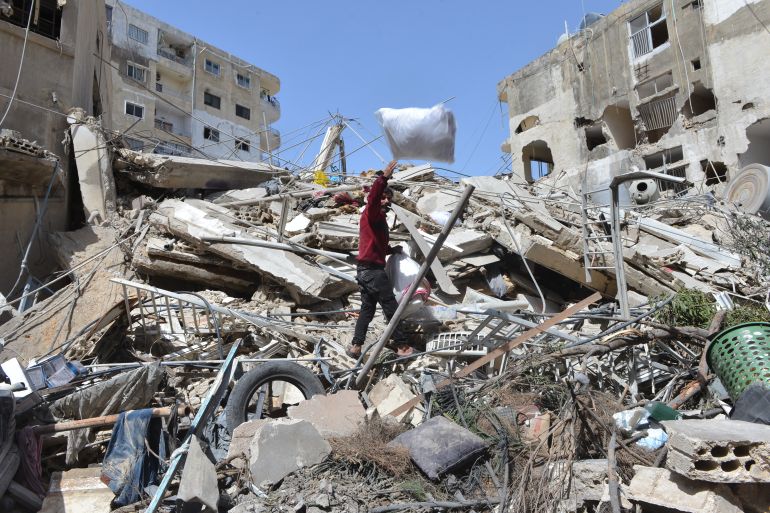
* **Lebanon Ceasefire:** A ceasefire in Lebanon was a key Iranian demand before agreeing to the two-week truce between the US-Israeli side and Iran. While a 10-day ceasefire is technically in place between Israel and the Lebanese armed group Hezbollah, it remains fragile. Israel has conducted strikes despite the truce, and its forces have established a Gaza-like “yellow line” buffer zone. The truce was declared days after Lebanon and Israel held their first direct negotiations in decades in Washington. According to Iran’s FM Araghchi, the brief reopening of the Strait of Hormuz was a direct response to the ceasefire being extended to Lebanon.
Hezbollah has condemned the ceasefire agreement as “an insult to our country” and “a slippery slope with no end in sight.” The Lebanon-based group stated, “A ceasefire means a complete cessation of all hostilities… Because we do not trust this enemy, the resistance fighters will remain in the field, ready to respond to any violations of the aggression. A ceasefire cannot be unilateral; it must be mutual.” Hezbollah, a core pillar of the “axis of resistance” – a network of armed groups aligned with Iran against Israel – joined the fighting after the Israeli army killed Iran’s Supreme Leader Khamenei in its initial strikes on Tehran.
#StraitOfHormuz #USIranTensions #MiddleEastCrisis #OilChokepoint #IranBlockade #NuclearProgram #LebanonCeasefire #Geopolitics #GlobalEnergy #IRGC


Leave a Reply