

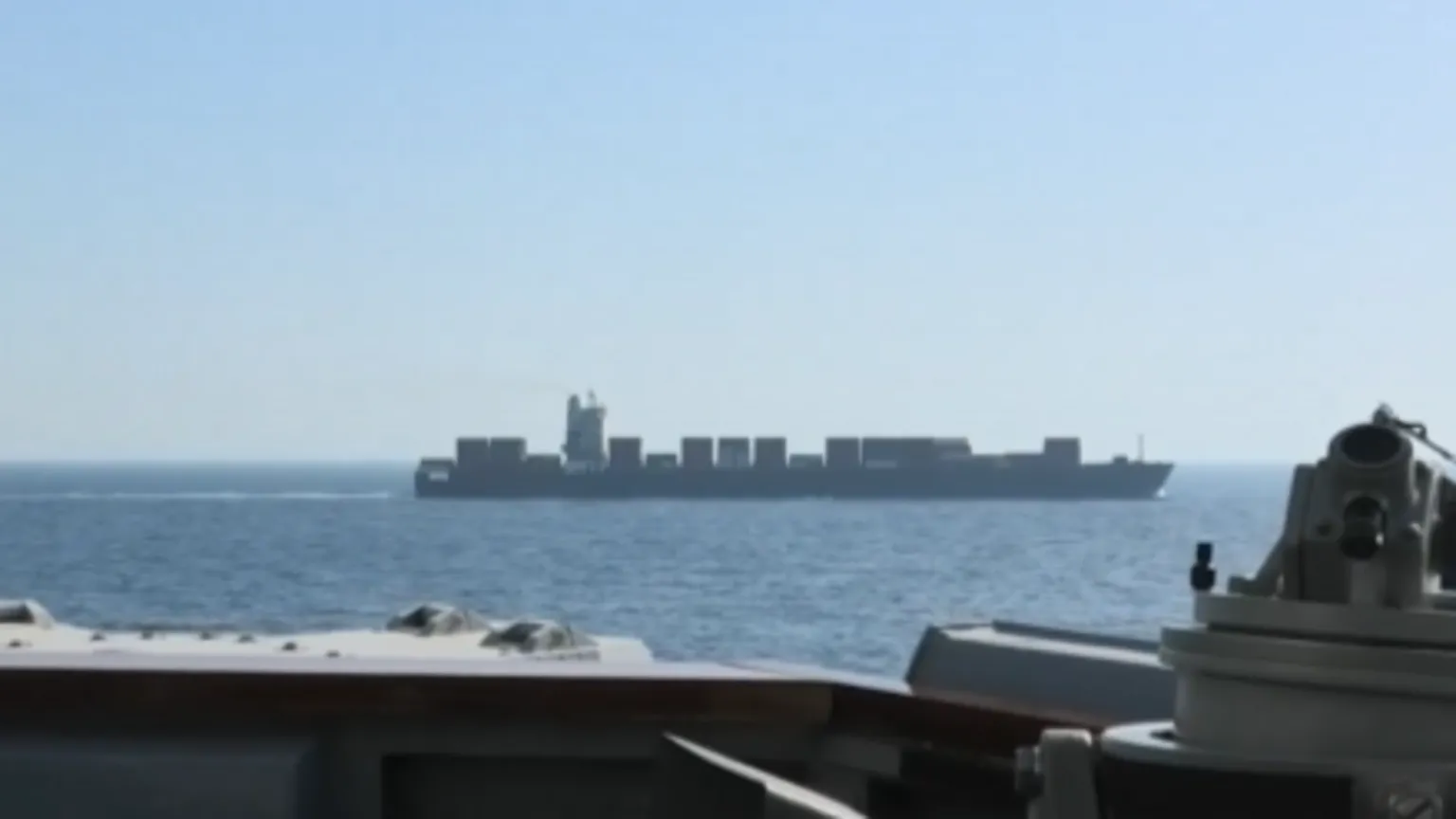
The United States has announced the interception and seizure of an Iranian-flagged cargo ship in the Gulf, an action described by former President Donald Trump as part of its ongoing naval blockade. Trump stated on his Truth Social platform that the vessel, named Touska, was seized by the US Navy after it allegedly failed to respond to a warning to stop. Iran has not yet issued an official comment on the incident.
Incident Details and US Claims
According to Trump, the TOUSKA, described as nearly 900 feet long and weighing almost as much as an aircraft carrier, attempted to bypass the US Naval Blockade. He claimed that after ignoring fair warning to stop, the US Navy “stopped them right in their tracks by blowing a hole in the engineroom.” Trump further added that the TOUSKA is under US Treasury Sanctions due to a history of illegal activity, and the US has full custody of the ship, with an ongoing inspection of its contents. US Central Command later released footage purportedly showing a naval vessel intercepting a cargo ship, with a gun visible firing in the direction of the cargo ship.
Diplomatic Efforts and Iranian Stance
The announcement of the seizure comes amidst a backdrop of diplomatic efforts to de-escalate tensions. The White House confirmed that US Vice-President JD Vance would lead another delegation for a second round of talks aimed at ending the conflict with Iran, to be held in Pakistan. However, Tehran has not yet confirmed its attendance. Iranian state media has reported that officials will not participate in talks while the US blockade remains in place. Iran’s state news agency IRNA later stated that reports of a second round of talks with the US were “not true,” citing the US blockade, “excessive” demands, and threatening rhetoric from Washington as hindrances to negotiation progress.
Strait of Hormuz Remains Closed
Trump reiterated on Friday that the naval blockade of Iranian ports would continue until a deal is agreed upon by both countries. The conflict, which began with US and Israeli strikes across Iran on February 28, escalated with waves of attacks across the Middle East for five weeks before a two-week truce was declared. The naval blockade was announced after an initial round of negotiations earlier this month concluded without an agreement, leaving key issues such as Iran’s nuclear program and control of the Strait of Hormuz – a critical oil transport route – unresolved.
The Strait of Hormuz remained closed on Sunday, following an announcement by the Islamic Revolution Guard Corps (IRGC) that it was ending a temporary reopening due to the US blockade, which it claimed violated ceasefire terms. Iran stated the Strait would remain closed until the US ended its naval blockade. Approximately 20% of the world’s oil and liquefied natural gas (LNG) typically transits through this strait, and its closure has led to a dramatic decrease in shipping traffic and a surge in global energy prices.
International Reactions and Warnings
Trump has asserted that Iran cannot “blackmail” the US with threats concerning the waterway, threatening to target Iranian infrastructure if a peace deal is not reached. French shipping company CMA CGM confirmed one of its vessels was targeted by “warning shots.” Reports from the UK Maritime Trade Operations indicated two ships – a tanker and a cargo ship – were attacked in the strait on Saturday. India also reported two Indian-flagged ships involved in a shooting incident. Data from MarineTraffic showed traffic in the Strait of Hormuz at a standstill on Sunday. The IRGC-affiliated Tasnim news agency reported that two tankers sailing under the flags of Botswana and Angola were forced to change course due to the actions of Iranian armed forces.
#USIranTensions #NavalBlockade #StraitOfHormuz #CargoShipSeizure #MiddleEastConflict #PeaceTalks #GlobalEnergy #TrumpAdministration #IranSanctions #InternationalShipping



Leave a Reply