

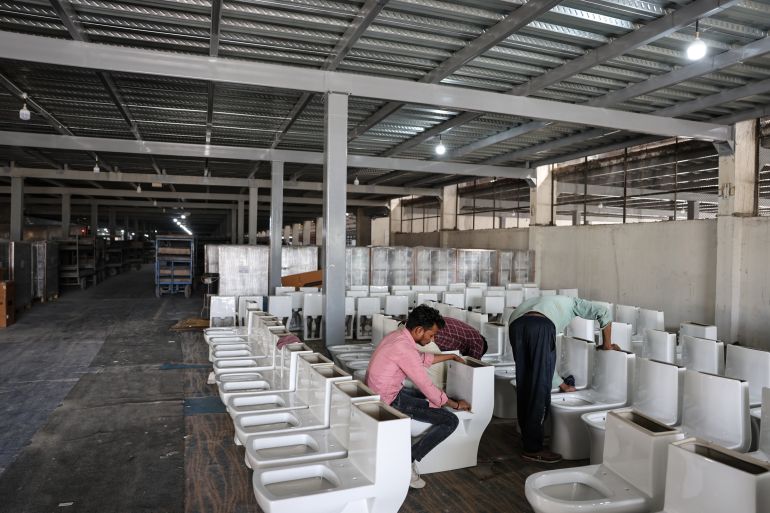
Morbi, India – For seven years, Pradeep Kumar diligently worked at a ceramics factory in western India, loading raw materials like clay, quartz, and sand into kilns amidst the intense heat and dust. His demanding job involved handling clay at various stages, often without protective gear against the high temperatures. “It would be very challenging in the summers since the heat would be at its peak,” he shared with Al Jazeera.
However, on March 15, Kumar lost his job, not due to his performance or his company’s actions, but because of a conflict in the Middle East. The United States and Israel’s attack on Iran ignited another war, leading to a global fuel crisis. Just two weeks after the conflict began, his ceramics company in Morbi, Gujarat – like many others in the industry – was forced to shut down due to a critical shortage of propane and natural gas.
Morbi is the heart of India’s ceramic industry, employing over 400,000 people. More than half of these workers, including Kumar, are migrants from poorer Indian states such as Uttar Pradesh and Bihar. Five days after his job loss, the 29-year-old Kumar returned to his home in Uttar Pradesh’s Hardoi district with his wife and three children. “I am here until every other migrant worker who came back home with us goes back,” he stated, adding, “We don’t want to suffer like dogs, like we did during the COVID-19 pandemic,” recalling the mass exodus of migrant workers in 2020 and 2021.
**Widespread Closures and Economic Impact**
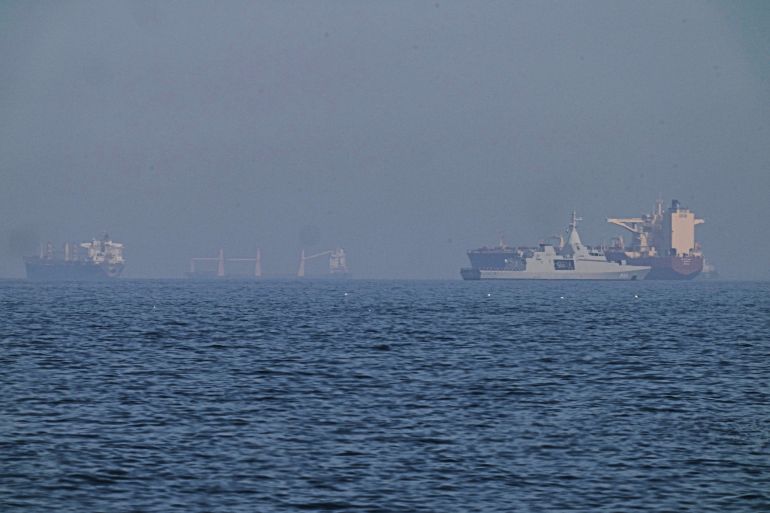
Morbi, home to over 600 companies, produces approximately 80 percent of India’s ceramics, including tiles, toilets, and wash basins. Yet, at least 450 of these companies have been forced to close due to a prolonged standoff in the Strait of Hormuz, a vital route for India’s gas imports.
The ongoing conflict saw the US capturing an Iranian cargo vessel, even as Washington expressed willingness for further talks with Tehran in Pakistan. Tehran, however, refused peace talks after the seizure of its ship. These events unfolded as a fragile ceasefire between Iran and the US neared its expiration, with a re-escalation of hostilities leading Iran to shut down Hormuz for traffic, disrupting global fuel supplies and driving up oil prices.
Siddharth Bopaliya, a 27-year-old third-generation manufacturer and trader in Morbi, explained to Al Jazeera, “All manufacturing units in Morbi rely on propane and natural gas to fire kilns at high temperatures. While propane is supplied by private companies, natural gas is provided by the state to those with connections. Around 60 percent of manufacturers use propane because it is comparatively cheaper.”
Manoj Arvadiya, president of the Morbi Ceramic Manufacturers Association, noted that units were initially shut until April 15, hoping for a resolution to the Middle East crisis. “But even today, only around 100 units have opened, and most have still not begun the manufacturing process. For at least another 15 days, it is likely to remain the same,” he said. Arvadiya estimates that 200,000 workers have been affected, with over a quarter returning to their home states. India’s ceramic industry is valued at $6 billion, with 25 percent of Morbi’s ceramics, worth $1.5 billion, exported to the Middle East, Africa, and Europe. These exports are now delayed or halted, particularly to Middle Eastern countries.
Factories dependent on propane remain closed. While natural gas is largely available, many units haven’t switched due to higher prices for new connections (93 rupees/kilo) compared to existing users (70 rupees/kilo). Khushiram Sapariya, a washbasin manufacturer, plans to wait before reopening, stating, “Because then I have to call hundreds of staff who have gone to their homes, and I want to be sure before taking their responsibility.”
**The Hidden Cost: Silicosis**
Among the workers who left Morbi is Ankur Singh, 27, who returned home not just jobless, but with silicosis – an incurable lung disease caused by inhaling silica dust. “I would often have fever and cough but kept ignoring it, until I came back to my hometown near Patna in Bihar and found after a check-up that it was silicosis,” he told Al Jazeera. Silicosis is a widespread occupational disease in Morbi due to workers’ routine exposure to fine silica dust and poor ventilation, as highlighted by labor rights activist Chirag Chavda.
Harish Zala, 40, a former ceramic worker, developed silicosis after two decades in the industry. He received no employer support and alleges abuse and threats when his father sought help. Zala claims that “Every year, at least one labourer dies of silicosis in each company, while several get detected for silicosis.” Many companies also fail to provide employment proof, denying workers legal rights and social security.
Some migrants, like Sushma Devi, 56, chose to stay in Morbi. Her son’s company promised shelter and food while awaiting manufacturing resumption. “I am here with a few more people because we did not want to spend money on travelling. Here, at least our ration is sorted,” she said, collecting firewood for meals. Meanwhile, Pradeep Kumar faces dwindling savings and fears debt, searching for daily wage work in Hardoi. “Initially, we ate from whatever we had saved. But the house needed repair and we had to borrow 20,000 rupees ($214) from a relative, which we have no idea when or how we will repay,” he lamented.
#IndiaCeramics #MorbiCrisis #JobLosses #MigrantWorkers #MiddleEastConflict #FuelCrisis #StraitOfHormuz #Silicosis #EconomicImpact #ReverseMigration






Leave a Reply