


Downing Street has firmly stated that the sovereignty of the Falkland Islands “rests with the UK,” responding to reports that the United States might reconsider its stance on Britain’s claim to the territory.
Reports from Reuters, citing an internal Pentagon email, indicate that the U.S. was allegedly exploring measures to penalize NATO allies perceived as not adequately supporting its war on Iran. These options reportedly included seeking Spain’s suspension from NATO due to its opposition to the conflict. BBC News, unable to independently verify the document, has reached out to the Pentagon for comment.
The Falkland Islands, a British overseas territory situated in the south-west Atlantic Ocean, continue to be a focal point of a sovereignty dispute between Britain and Argentina.
UK’s Unwavering Stance
A Downing Street spokesman reiterated on Friday that the Falkland Islanders have “overwhelmingly voted in favour of remaining a UK overseas territory.” He emphasized the UK’s consistent support for the islanders’ right to self-determination and affirmed that “sovereignty rests with the UK.” The prime minister’s official spokesman further stated that the government “could not be clearer about the UK’s position,” asserting that the islanders’ right to self-determination is “paramount.” This stance, he added, has been communicated clearly and consistently to successive U.S. administrations and “nothing is going to change that.”
Historically, U.S. administrations have formally acknowledged the UK’s de facto administration of the islands but have refrained from taking a formal position on sovereignty.
In a statement, the Falkland Islands government expressed “complete confidence in the commitment made by the UK government to uphold and defend our right of self-determination.”
Strong Condemnation from UK Politicians
Conservative leader Kemi Badenoch dismissed the reported U.S. stance as “absolute nonsense,” affirming: “We need to make sure that we back the Falklands. They are British territory.” Nigel Farage of Reform UK declared the issue “utterly non-negotiable,” stating there would be “no way we’re even going to have a debate about the sovereignty of the Falkland Islands.” He also indicated plans to discuss the matter with Argentine President Javier Milei later this year. Liberal Democrat leader Sir Ed Davey renewed his call for the cancellation of the King’s upcoming visit to the U.S., criticizing the president as “unreliable” and “damaging.”
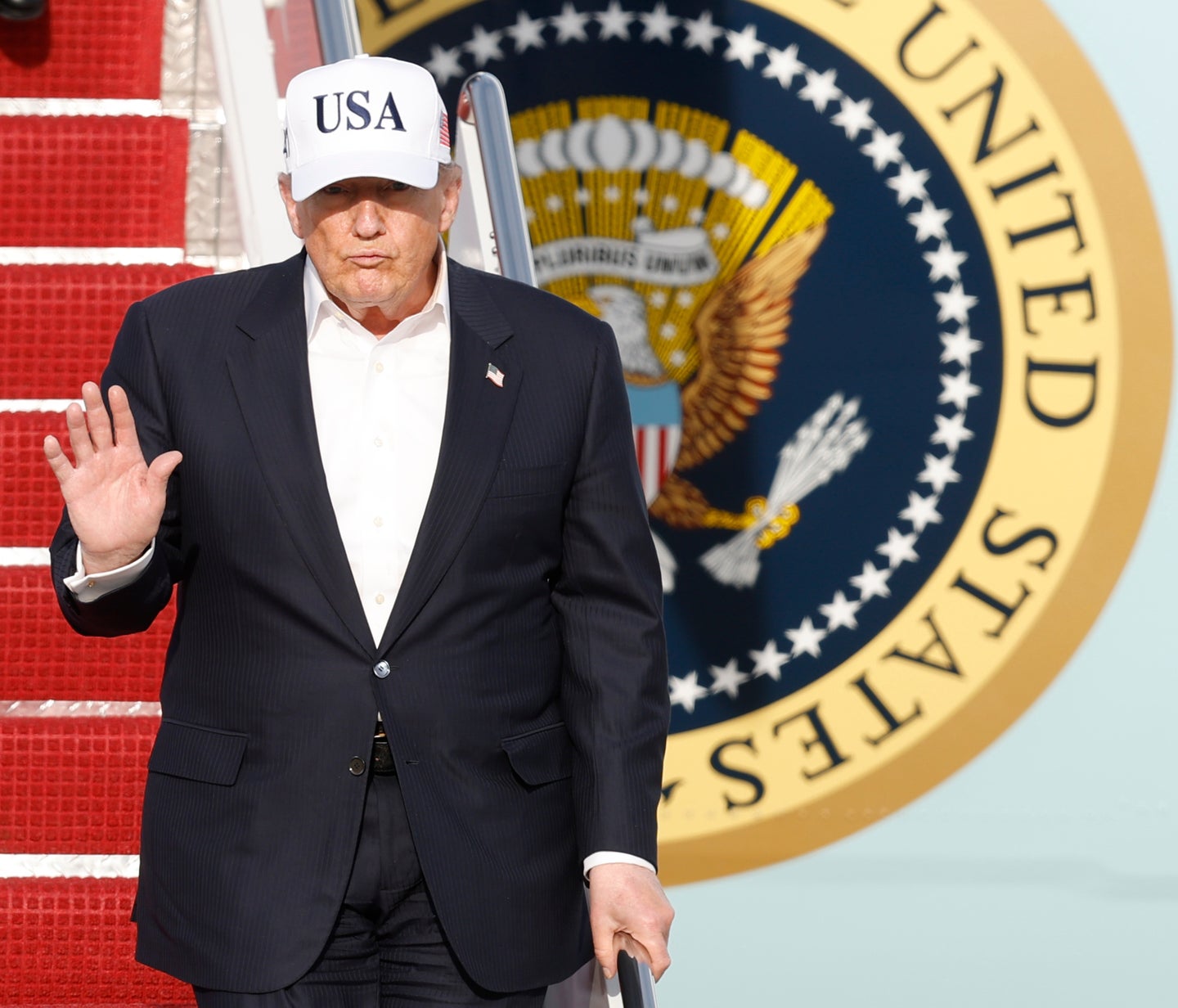
The report surfaced just three days before King Charles and Queen Camilla are scheduled to visit the U.S. and meet President Donald Trump at the White House. While the White House has yet to comment, this development could exacerbate diplomatic tensions between the U.S. and the UK. President Trump has previously expressed dissatisfaction with the UK’s support during its war in Iran, a stance contrasted by Sir Keir Starmer’s repeated assurances that Britain will not be drawn into a wider conflict.
NATO’s Position on Expulsion
Responding to the report’s suggestion that the U.S. might seek Spain’s expulsion from NATO, an alliance official clarified that its founding treaty “does not foresee any provision for suspension of Nato membership, or expulsion.” Spain’s Prime Minister Pedro Sanchez earlier stated: “We do not work based on emails. We work with official documents and official positions taken, in this case, by the government of the United States.”
The sovereignty dispute has deep historical roots. In 1982, a 10-week conflict erupted after Argentina’s military dictator, Leopoldo Galtieri, ordered an invasion of the islands. The government of then-UK Prime Minister Margaret Thatcher dispatched a naval task force, leading to the surrender of Argentine forces. Despite this, Argentina continues to claim sovereignty over the islands, which it refers to as the Malvinas, located approximately 300 miles (483km) east of its coast. The conflict resulted in the tragic loss of 649 Argentine military personnel, 255 British military personnel, and three Falkland Islanders.
Islanders’ Right to Self-Determination
More recently, Falkland Islanders have overwhelmingly affirmed their desire to remain a British territory. A 2013 referendum, with a turnout exceeding 90% among 1,672 eligible voters, saw all but three votes cast in favour of continuing as an overseas territory. Consistent British governments have upheld the island population’s right to self-determination, as enshrined in international law under the United Nations Charter.
In April 2024, Argentine President Javier Milei stated his intention to outline a “roadmap” for the islands to become part of Argentina, emphasizing that this would only be pursued through diplomatic channels. A month later, speaking to the BBC, Milei acknowledged that the Falkland Islands are currently “in the hands of the UK” and that there was “no instant solution” to altering their status.
#Falklands #FalklandIslands #UKPolitics #USDiplomacy #Sovereignty #SelfDetermination #Argentina #NATO #InternationalRelations #DowningStreet








Leave a Reply