

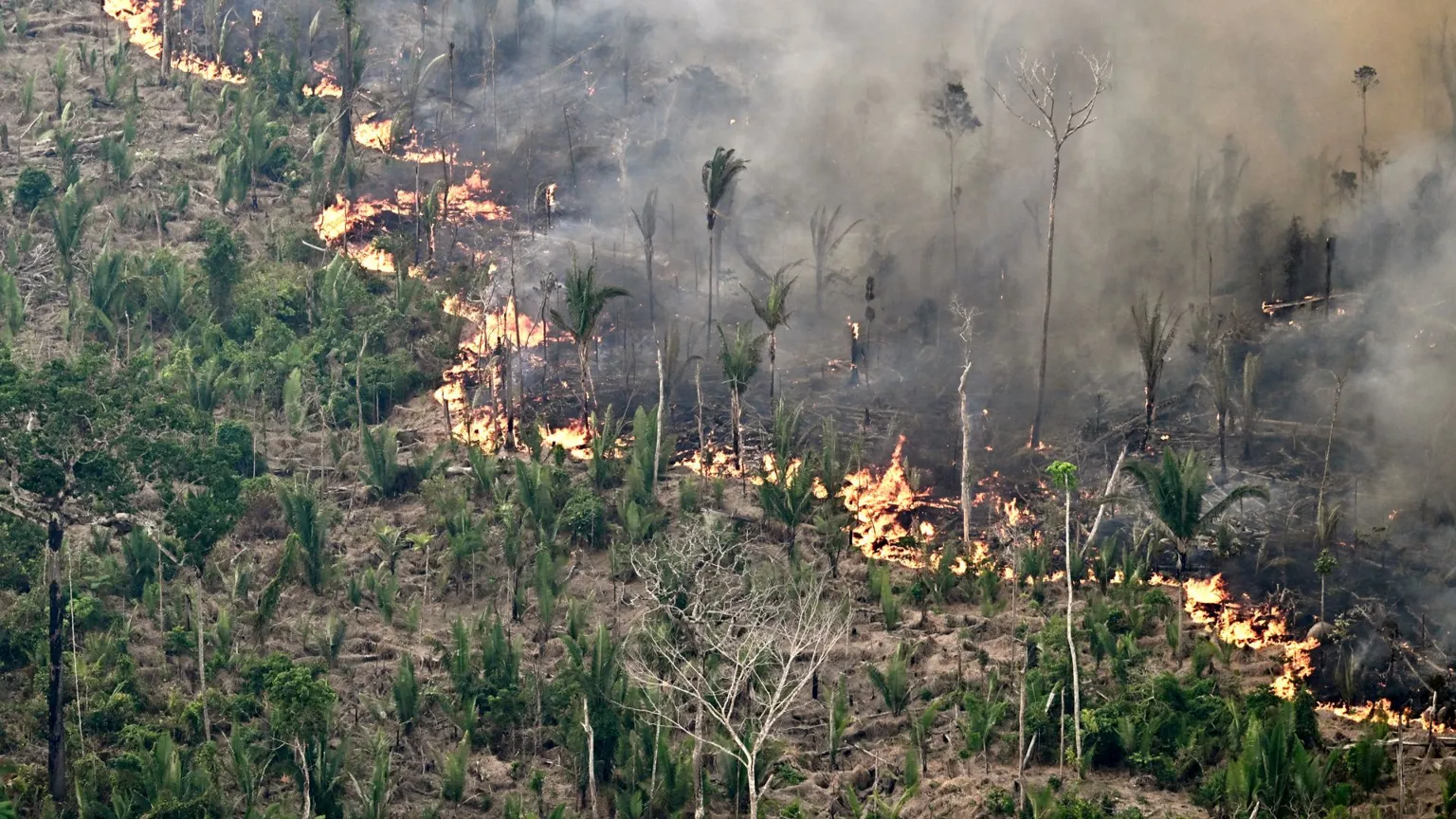
New satellite data indicates a slowdown in the loss of tropical rainforests last year, largely attributed to Brazil’s intensified efforts to curb deforestation in the Amazon. Researchers estimate that approximately 43,000 sq km (17,000 sq miles) of old-growth tropical forests were lost globally in 2025, an area roughly the size of Denmark.
While this represents about a third less than the record losses seen in 2024, scientists caution that tropical forests, vital ecosystems for Earth, are still disappearing much faster than a decade ago.
El Niño and Climate Change: A Looming Fire Threat
There is significant concern that a dual challenge from climate change and the anticipated arrival of the warming El Niño weather pattern later this year could significantly increase both the likelihood and severity of forest fires. According to analysis from the World Resources Institute and the University of Maryland, the loss of tropical forests fell by 36% in 2025. While the data carries some uncertainty due to satellite detection timelines, scientists are confident in the overall positive trend. This decline partly reflects an easing of the unprecedented fires of 2024, aided by cooler La Niña conditions.
Beyond climatic factors, researchers also highlight greater efforts to protect forests in nations like Brazil, Colombia, and Malaysia. Elizabeth Goldman, co-director of Global Forest Watch at the World Resources Institute, stated, “It’s incredibly encouraging to see the decline in 2025. It highlights how when we have political will and leaders in charge who want to do something for forests, we can see real results in the data.”
In Brazil, home to the world’s largest rainforest, researchers point to the effectiveness of stronger environmental policies and law enforcement in slowing deforestation. Excluding fire-driven losses, an estimated 5,700 sq km (2,200 sq miles) of old-growth tropical forests disappeared in Brazil last year – the lowest figure since the analysis began in 2002.
Tropical rainforests are crucial, housing millions of species and absorbing vast quantities of planet-warming carbon dioxide, thus helping to regulate Earth’s temperature. However, they have faced increasing pressure from decades of deliberate land clearance for agriculture and logging, alongside climate change, which scientists warn can create conditions conducive to larger, more intense fires.
Despite world leaders pledging to “halt and reverse” forest loss by 2030 at the COP26 climate summit in Glasgow in 2021, progress towards this goal remains significantly off track. In 2024, tropical forests vanished at an unprecedented rate, fueled by fires exacerbated by human-caused climate change and the El Niño weather pattern.
Rod Taylor, global director for forest and nature conservation at the World Resources Institute, noted, “Forests are well equipped to cope with normal climate. With these new intense fires and droughts and so on, we really have to think about how to make forests more resilient and proof them against climate and fire.” Researchers are particularly concerned that the threat from fires could be even higher later this year due to the combination of climate change and a new phase of El Niño, though predictions are still uncertain. Prof. Matthew Hansen of the University of Maryland warned, “Climate change and land clearing have shortened the fuse on global forest fires. Without urgent action to manage fire more effectively, we risk pushing the world’s most important forests past recovery.”
Europe’s Climate Challenges in 2024
In a separate report released recently, the EU’s Copernicus climate service detailed how climate change contributed to intense heatwaves, wildfires, and droughts across large parts of Europe last year. As the world’s fastest-warming continent, Europe saw at least 95% of its area experiencing above-average annual temperatures. This warmth fostered widespread wildfires, burning over 10,000 sq km (4,000 sq miles) – an area larger than Cyprus. Even traditionally cold regions were affected, with Alpine glaciers continuing to lose ice and temperatures in the Arctic Circle reaching 30°C in July. The average surface temperature of Europe’s seas also hit a record high, with the Mediterranean Sea particularly impacted. However, the report also highlighted progress in tackling climate change, with nearly half of Europe’s electricity now generated from wind, solar, and hydropower.
#ForestConservation #Deforestation #ClimateChange #ElNino #Rainforests #GlobalForestWatch #EnvironmentalPolicy #Wildfires #Sustainability #Amazon










Leave a Reply