

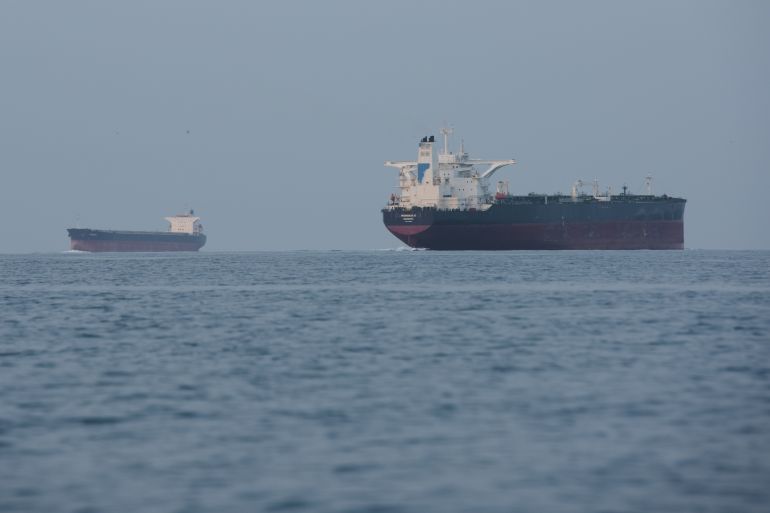
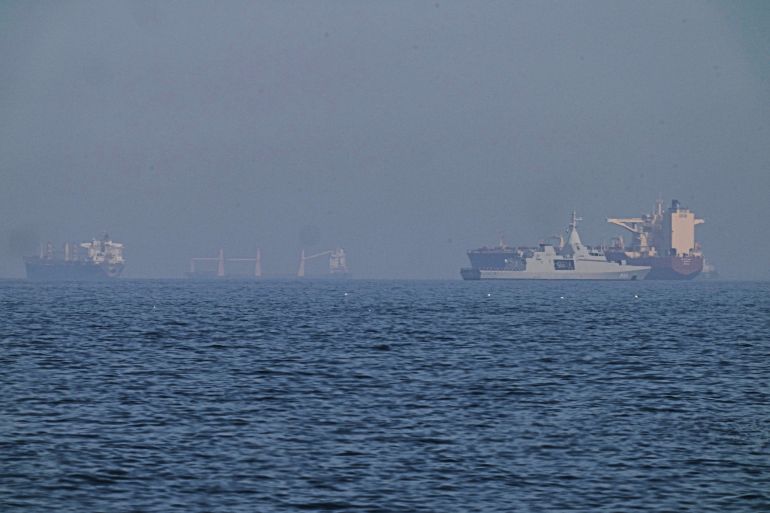
Iran’s military has issued a **stern warning to the United States Navy**, urging it to steer clear of the Strait of Hormuz. This comes after former President Donald Trump stated that the US would “help free up” vessels currently stranded in the Gulf.
Ali Abdollahi, head of Iran’s military unified command, declared on Monday that **US forces would face attack if they attempt to enter the strait**. He also advised commercial ships and oil tankers to halt movement unless coordinated with Iran. The statement explicitly warned: “We caution that any foreign armed forces, particularly the aggressive US army, will be attacked if they intend to approach and enter the Strait of Hormuz.”
Hours following this warning, Iran’s semi-official Fars news agency, linked to the Islamic Revolutionary Guard Corps (IRGC), reported that two missiles had struck a US warship at the southern entrance of the Strait of Hormuz. The United States, however, **refuted these claims**, denying any warship had been hit.
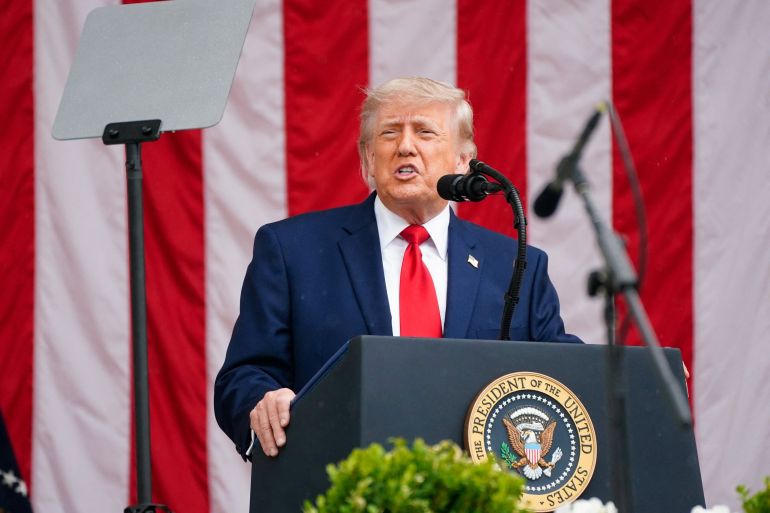
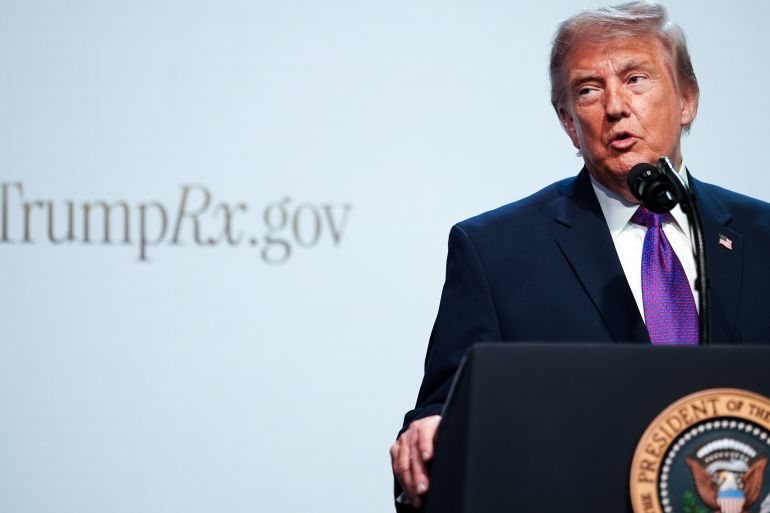
On Sunday, Trump announced the launch of a “Hormuz campaign” dubbed “**Project Freedom**.” He claimed this initiative was in response to requests from “neutral and innocent bystander” countries whose ships were stranded because of the US-Israel conflict with Iran. In a post on Truth Social, Trump stated: “For the good of Iran, the Middle East, and the United States, we have told these Countries that we will guide their Ships safely out of these restricted Waterways, so that they can freely and ably get on with their business.” He did not, however, specify which nations had sought Washington’s assistance. Trump further added that many of these ships were “running low on food, and everything else necessary for largescale crews to stay on board in a healthy and sanitary manner,” warning that any interference with the operation would “**unfortunately, have to be dealt with forcefully**.”
The US military’s Central Command (CENTCOM) confirmed its support for this operation, deploying **15,000 military personnel, over 100 land- and sea-based aircraft, warships, and drones**. Admiral Brad Cooper, CENTCOM commander, emphasized in a statement: “Our support for this defensive mission is essential to regional security and the global economy as we also maintain the naval blockade.”
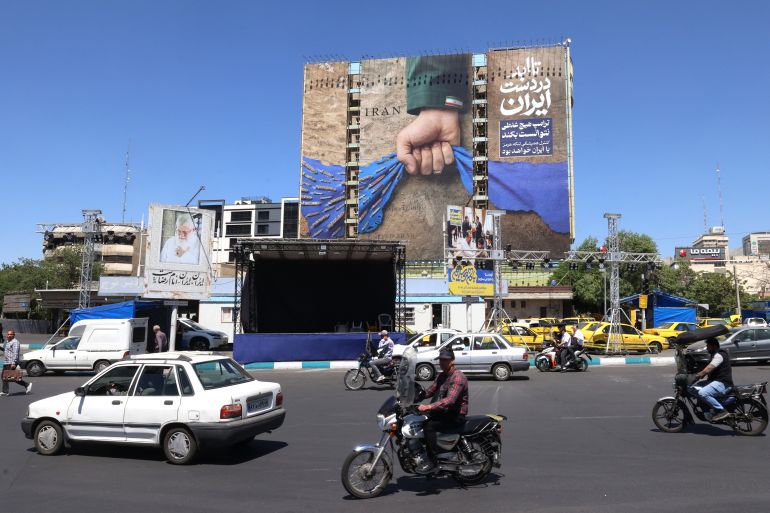
Reporting from Tehran, Al Jazeera’s Resul Serdar Atas noted that Iran would consider any US intervention in the Strait of Hormuz as a **direct violation of the ceasefire agreement** that began on April 8. “The Iranians are quite clear,” Atas explained. “They are saying they’re going to respond and engage militarily. And in such a case, that will be the end of the ceasefire.” He added, “The Iranian military establishment and political officials here say that the war has changed many things and that there is a new regime [in the Strait of Hormuz] and Iran in one way or another is going to keep control over the waterway.”
On Monday, the United Kingdom Maritime Trade Operations (UKMTO) reported that the **maritime security threat level in the strait remains critical**, citing ongoing military operations. The agency recommended that mariners consider rerouting through Oman’s territorial waters, where the US has “established an enhanced security area.” Earlier, UKMTO also reported that a tanker off the coast of Fujairah in the United Arab Emirates had been “hit by unknown projectiles.” It confirmed, “All crew are reported safe. No environmental impact reported.”
Dangerous Escalation
For over two months, Iran has been obstructing nearly all shipping from the Gulf, excluding its own vessels, a move that has **significantly driven up global energy prices**. In the US, petrol prices have surged to an average of $4.44 per gallon (3.8 litres), a substantial increase from under $3 before the war commenced on February 28, thereby fueling inflation.
Trump, who had previously ordered a naval blockade of Iranian ports beginning April 13, had earlier indicated comfort with the existing dual US and Iranian blockades in the strait, asserting that the US siege was “more effective than bombing.” However, his recent initiative to alleviate Iran’s blockade of the strait could **disrupt the relative calm** maintained since the ceasefire, especially as tensions have escalated in recent weeks.
Harlan Ullman, chairman of the Killowen Group and a former US naval officer, warned that Trump’s latest plan carries the risk of a **dangerous escalation**. “Iran has huge amounts of drones and small craft that could make this very, very difficult,” Ullman told Al Jazeera. He added, “I would hate to see a confrontation where an American warship is hit because then the Americans will have no other option except to retaliate.”
Diplomacy Efforts
Tensions surrounding the control of the Strait of Hormuz are intensifying, even as Iran presented a **14-point proposal aimed at ending the conflict**. Esmaeil Baghaei, spokesperson for the Iranian Ministry of Foreign Affairs, confirmed that officials are currently reviewing a counterproposal from the US. Baghaei informed reporters, “The US message was received through Pakistan, and I will not discuss the details of the issues raised at this time because these issues are still under review.” He further noted that the US tendency for “excessive and unreasonable demands” makes the proposal “**not easy to review**.”
Baghaei also addressed reports concerning negotiations about Iran’s nuclear program, dismissing them as mere speculation. “The issues raised about enrichment or nuclear materials are purely speculative,” he asserted. “At this stage, we are not talking about anything other than stopping the war completely, and the direction we will take in the future will be determined in the future.”
#StraitOfHormuz #IranUSConflict #ProjectFreedom #MaritimeSecurity #GlobalEnergy #CeasefireViolation #MiddleEastTensions #NavalBlockade #IranDiplomacy #Geopolitics


Leave a Reply