


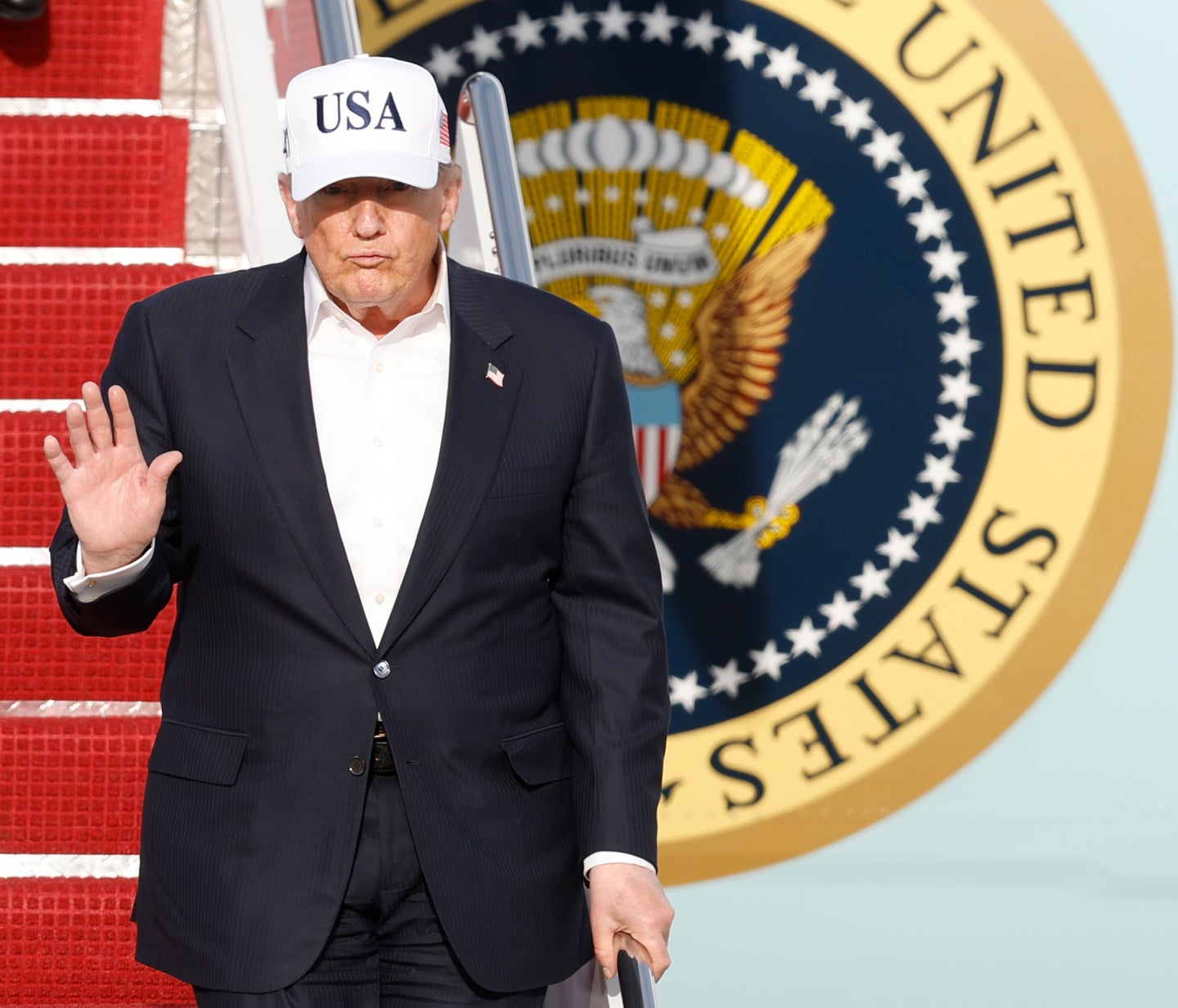
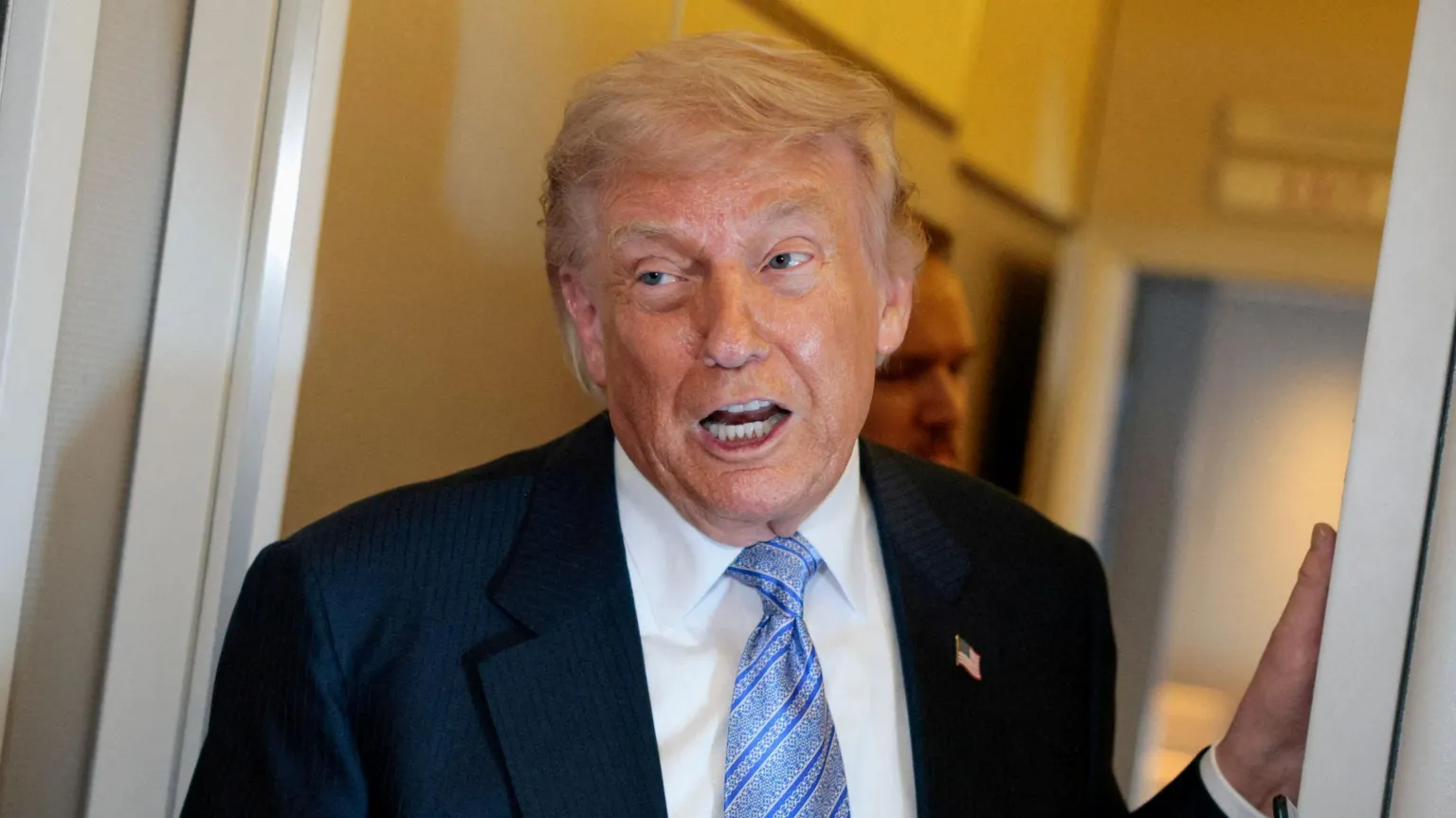
U.S. President Donald Trump arrived in Beijing on Wednesday evening, stepping off Air Force One to a grand welcome, ahead of crucial talks with Chinese President Xi Jinping.
During his two-day visit, discussions between the two global powers are anticipated to cover tariffs, technological competition, the conflict in Iran, and the United States’ relationship with Taiwan.
Trump’s return to China finds a nation more assertive than during his 2017 visit, as he faces increasing scrutiny regarding military actions in the Middle East.
The trip, initially planned for March, was postponed due to the conflict in Iran involving the U.S. and Israel, a situation that continues to impact the global economy.
Chinese Vice-President Han Zheng, a prominent leader, greeted President Trump on the red carpet. This gesture is interpreted as a significant show of respect from Beijing towards the U.S. president, especially given that a lower-ranking official had received him during his previous visit.
A brass band and individuals waving Chinese and American flags chanted “welcome, welcome, a warm welcome” as the president offered his characteristic fist pump to the large welcoming party, arranged in neat, uniformed rows.
Accompanying the U.S. president were his son Eric Trump and several prominent figures from the U.S. tech industry, including Elon Musk of Tesla and Jensen Huang of Nvidia. Other CEOs anticipated to be part of the delegation include Tim Cook from Apple, Larry Fink from BlackRock, and Kelly Ortberg from Boeing.
Ahead of his arrival, President Trump stated on social media, “I will be asking President Xi, a Leader of extraordinary distinction, to ‘open up’ China so that these brilliant people can work their magic, and help bring the People’s Republic to an even higher level.” Trump indicated this would be his “very first request” during his meeting with the Chinese leader.
Bilateral trade has seen a decline in recent years, attributed to an escalating tariff dispute and other trade restrictions. Last year, bilateral trade amounted to $414.7 billion (£307.3 billion), a significant drop from the $690.4 billion (£511.6 billion) recorded in 2022. President Trump also aims to reduce the trade deficit between the two nations. Last year, U.S. imports from China exceeded its exports by over $200 billion.
China, meanwhile, has positioned itself as a formidable competitor in the global AI race, leading to increased demand for U.S.-made computing chips. However, concerns in the U.S. regarding technology theft by Chinese firms have led to tighter export restrictions. Beijing could potentially leverage its control over rare earth metals, crucial for high-tech industries, a tactic previously employed in response to Trump’s tariffs.
Regarding trade, Trump is expected to advocate for increased Chinese purchases of U.S. agricultural products, while Beijing will likely press Washington to reduce tariffs on Chinese goods.
The conflict in Iran is also anticipated to be a key topic during Trump’s meeting with Xi. China heavily relies on Iran for oil, and exports have been significantly impacted as ships face difficulties navigating the Strait of Hormuz. The two nations also share a long-standing alliance. Beijing faces increasing pressure from the U.S. to utilize its economic and political influence concerning Iran. Prior to his departure for China, Trump informed reporters in Washington that he and Xi would have a “long talk” about Iran, though he maintained, “I don’t think we need any help” in resolving the situation. China also desires an end to the conflict, as rising oil prices exert pressure on its economy.
Tensions surrounding Taiwan are also expected to be a backdrop to the meeting. The Trump administration has adopted a nuanced approach with Taipei, approving a substantial arms deal while simultaneously downplaying its readiness to defend the island against potential Chinese aggression. On Friday, a bipartisan group of U.S. senators sent a direct letter to Trump, urging him to reaffirm U.S. support for Taiwan and to remind China’s president of the $14 billion arms sale to Taiwan, approved by Congress last year. The letter stated, “You can make clear to Beijing that as you seek to level the economic playing field, American support for Taiwan is not up for negotiation.”
On Thursday, Trump’s schedule includes a welcome ceremony with Xi at China’s Great Hall of the People, a state banquet, several bilateral meetings, and a “friendship photo” in Beijing’s Zhongnanhai Garden. He is set to depart China on Friday, after a tea session and a working lunch with Xi.
#TrumpChinaVisit #USTrade #USChinaRelations #XiJinping #IranConflict #TaiwanSecurity #TechWar #GlobalDiplomacy #TradeWar #BeijingSummit



Leave a Reply