

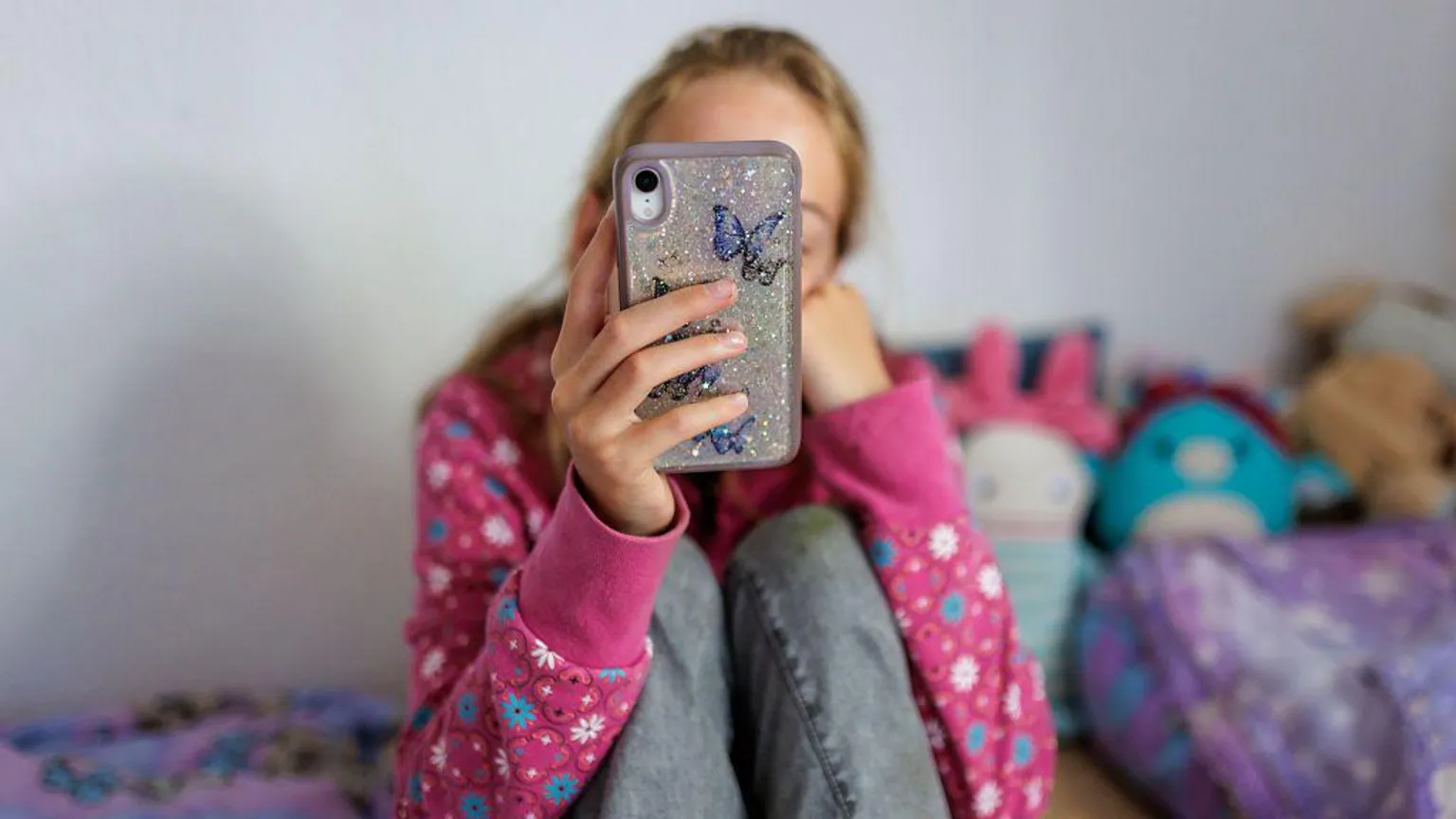
Ofcom has criticized TikTok and YouTube, stating in a new report that their content feeds are “not safe enough” for children.
These findings follow the regulator’s call for stronger action on children’s online safety, noting that Meta, Snap, and Roblox had each agreed to enhanced anti-grooming measures.
Ofcom also stated it would share concerns with the government regarding sites not effectively enforcing minimum age rules, especially as the government’s consultation on a potential ban of social media for under-16s is nearing its conclusion.
YouTube responded by saying it collaborates with child safety experts to offer “industry-leading, age-appropriate” experiences for children. TikTok expressed its “disappointment” that Ofcom had not acknowledged its existing safety features.
Ofcom’s criticism forms part of a new report examining how five major social media and video platforms have responded to its demands for stronger protections for children.
“Notably, TikTok and YouTube failed to commit to any significant changes to reduce harmful content served to children, maintaining that their feeds are already safe,” the report stated. “Our extensive evidence, published today, suggests they are still not safe enough.”
In their defense, both TikTok and YouTube highlighted existing safety features on their apps, such as TikTok’s restriction on direct messaging for under-16s and YouTube’s short-form video timer, which allows parents to set time limits for the Shorts feed.
Social media consultant and analyst Matt Navarra commented that the criticism signifies a shift towards viewing online harms as a “product problem.”
He elaborated, “The previous debate focused on whether platforms removed harmful content quickly enough; the new discussion has shifted to, ‘why was it shown to a child in the first place?’”
Dame Melanie Dawes, Ofcom’s Chief Executive, expressed the regulator’s “deep concern” that companies are still not taking adequate measures to keep underage children off their platforms.
An Ofcom survey revealed that 84% of children aged eight to 12 were still using at least one major service with a minimum age of 13, prompting a warning that stronger legislation might be necessary.
Online safety researcher Professor Victoria Baines described the research as “unsurprising,” citing the “limited success” in removing accounts of under-16s in Australia after its social media ban.
She suggested, “Some platforms might need to utilize more behavioral data—what a user watches, engages with, and discusses—to accurately determine if they are truly above the minimum age.”
Grooming Risks
Ofcom’s report highlighted changes implemented by Snap, Roblox, and Meta, specifically aimed at reducing grooming risks.
Ofcom stated that Snap, owner of Snapchat, had agreed to block adult strangers from contacting children by default in the UK, cease encouraging children to add unknown individuals, and introduce “highly effective” age checks this summer.
A Snapchat spokesperson affirmed that these measures would be rolled out while “preserving privacy protections and the ability for our community to stay connected with their real friends and family.”
The report also mentioned that Roblox would allow parents to completely disable direct chat for under-16s, and Meta would hide teens’ Instagram connection lists by default and develop AI tools to detect potentially sexualized conversations in DMs.
Both TikTok and YouTube reiterated existing safety features on their apps, such as TikTok’s prevention of direct messaging for under-16s and YouTube’s short-form video timer, enabling parents to set time limits for the scrolling Shorts feed.
Andy Burrows, Chief Executive of the Molly Rose Foundation, a UK-based online safety charity, welcomed the report, describing big tech platforms as “complacent and evasive” regarding the protection of children from preventable harm.
He further stated: “Ofcom will be judged by its speed in reducing exposure to online harm. A stronger regulator must be coupled with a conditional ban on personalized algorithms that continue to push a deluge of harmful content to teens.”
Ofcom emphasized that these promises must now be implemented quickly and properly, warning of action if platforms fail to deliver.
The Social Media Ban Question
The government’s consultation on a potential ban of social media for under-16s is set to conclude on May 26, with the government planning its response for the summer.
On Thursday, the Education Committee published its response to the consultation, advocating for a ban on social media for under-16s.
It also urged urgent action to curb features reportedly designed to drive excessive screen use among under-18s.
However, it clarified that a ban should be considered merely a starting point for online safety.
Helen Hayes MP, chair of the committee, told the BBC: “The Education Committee’s recent report is clear—social media firms cannot be relied upon to self-regulate.”
She added, “Until the safety of children and young people takes precedence over commercial incentives, they will continue to be exposed to the worst of social media and online harms. We need a total reset.”
She concluded: “Only a statutory ban on social media for under-16s, alongside restrictions on addictive and high-risk features for under-18s, will effectively protect children from harm.”
#OnlineSafety #ChildSafety #SocialMediaRegulation #OfcomReport #TikTokSafety #YouTubeSafety #Under16Ban #DigitalWellbeing #ParentalControl #TechAccountability




Leave a Reply