

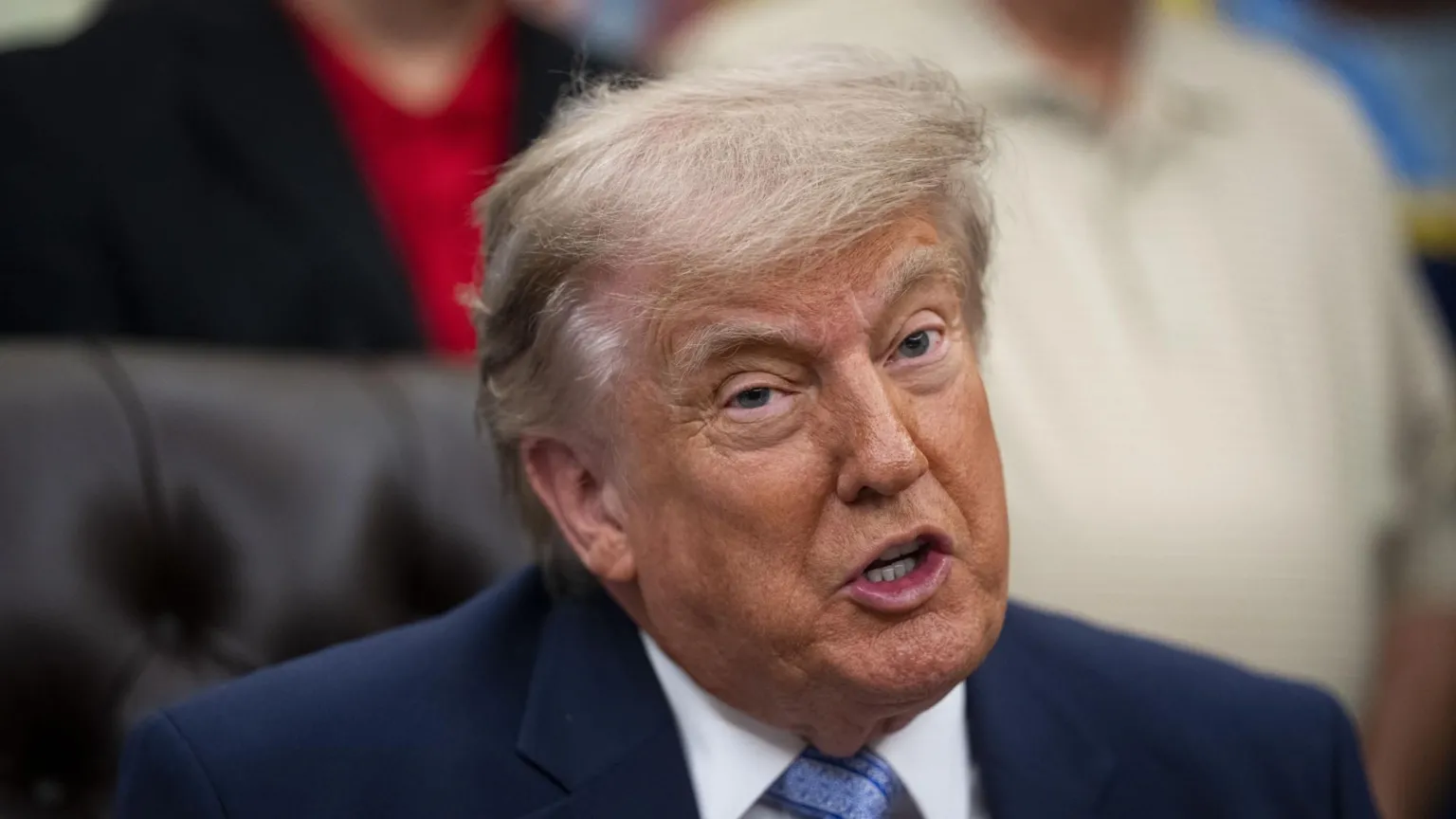
US President Donald Trump announced that an **agreement with Iran has been “largely negotiated”** and further details are expected to be released soon. He stated on Saturday that the deal would encompass the **reopening of the Strait of Hormuz**, though he did not elaborate further.
Earlier, Iranian foreign ministry spokesman Esmaeil Baqaei informed state television that US and Iranian positions had shown convergence over the past week. However, he cautioned that this did not guarantee agreements on key issues and accused Americans of making “contradictory statements.”
On social media, Trump mentioned having a “very good call” with leaders from Saudi Arabia, the United Arab Emirates, Qatar, and others regarding a **”Memorandum of Understanding pertaining to PEACE.”**
Trump stated, “An agreement has been largely negotiated, subject to finalization between the United States of America, the Islamic Republic of Iran, and the various other Countries, as listed.” He added, “Final aspects and details of the deal are currently being discussed, and will be announced shortly.”
He also confirmed a “very well” phone call on Saturday with Israeli Prime Minister Benjamin Netanyahu.
The president has not provided additional specifics on the deal but has emphasized that any agreement would **”absolutely” prevent Iran from obtaining a nuclear weapon.**
Subsequently, Pakistan’s Prime Minister Shehbaz Sharif congratulated President Donald Trump on his “extraordinary efforts to pursue peace,” describing their phone call as “very useful and productive.” Pakistan has been facilitating negotiations for a peace deal, acting as an intermediary. Sharif expressed hope to “host the next round of talks very soon” in a statement on X.
On February 28, the US and Israel launched extensive strikes on Iran, leading to conflict across the Middle East. Iran retaliated with attacks on Israel and US-allied states in the Gulf. A ceasefire in Iran was agreed upon in early April, followed by talks between Washington and Tehran for a long-term peace deal.
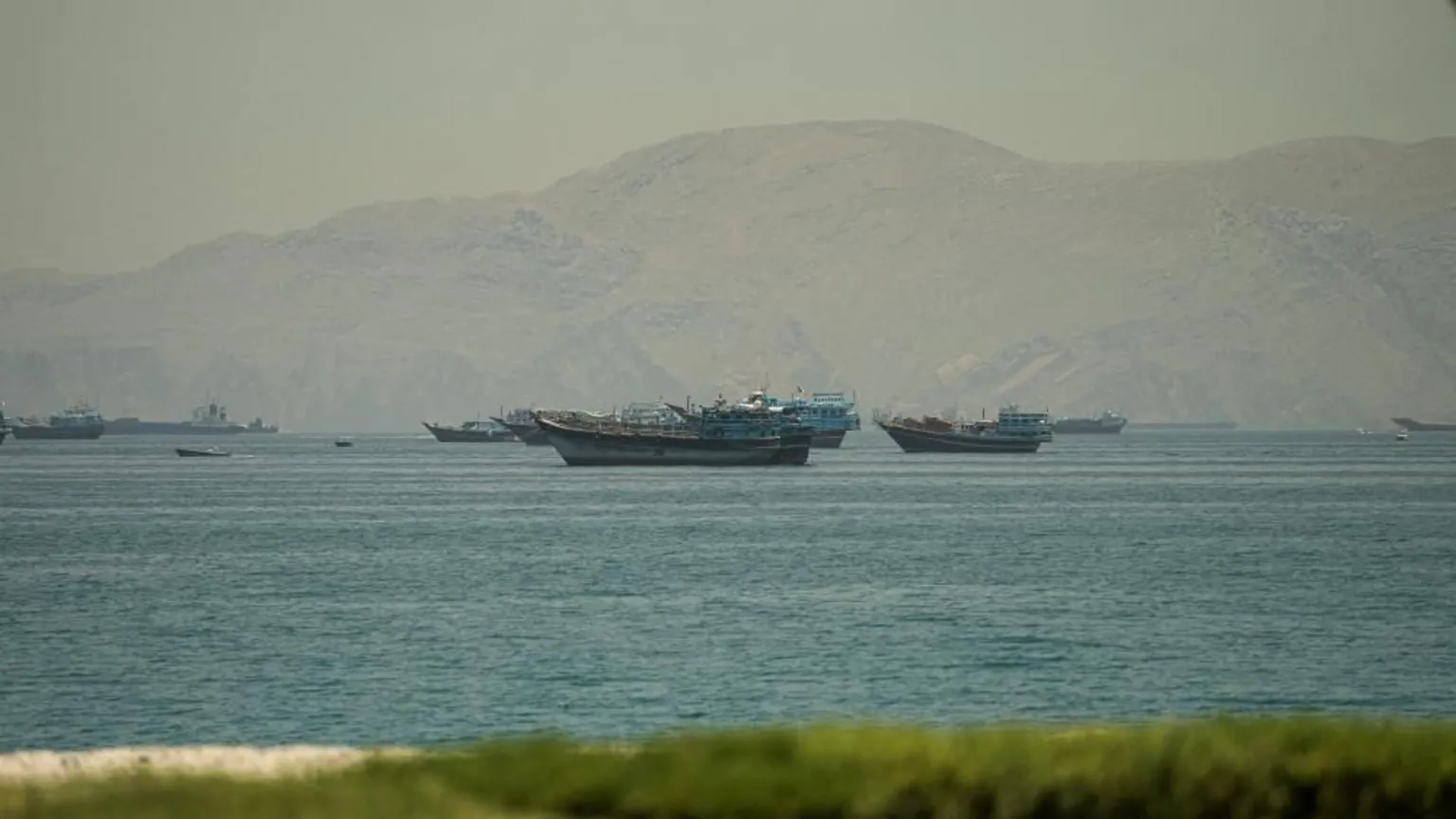
The **Strait of Hormuz is a narrow stretch of water** situated between Iran, the United Arab Emirates (UAE), and Oman. This waterway, approximately 21 miles (33 km) at its narrowest point, connects the Gulf to the Gulf of Oman, making it a **vital global shipping route**. Approximately **20% of the world’s oil and liquefied natural gas** typically transits through the Strait of Hormuz. This oil originates not only from Iran but also from Gulf states such as Iraq, Kuwait, Qatar, Saudi Arabia, and the UAE. In 2025, an estimated 20 million barrels of oil passed through the waterway daily, according to the US Energy Information Administration (EIA), representing nearly $600 billion (£447 billion) in energy trade annually. Sea traffic has significantly decreased since the conflict began.
Speaking to state television on Saturday, Iranian foreign ministry spokesman Esmaeil Baqaei also referred to a **”memorandum of understanding,”** indicating Iran’s aim to reach an agreement “in the form of a framework, consisting of 14 points.” Baqaei stated they were in the process of **finalising the memorandum** to allow for further talks within 30 to 60 days, ultimately leading to a final agreement.
This new momentum follows a period where the mood in Washington appeared to have soured, with anonymous officials briefing US media on Friday that the administration was preparing for a new round of military strikes, although no final decision had been made. On Friday, the president posted on Truth Social that he would not attend his son Donald Jr.’s wedding that weekend to remain in Washington DC “during this important period of time.” Last week, Trump had declared the truce was on “massive life support” after rejecting Tehran’s demands, labeling them “totally unacceptable.” The US has blockaded Iranian ports since April 13.
On Saturday, US Central Command (Centcom) reported redirecting 100 vessels, disabling four, and allowing 26 humanitarian aid ships to pass since the blockade commenced. Centcom commander Admiral Brad Cooper stated that its forces had been “highly effective” in “allowing zero trade into and out of Iranian ports which has squeezed Iran economically.” Meanwhile, Iran has asserted military control over an area around the Strait of Hormuz, stating that all transit through the strait “requires coordination with and authorisation from the Persian Gulf Strait Authority.” The US and Gulf allies have consistently rejected Iranian attempts to assert control over the strait, with the US advising ships not to comply with Iran’s rules.
#IranDeal #StraitOfHormuz #DonaldTrump #MiddleEastPeace #USIranRelations #Diplomacy #EnergySecurity #GlobalShipping #PakistanMediation #NuclearNonProliferation







Leave a Reply