


Iran has stated that some progress has been achieved in discussions with the US, but emphasized that a deal “is not imminent.” Foreign ministry spokesman Esmail Baqai’s comments followed remarks by US Secretary of State Marco Rubio, who had suggested an agreement might be reached on Monday.
“It is correct to say that we have reached a conclusion on a large portion of the issues under discussion,” Baqai said in Tehran on Monday. “But to say that this means the signing of an agreement is imminent – no-one can make such a claim.”
The reported memorandum of understanding is said to involve a 60-day ceasefire extension, the reopening of the Strait of Hormuz, and a framework for further negotiations concerning Iran’s nuclear program.
Over the weekend, President Donald Trump hinted that the parties were nearing a deal, although he later stated he had instructed negotiators “not to rush into” one. On Monday, Rubio informed reporters in Delhi, the Indian capital: “We thought we might have some news last night. Maybe today.” He cautioned, “I wouldn’t read too much into it,” adding, “It takes a little while to hear back from Iran.”
CBS News, the BBC’s US partner, has reported that US intelligence believes Iran’s Supreme Leader Mojtaba Khamenei – who was reported to have been injured in an Israeli strike on the first day of the conflict that resulted in the death of his father and predecessor – is currently in an undisclosed location. This situation is believed to be complicating communication with his envoys, thereby affecting the pace of talks with the US.
According to US media, the proposed deal is not a final settlement. Instead, it reportedly defers some of the most complex issues for later negotiation, including the scope and timing of Iranian sanctions relief, the release of frozen Iranian funds, and Washington’s calls for Iran to manage its nuclear ambitions.
Rubio commented, “So we have, what I think is a pretty solid thing on the table in terms of their ability to open up the Straits,” referring to the Strait of Hormuz, a crucial waterway through which 20% of the world’s oil and liquefied natural gas typically passes, and where passage has been restricted by Iran.
Oil prices experienced a sharp decline, and Asian stock markets saw a rise on Monday, fueled by hopes of an agreement. The reported deal has caused division among Trump’s Republicans, with some publicly arguing it is too lenient towards Iran.
Senator Ted Cruz described it as “a disastrous mistake,” while Roger Wicker, who chairs the Senate Armed Services Committee, stated that a 60-day ceasefire would render “everything accomplished by Operation Epic Fury… for naught!” Senator Lindsey Graham, a close ally of Trump, also voiced criticism against any deal that might allow Iran to be perceived as a dominant force in the region. He remarked, “It makes one wonder why the war started to begin with.”
Trump responded by saying he did not “listen to the losers, who are critical about something they know nothing about.” He wrote on Truth Social, “If I make a deal with Iran, it will be a good and proper one.”
Even in the most favorable scenario, the impacts of a deal are unlikely to be immediately apparent. Lars Jensen, chief executive of Vespucci Maritime and former director of shipping company Maersk, informed BBC Radio 4’s Today programme that it could take months for the shipping industry to restore supply chains to their pre-crisis state. Jensen explained that even if a deal between Iran and the US is announced in the coming days, the industry would likely remain “cautious and hesitant” to implement any “major operational changes.”
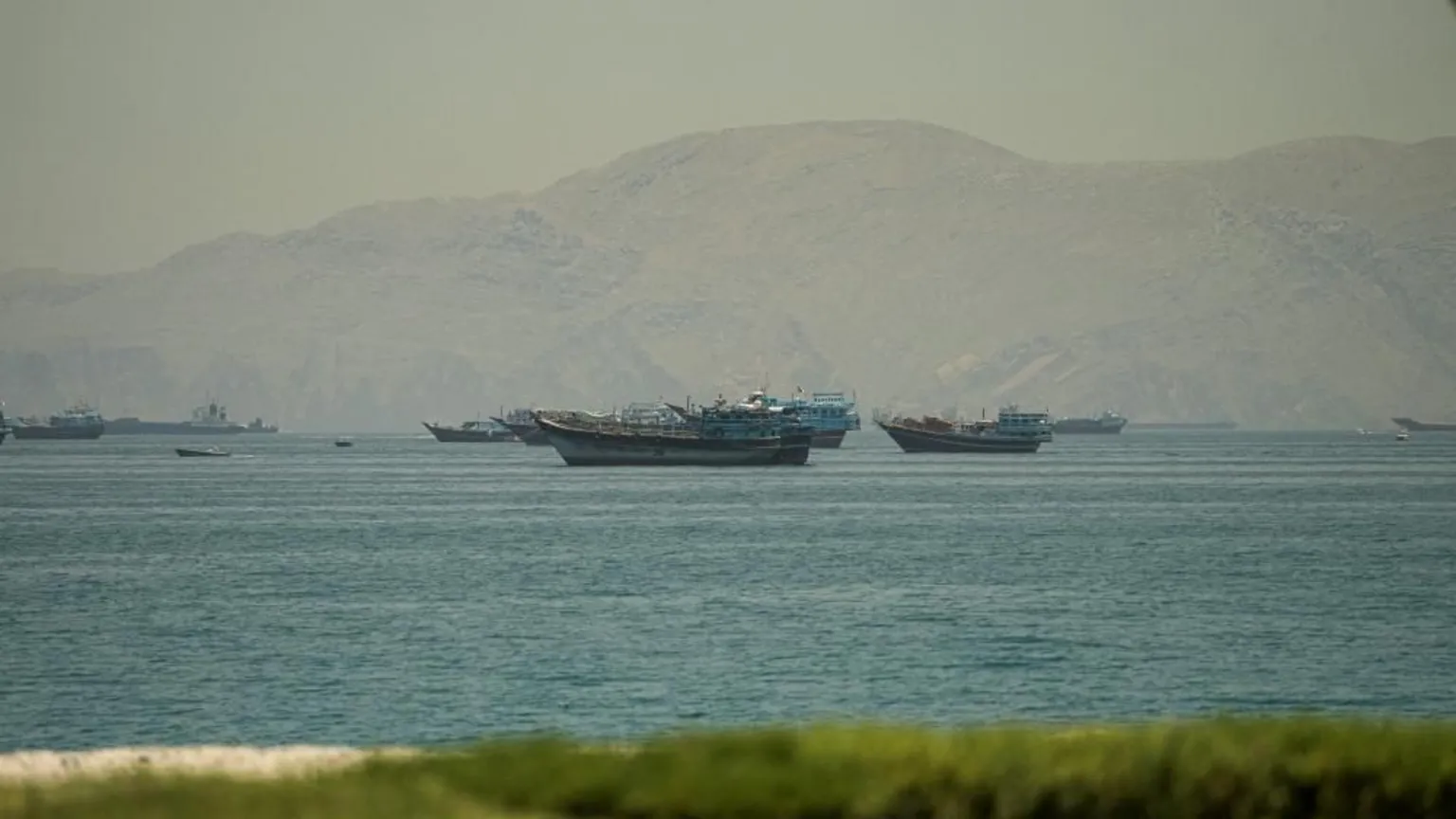
The Strait of Hormuz: A Vital Waterway
The Strait of Hormuz is a narrow body of water situated between Iran, the United Arab Emirates (UAE), and Oman. At its narrowest point, it measures approximately 21 miles (33 km) and connects the Gulf to the Gulf of Oman, establishing it as a critical global shipping route. Approximately 20% of the world’s oil and liquefied natural gas typically transits through the Strait of Hormuz. This oil originates not only from Iran but also from Gulf states such as Iraq, Kuwait, Qatar, Saudi Arabia, and the UAE. In 2025, an estimated 20 million barrels of oil passed through the waterway daily, according to the US Energy Information Administration (EIA), representing nearly $600 billion (£447 billion) worth of energy trade annually.
The US and Israel initiated wide-ranging strikes on Iran on February 28, leading to conflict across the Middle East. Iran responded by targeting Israel and US-allied states in the Gulf, which impacted navigation in the Strait of Hormuz. This development contributed to a global surge in oil prices. Shortly after a ceasefire was agreed upon in early April, the US established a blockade of Iranian ports, which Trump stated would remain “in full force and effect until an agreement is reached, certified, and signed.”
In a Sunday post on Truth Social, Trump reiterated that Iran “must understand” it cannot develop a nuclear weapon. Tehran has consistently affirmed that its nuclear program is solely for peaceful purposes. Some reports in US media suggest the deal could involve Iran agreeing to eventually transfer its highly enriched uranium. At the onset of the conflict, Iran was believed to possess approximately 440kg (970 lbs) of uranium enriched up to 60% purity, a level considered a short step from weapons-grade 90%, which theoretically could enable the creation of a nuclear bomb. Iranian President Masoud Pezeshkian told state TV that Iran was ready “to assure the world that we are not after a nuclear weapon.”
#IranUSNegotiations #StraitOfHormuz #NuclearDeal #MiddleEastPeace #GlobalOilPrices #Diplomacy #InternationalRelations #CeasefireTalks #EnergySecurity #IranNuclearProgram








Leave a Reply