

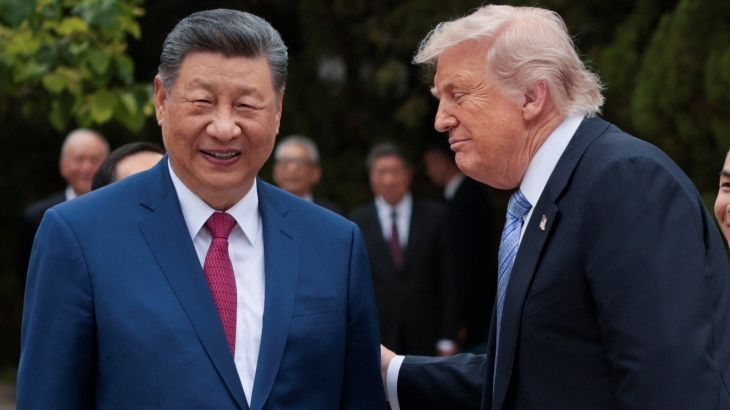
Reports of a potential agreement with Iran have prompted warnings from pro-Israel advocates in the United States, urging President Donald Trump to reconsider signing such a deal. **Prominent hawkish figures**, including several senators, have expressed strong opposition to any agreement that does not significantly weaken Iran’s political leadership or dismantle its military capabilities. However, a shift in tone occurred after Trump suggested the possibility of more Arab nations normalizing relations with Israel as part of the proposed deal, leading some critics to soften their stance.
US Senator Lindsey Graham, a vocal advocate for the conflict, initially warned on Saturday that reopening the Strait of Hormuz by ending the war would be a “nightmare” for Israel. He emphasized the importance of a correct approach in a social media post shared by AIPAC. Yet, his perspective changed after President Trump stated on Monday that it “should be mandatory” for countries like Saudi Arabia, Qatar, and Pakistan to establish diplomatic ties with Israel within the framework of a US-Iran agreement. Senator Graham subsequently lauded Trump’s diplomatic initiative as “simply brilliant,” suggesting that peace between Israel and nations like Saudi Arabia and Pakistan would usher in unprecedented regional stability and transform the Middle East into an economic powerhouse rather than a volatile region.
Abraham Accords Expansion
Similarly, **Mark Levin**, a pro-Israel political commentator close to Trump, praised the normalization efforts on Monday, a stark contrast to his Saturday criticism of the potential Iran deal. Levin described Trump’s proposal as a “truly massive accomplishment!” This shift followed Trump’s articulation of his vision for expanding the Abraham Accords, a series of normalization agreements between Israel and several Arab states. On Truth Social, Trump asserted that it “should be mandatory” for at least six countries, including Turkiye and Egypt (which already have formal diplomatic relations with Israel), to simultaneously join the Abraham Accords. However, none of the mentioned countries have publicly responded to his call. Historically, many nations have refrained from normalizing ties with Israel, particularly in light of the conflict in Gaza. Saudi Arabia, for instance, has consistently upheld the 2002 Arab Peace Initiative, which advocates for Israel’s recognition of a Palestinian state based on 1967 borders with East Jerusalem as its capital.
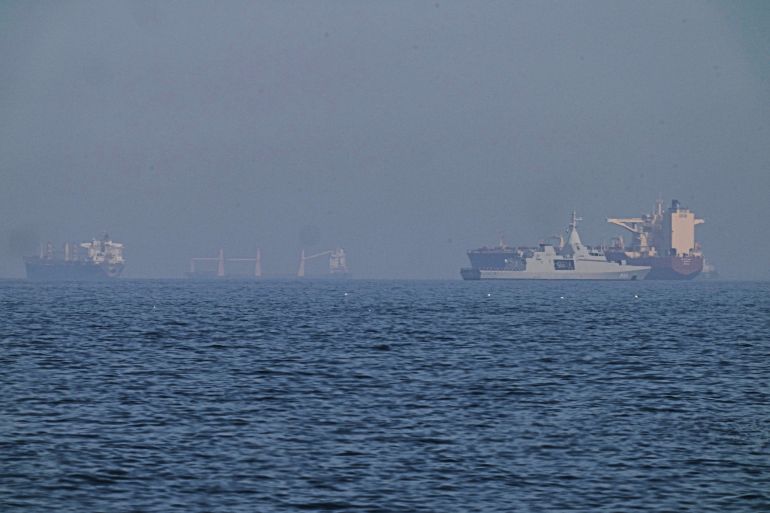
Trump’s recent demands coincide with his administration’s ongoing efforts to negotiate a peace deal following the US and Israel’s initiation of a conflict against Iran on February 28. The war’s objectives, initially focused on **regime change in Iran**, ending its nuclear program, and limiting its missile capabilities, have drawn scrutiny. A subsequent key objective became the forced reopening of the Strait of Hormuz, a crucial trade route for over 20% of global oil shipments. The extent of Trump’s influence to dictate policy to other regional nations within the Iran peace negotiations remains uncertain. Nevertheless, this renewed push for normalization might appease pro-Israel politicians who are against ending the conflict with Iran. Dania Thafer, executive director of the Gulf International Forum, suggested that Trump aims to reframe the war, which she described as a “strategic failure,” as a success for the US and Israel. However, Thafer informed Al Jazeera that Gulf states, especially Saudi Arabia and Qatar, are currently “not interested” in normalization. She further elaborated that beyond the Palestinian issue, Gulf countries, having experienced attacks during the conflict, are wary of “tipping the balance in favor of an Israeli-led regional order.” Thafer cautioned that an insistence on this normalization drive could potentially jeopardize a US agreement with Iran, questioning whether the push is more rhetorical than a substantive policy stance.
Republican Concerns
Normalizing Israel’s foreign relations has been a key priority for Trump since his first presidential term. In 2020, with his support, Israel signed the Abraham Accords with the UAE, Bahrain, and Morocco, establishing bilateral diplomatic relations. However, both Trump and his successor, Joe Biden, have struggled to expand these accords, while Israeli Prime Minister Benjamin Netanyahu continues to reject the concept of a Palestinian state. Israel has consistently aimed to separate its regional diplomatic efforts from its ongoing occupation of Palestinian territories and treatment of Palestinians, which human rights organizations describe as apartheid. Expanding formal ties with Arab and Muslim nations could offer political and economic advantages to Israel, potentially further isolating Palestinians.
Over the weekend, Trump faced unusual, albeit indirect, criticism from within his Republican Party following leaks regarding a potential peace deal with Iran. The reported terms included unfreezing billions in Iranian assets and an end to the conflict, with promises of further negotiations. **Senator Ted Cruz**, a staunch pro-Israel ally of Trump, expressed “concern” about these reports on Saturday. He warned that an outcome leading to an Iranian government, still led by figures who chant “death to America,” receiving billions, developing nuclear capabilities, and controlling the Strait of Hormuz, would be “a disastrous mistake.” AIPAC also shared criticism from Republican Senator Roger Wicker, who stated that a “rumored 60-day ceasefire” based on the belief of Iran’s good faith engagement would be “a disaster,” rendering “everything accomplished by Operation Epic Fury… for naught!”
Mike Pompeo, Trump’s former Secretary of State, joined the chorus of critics, comparing the rumored deal to the 2015 nuclear agreement that was negotiated by Democratic officials. He argued it was “not remotely America First,” referencing Trump’s campaign promise to prioritize US interests. Pompeo advocated for a clear approach: “Open the damned strait. Deny Iran access to money. Take out enough Iranian capability so it cannot threaten our allies in the region. Overdue. Let’s go.” The Trump administration swiftly rebutted Pompeo’s comments, with White House Communications Director Steven Cheung dismissing him as misinformed and out of touch with ongoing developments.
#Trump #IranDeal #IsraelNormalization #AbrahamAccords #MiddleEastPeace #USForeignPolicy #LindseyGraham #TedCruz #StraitOfHormuz #Geopolitics



Leave a Reply