

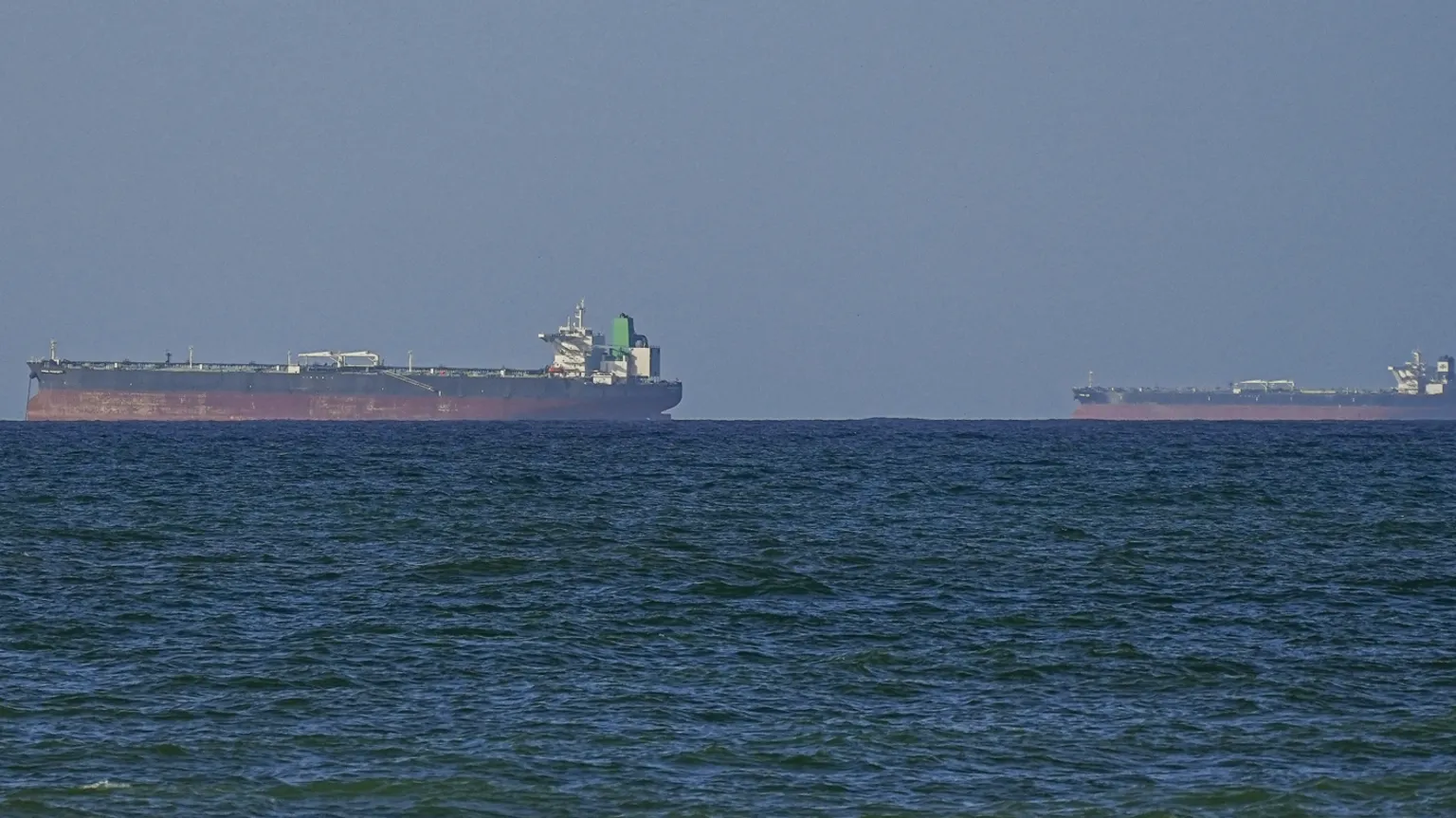
Iran’s navy has announced the seizure of two cargo ships in the Strait of Hormuz, stating they have been taken to the country’s coast. This development follows earlier reports indicating that three vessels had come under fire from Iranian forces.
Details of the Incidents
According to Nour News, a website affiliated with Iran’s Supreme National Security Council, the Islamic Revolutionary Guard Corps (IRGC) opened fire on the first ship, identified as the Epaminodes. The report claims the vessel had “ignored the warnings of the Iranian armed forces.”
A second ship, named Euphoria, was subsequently stopped after reportedly being “fired upon.” A third vessel, the MSC-Francesca, was also targeted, as reported by BBC Verify.
Fars News Agency, an outlet affiliated with the IRGC, confirmed the Revolutionary Guard’s involvement in these actions.
Iran’s Justification for Seizures
The IRGC Naval Command issued a statement on social media, asserting that the two seized ships – the Epaminodes and MSC-Francesca – had “endangered maritime security by operating without the necessary permits and tampering with navigation systems.” The statement further declared, “Disruption of order and safety in the Strait of Hormuz is our red line.”
Iranian state television reported that the cargo and documents of the two seized vessels would undergo examination.
Context: Ceasefire and Regional Tensions
These interceptions occurred mere hours after US President Donald Trump extended a two-week ceasefire with Iran, intended to facilitate ongoing talks between the two nations. The initial truce between the US and Iran was set to expire, but President Trump stated he had been requested by Pakistan, acting as a mediator, to postpone any attacks on Iran.
President Trump also affirmed that a US blockade of Iran’s ports would persist, adding that the Islamic Republic was “collapsing financially” due to the blockade of Hormuz.
In response, Mahdi Mohammadi, an adviser to the Iranian parliament speaker, commented on Trump’s truce extension. In a Persian post on X, Mohammadi described the move as “certainly a ploy to buy time for a surprise strike.” He added that the continuation of Trump’s “siege” was “no different from bombardment” and necessitated a “military response,” concluding that “The time for Iran to take the initiative has come.”
The Strategic Importance of the Strait of Hormuz
The Strait of Hormuz is a critical narrow waterway situated between Iran, the United Arab Emirates (UAE), and Oman. At its narrowest point, it measures approximately 21 miles (33 km) and serves as a vital global shipping route connecting the Gulf to the Gulf of Oman.
Approximately 20% of the world’s oil and liquefied natural gas typically transits through the Strait of Hormuz. This includes oil from Iran, as well as Gulf states such as Iraq, Kuwait, Qatar, Saudi Arabia, and the UAE. Estimates from the US Energy Information Administration (EIA) suggest that in 2025, around 20 million barrels of oil passed through the waterway daily, representing nearly $600 billion (£447 billion) worth of energy trade annually. Maritime traffic in the strait has reportedly seen a significant reduction since the war began.
Further Details on Targeted Vessels
BBC Verify understands that the Epaminondas, targeted by the IRGC, is owned by a Greek company. AIS data from Marine Traffic indicated the vessel was not transmitting a detectable signal while crossing the strait. Reports from both UKMTO and Vanguard suggested the ship’s master had been informed the vessel had permission to transit. However, it was approached by an IRGC gunboat, which opened fire, causing significant damage to the bridge.
The second cargo ship targeted, the Euphoria, is Panama-flagged and owned by a UAE-based company, with Jeddah, Saudi Arabia, listed as its destination. The identity of who targeted this vessel remains unclear. UKMTO stated it was “aware of high levels of activity in the SoH [Strait of Hormuz] area and encourages vessels to report any suspicious activity.”
Later, the third cargo ship, the Panama-flagged MSC Francesca, was targeted about six nautical miles off the coast of Iran while heading south out of the strait into the Gulf of Oman. Maritime intelligence firm Vanguard informed BBC Verify that the MSC Francesca was hailed by the IRGC and “instructed to drop anchor,” reporting “damage to the hull and accommodation.”
Background of the Truce
The initial two-week ceasefire had offered some relief to the Middle East, which had been embroiled in conflict for weeks following a US and Israel attack on Iran on February 28. On April 8, Iran and the US agreed to the conditional truce. President Trump initially stated the deal was contingent on Iran reopening the Strait of Hormuz. Iran agreed to allow vessels through the strait for two weeks, with their passage coordinated by the Iranian military.
Subsequently, on April 13, the US initiated a naval blockade of maritime traffic entering and leaving Iranian ports. This blockade, announced by Trump after unsuccessful talks in Pakistan, aimed to pressure Iran by restricting its oil export capabilities. Under its terms, American forces stated they would intercept or turn back vessels traveling to or from Iran’s coast, regardless of nationality.
With no concrete peace agreement yet in place, uncertainty persists, offering little relief to global markets. Iran’s foreign ministry previously informed the BBC that Tehran had not yet decided whether to participate in a new round of peace talks with the US.
#StraitOfHormuz #Iran #MaritimeSecurity #ShippingNews #IRGC #USIranRelations #MiddleEastTensions #OilTrade #GlobalShipping #Geopolitics








Leave a Reply