

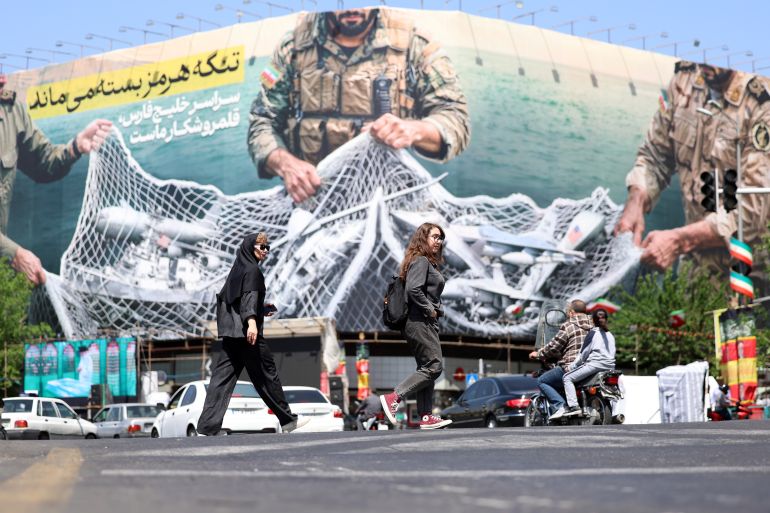
United States Defense Secretary Pete Hegseth faced scrutiny from American lawmakers regarding the financial toll of the conflict with Iran during his initial appearance on Capitol Hill since the war began three months ago.
The Pentagon reported to the House Armed Services Committee that the U.S. had allocated $25 billion towards the conflict, primarily for munitions and equipment maintenance. However, Democratic leaders and several economists contend this figure is a significant underestimate, suggesting the actual cost to the U.S. economy and its 330 million citizens could range between $630 billion and $1 trillion.
Hegseth criticized lawmakers who questioned President Donald Trump’s handling of the Middle East conflict, stating, “The biggest challenge, the biggest adversary we face at this point are the reckless, feckless and defeatist words of Congressional Democrats and some Republicans.”
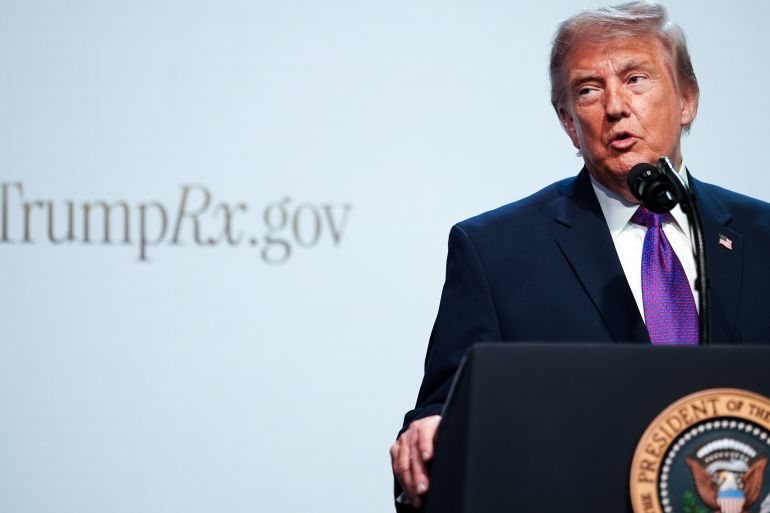
As the US-Israel conflict with Iran continues without a resolution, the Trump administration has proposed a $1.5 trillion defense budget for the upcoming year, marking a 42 percent increase and the largest expansion in military spending since World War II.
This raises the crucial question: What is the true cost of the Iran conflict for the U.S., and does the answer depend on whose perspective is prioritized?
What Did the Pentagon Disclose on Capitol Hill?
The exchange on Capitol Hill occurred amidst increasing criticism regarding the Trump administration’s perceived lack of transparency concerning Iran conflict expenditures.
Jay Hurst, the Pentagon’s acting comptroller, who testified alongside Hegseth and Joint Chiefs of Staff Chairman Dan Caine, informed Representative Adam Smith, the committee’s top Democrat from Washington, about the estimated $25 billion figure.
Hurst stated, “We will formulate a supplemental [on additional funding], through the White House, that will come to Congress once we have a full assessment of the cost of the conflict,” also promising a detailed cost breakdown later. He clarified that this estimate solely reflects “the costs of the war,” explaining, “We’re factoring in costs of munitions expended in that total and other operational costs.”
Previously, in March, Pentagon officials had informed Congress that the conflict incurred $11.3 billion in its first six days. The Pentagon’s current estimate is also considerably lower than the $200 billion initially requested by the Trump administration for the conflict.
According to the Ministry of Health in Tehran, US-Israeli actions against Iran since February 28 have resulted in at least 3,375 fatalities. The U.S. military has confirmed 14 combat-related deaths among its personnel and over 200 injuries.
Democrats Question the Official Figures
Democrats interrogating Hegseth and his colleagues expressed skepticism regarding the reported costs of the Iran conflict.
Representative Ro Khanna asserted that the actual cost far exceeded the Pentagon’s $25 billion estimate. Khanna questioned, “Do you know how much it will cost Americans in terms of their increased cost in gas and food over the next year because of Iran?”
With the U.S. maintaining its blockade of Iranian ports and Tehran controlling the Strait of Hormuz, U.S. gas prices have reached a new high of $4.23 per gallon, the highest since 2022. The Brent crude benchmark has been trading above $120.
A 40 percent surge in gas prices since before the conflict has contributed to President Trump’s approval rating hitting a record low in his second term, according to a recent Reuters/Ipsos poll. Only 22 percent of Americans approved of Trump’s handling of the cost of living.
Khanna claimed the conflict would impose an approximate $631 billion cost on the U.S. economy—or about $5,000 per household—due to elevated gas and food prices.
He challenged Hegseth, stating, “You don’t know what we paid in terms of the missiles that hit the Iranian school. You don’t know what we’re paying in terms of gas. You don’t know what we’re paying in terms of food. Your $25bn number is totally off.”
Linda Bilmes, a prominent Harvard economist, has projected the total cost of the conflict could reach $1 trillion.
Beyond Munitions: The Broader Economic Impact of Conflict
The U.S. previously reported striking over 13,000 targets during the first 39 days of fighting with Iran before a fragile ceasefire was implemented.
For context, the U.S. deployed more Patriot missiles in the initial four days of the Iran conflict than it supplied to Ukraine over the past four years. Each of these defense missiles costs $4 million, used to intercept Iran’s Shahed drones, which are valued at no more than $50,000 each.
However, the economic repercussions and overall impact of the conflict extend far beyond the cost of bombs and missiles.
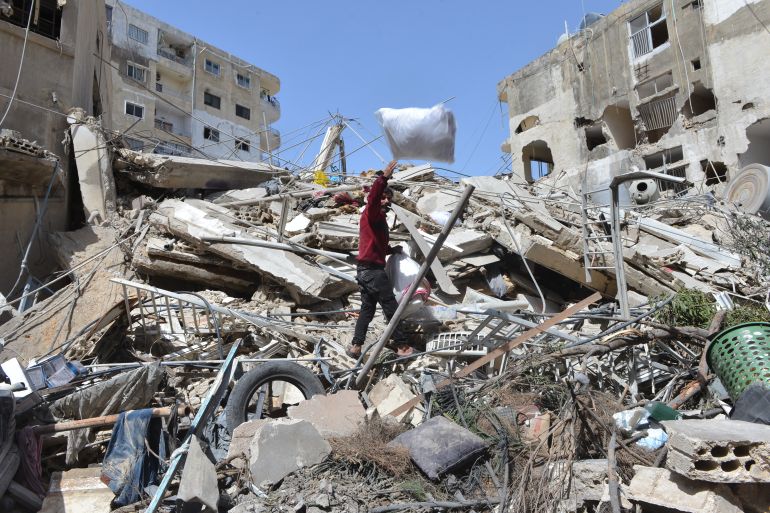
A significant expenditure involves the reconstruction and repair of damaged infrastructure and assets.
Following the US-Israeli actions that resulted in the death of former Supreme Leader Ali Khamenei on the conflict’s first day, Tehran responded by launching missiles and drones at U.S. military facilities and embassies in the Gulf region.
Iranian strikes caused damage to U.S. military camps in Kuwait, along with other bases such as al-Dhafra airbase and Al Ruwais military base in the United Arab Emirates, Prince Sultan Air Base in Saudi Arabia, and Muwaffaq Salti Air Base in Jordan.
Earlier this month, NBC News cited six U.S. officials who indicated that Iran inflicted far greater damage to U.S. military bases and equipment in the Middle East than publicly acknowledged. These damages alone could amount to billions of dollars in repairs.
Another report by The New York Times estimated that repairs to the U.S. Navy Fifth Fleet headquarters in Bahrain could cost $200 million alone.
Hegseth declined to confirm if this figure included repairs to U.S. bases. During budget briefings last week, Hurst, the acting Pentagon comptroller, informed reporters that Washington does not “have a final number for what the damage is to our installations overseas.”
He added that the department is still assessing “what we want to construct in the future” when questioned about the cost of repairing facilities damaged in the Iran conflict.
Hurst also noted, “Our partners also might contribute a share for that construction.” Meanwhile, economists believe the U.S. financial burden would increase further if its Gulf allies request Washington to contribute to their own repairs from Iranian actions.
The Hidden and Long-Term Costs of War
Bilmes, a public finance professor at Harvard Kennedy School, estimated in February 2006 that the Iraq war would cost the U.S. $3 trillion, at a time when the George Bush administration projected a cost of $50 billion.
Twenty years later, Bilmes’s prediction proved remarkably accurate, with the Iraq war’s total cost now estimated at $2 trillion, though she believes the actual cost was higher.
Bilmes remarked to the Harvard Kennedy School, “Wars always cost more than expected. Throughout history, those who get into wars tend to be optimistic about the cost and about the length of time it will take.”
She added, “It is hard to measure the exact cost. But based on what we know now, it [the current Iran conflict] is costing about $2 billion a day in short-term, upfront costs, which is the tip of the iceberg.”
Beyond immediate expenses, Bilmes highlighted long-term costs that emerge after a conflict concludes, including veterans’ care and replenishing weapons inventories.
She concluded, “I am certain we will reach one trillion dollars for the Iran war.”
#IranConflict #USDefenseSpending #WarCosts #PentagonBudget #EconomicImpact #CapitolHill #MilitaryExpenditure #Geopolitics #DefenseEconomics #NationalDebt


Leave a Reply