

President Donald Trump has informed Congress that US hostilities with Iran have “terminated” due to an ongoing ceasefire, asserting that he does not require legislative authorization for the conflict.
In a communication to congressional leaders, President Trump stated, “There has been no exchange of fire between the United States Forces and Iran since April 7, 2026.” He further declared, “The hostilities that began on February 28, 2026 have terminated.”
This declaration coincided with the 60th day since he formally notified Congress of military actions against Iran.
US law mandates the termination of any use of United States Armed Forces within 60 days of such a notification, unless Congress explicitly permits a continuation.
In letters sent on Friday, Trump affirmed his intent to “continue to direct United States Armed Forces consistent with my responsibilities and pursuant to my constitutional authority to conduct United States foreign relations and as Commander in Chief and Chief Executive.”
Understanding the War Powers Resolution
The decades-old War Powers Resolution, a key piece of US legislation, outlines specific requirements for a president “within sixty calendar days” of deploying US armed forces in combat. This resolution stipulates that a president must cease the use of such forces unless Congress issues a formal declaration of war or grants the president an extension, up to 30 days, for the “prompt removal” of troops.
US Defence Secretary Pete Hegseth also presented an argument during a congressional hearing on Thursday, suggesting that the deadline for seeking legislative approval had been paused. He stated, “We are in a ceasefire right now, which our understanding means the 60-day clock pauses or stops in a ceasefire.” Democratic Senator Tim Kaine, who posed the question, countered, “I do not believe the statute would support that.”
The War Powers Resolution was enacted in 1973 with the aim of limiting the executive’s power to engage in prolonged military conflicts without congressional consent, notably in the context of the Vietnam War.
Lawmakers have increasingly faced inquiries regarding their plans to schedule a vote in both chambers to formally authorize the conflict. According to CBS, the BBC’s US partner, Trump administration officials have been in discussions with members of Congress to secure approval. Efforts led by Democrats in both chambers of Congress to impose constraints on President Trump regarding Iran have consistently failed. While most Republicans have opposed these Democratic initiatives, some have suggested they might reconsider their stance after the 60-day period.
Diplomatic Efforts Amidst Ceasefire
Despite the ongoing ceasefire, a long-term agreement through negotiations has not yet been reached. However, Iranian media reported on Friday that a new proposal from Tehran was sent to Pakistan. Iran’s state news agency IRNA confirmed that a proposal for negotiations with the US had been conveyed to Pakistani intermediaries. Details of the proposal were not disclosed by the news agency, and its reception by the US remains unconfirmed.
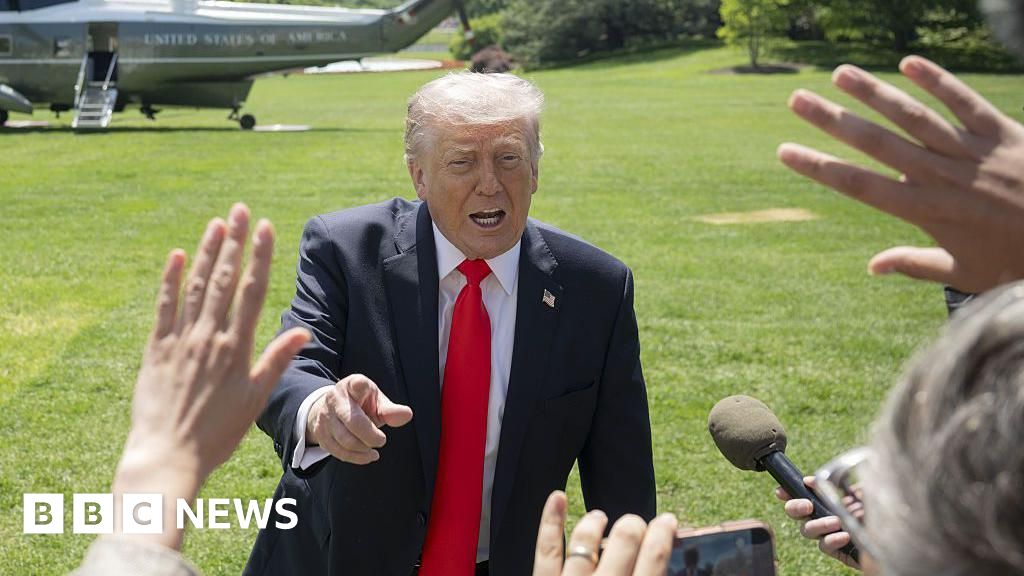
President Trump informed reporters on Friday afternoon, stating, “We just had a conversation with Iran. Let’s see what happens. But, I would say that I am not happy.” He attributed the difficulty in reaching a deal, in part, to the challenges faced by Iranian leadership following the loss of several top military officials during the conflict. Trump mentioned that he was briefed by US Central Command on Thursday with various options, ranging from aggressive military action to pursuing a diplomatic agreement.
#Trump #IranConflict #Ceasefire #WarPowersResolution #USCongress #ForeignPolicy #Diplomacy #MiddleEast #USIranRelations #PresidentialPowers






Leave a Reply