

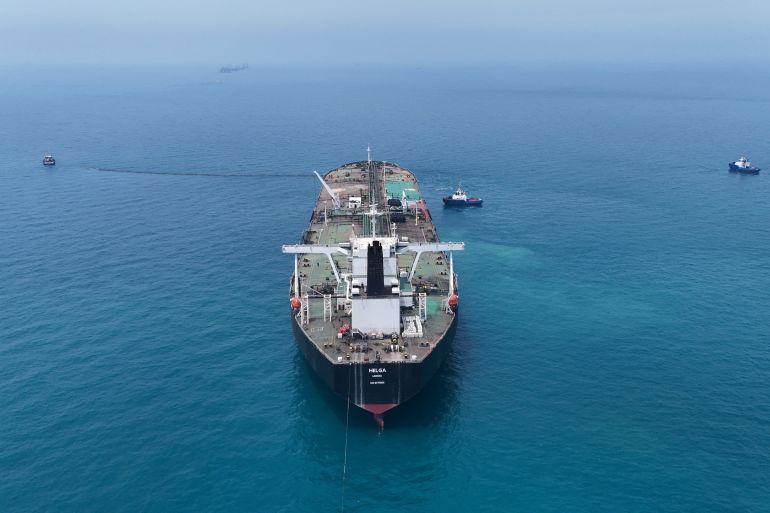
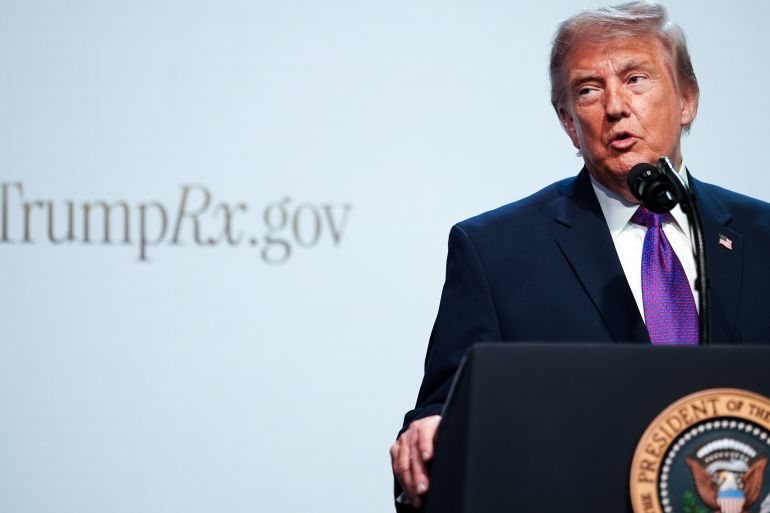
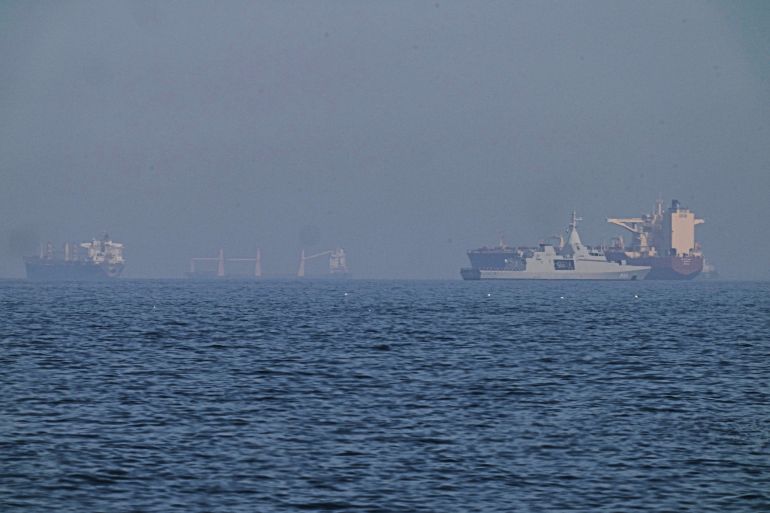
United States President Donald Trump has announced that the US will begin efforts to “help free up” ships currently stuck in the Strait of Hormuz starting Monday. This move suggests his administration intends to challenge what it describes as Iran’s blockade of the crucial strategic waterway.
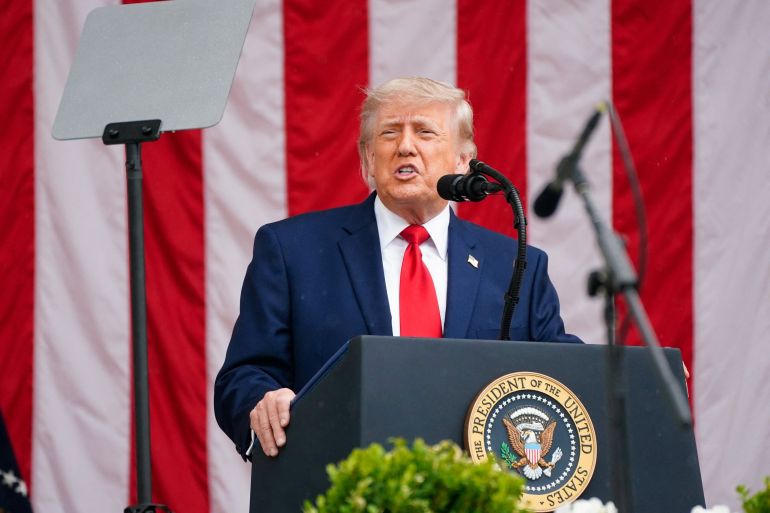
Trump stated on Sunday that he is initiating this campaign, dubbed Project Freedom, following requests from countries whose vessels are stranded in the strait. He referred to these nations as “neutral and innocent bystanders.”
In a post on Truth Social, Trump elaborated, “For the good of Iran, the Middle East, and the United States, we have told these Countries that we will guide their Ships safely out of these restricted Waterways, so that they can freely and ably get on with their business.” He did not specify which countries had sought Washington’s assistance.
Trump also noted that many of these ships are experiencing shortages of food and other essential supplies for their large crews to maintain health and sanitation. He warned that any interference with this operation would “unfortunately, have to be dealt with forcefully.”
The exact method of execution for this campaign, which Trump characterized as a humanitarian gesture, remains unclear, as does whether it will involve coordination with Tehran.
Should the initiative encounter Iranian resistance, it carries the risk of destabilizing the fragile ceasefire that came into effect on April 7.
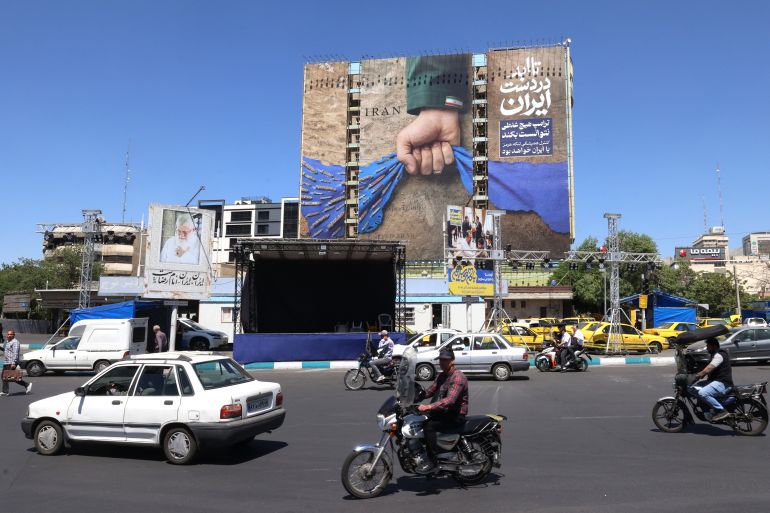
Following Trump’s announcement, Ebrahim Azizi, head of the Iranian parliament’s National Security Commission, issued a warning. He stated that any “American interference” in the strait would be considered a breach of the truce.
Azizi further commented in a post on X, “The Strait of Hormuz and the Persian Gulf would not be managed by Trump’s delusional posts! No one would believe Blame Game scenarios!”
Meanwhile, US Central Command (CENTCOM) confirmed in a statement that it would commence supporting merchant vessels “seeking to freely transit” the strait from Monday. Admiral Brad Cooper, CENTCOM Commander, emphasized the importance of this defensive mission for “regional security and the global economy,” while also affirming the continuation of the naval blockade.
CENTCOM did not provide specific details on how it plans to ensure free passage for vessels in the waterway. The US military had previously indicated it was “not ready” to escort vessels through the narrow strait, where they could potentially face fire from Iranian territory.
Despite the US-Iran truce holding for nearly a month, Tehran’s blockade of the strait and Washington’s naval siege on Iranian ports have led to oil prices soaring. In the US, petrol prices have risen to an average of $4.44 per gallon, up from under $3 before the conflict began, thereby fuelling inflation. Rising energy costs are contributing to increasing public discontent with the conflict, coinciding with a decline in Trump’s job approval ratings, according to recent public opinion polls.
Trump had previously suggested he was comfortable with the existing situation of competing blockades in the Gulf, arguing that the US siege was “more effective than bombing.” However, this new move to counter the Iranian blockade could disrupt the relative calm that has prevailed amidst growing tensions in recent weeks.
Negar Mortazavi, a senior fellow at the Center for International Policy, suggested that Iran would not perceive any US effort to escort ships out of the strait as a humanitarian mission. Mortazavi told Al Jazeera in an interview that such a move would bring US forces and assets “closer to the shooting range of Iran, potentially, if it’s going to be an escort.” She questioned, “So I don’t know if this is a threat. Is this a negotiating tactic?… Or is this really the plan of the president? I mean, we know, and Tehran has suspected, also, that there would be a potential escalation in one form. I don’t know if this could be it.”
Trump also indicated on Sunday that the path to a diplomatic resolution to the crisis remains open. He posted on Truth Social, “I am fully aware that my Representatives are having very positive discussions with the Country of Iran, and that these discussions could lead to something very positive for all.” He added that the ship movement is “merely meant to free up people, companies, and Countries that have done absolutely nothing wrong — They are victims of circumstance.”
Trump Says Iran’s Plan Unacceptable
Hours earlier, the US president stated he had rejected Tehran’s latest 14-point proposal for ending the US-Israel conflict with Iran. “It’s not acceptable to me. I’ve studied it; I’ve studied everything – it’s not acceptable,” Trump told Kan, Israel’s public broadcaster.
While the specifics of the 14-point plan remain undisclosed, Iranian officials have indicated that Tehran’s primary focus is on achieving a permanent end to the conflict and lifting the blockade against its ports before engaging in talks for a broader nuclear deal. Iranian officials confirmed on Sunday that Tehran has received a formal response from Washington to its proposal and is currently reviewing it.
Trump had previously signaled his desire to inflict more damage on Iran before the conclusion of the conflict. In a Truth Social post on Saturday, he wrote, “I will soon be reviewing the plan that Iran has just sent to us, but can’t imagine that it would be acceptable in that they have not yet paid a big enough price for what they have done to Humanity, and the World, over the last 47 years.”
Iran has maintained a stance of defiance in response to Trump’s rhetoric, asserting that it will defend itself against any attacks. The Islamic Revolutionary Guard Corps of Iran has declared it is “fully prepared” to counter any “adventures or foolishness” from Washington.
#HormuzStrait #USIranTensions #ProjectFreedom #MaritimeSecurity #GlobalShipping #MiddleEast #DonaldTrump #IranBlockade #Ceasefire #OilPrices


Leave a Reply