

A recently unveiled map, depicting two red lines extending beyond the Strait of Hormuz, has emerged as a potent symbol of the intensifying war of attrition between Iran and the United States. On Monday, Iran’s Revolutionary Guard Corps (IRGC) released this map, illustrating an expanded maritime area of control that now encompasses significant portions of the United Arab Emirates’ coastline. One line stretches from Iran’s Qeshm Island to the UAE’s Umm al Quwain emirate in the west, while another connects Iran’s Mount Mobarak with the UAE’s Fujairah in the east.
“Project Freedom” and Regional Flare-ups
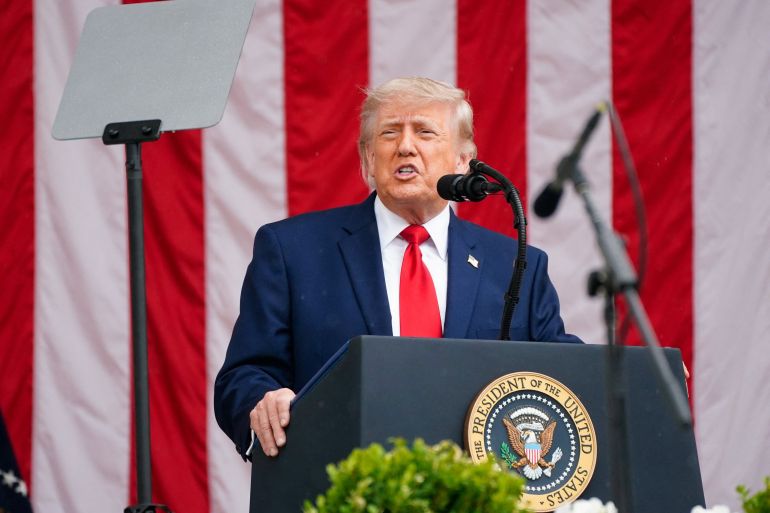
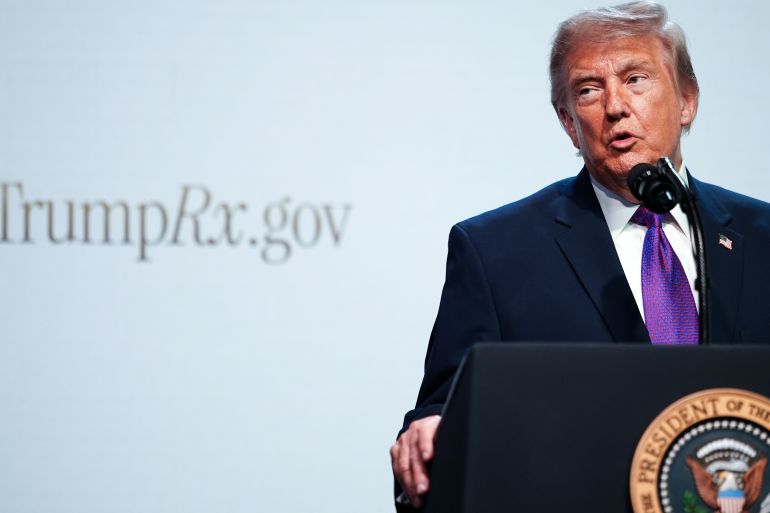
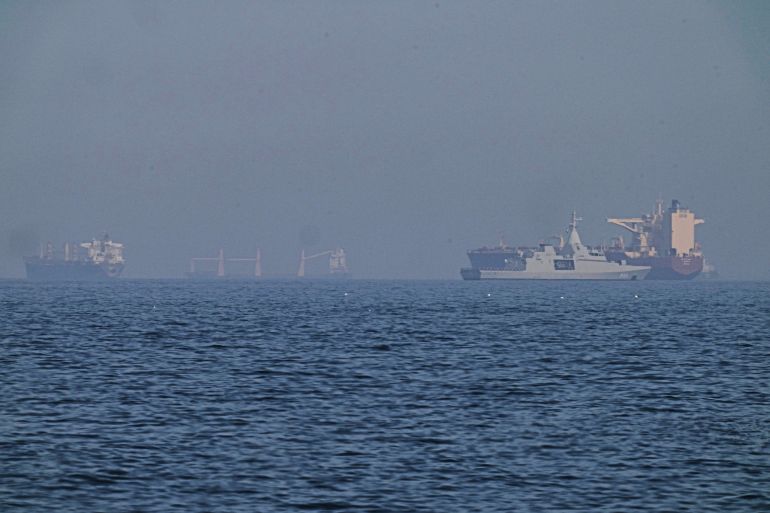
This announcement followed a new initiative by US President Donald Trump, dubbed “Project Freedom,” aimed at reopening the vital energy chokepoint. The strait had been largely closed since the US-Israel conflict with Iran began on February 28, prompting the US Navy to escort stranded tankers through the passage.
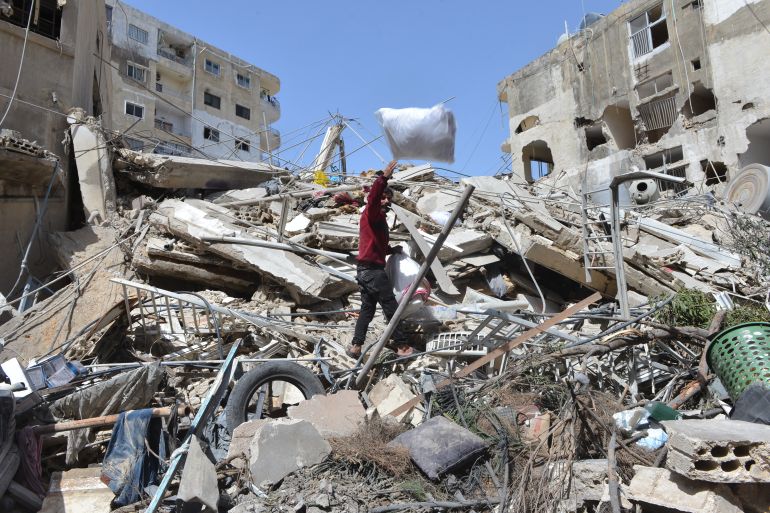
Further escalating the situation, the UAE reported drone and missile attacks on Monday, including one that ignited a fire at a major energy hub in Fujairah. These incidents mark the first of their kind in a Gulf state since the US-Iran ceasefire on April 8. The UAE attributed these attacks to Iran, which, while not officially confirming responsibility, appeared to acknowledge its involvement on Tuesday, simultaneously blaming the US and its regional actions.
Iranian Parliament Speaker Mohammad Bagher Ghalibaf stated on social media that “the continuation of the current situation is unbearable for the United States, while we have not even begun yet.”
Iran’s Indispensable Leverage in Hormuz
Despite outward confidence, analysts suggest that Iran is increasingly relying on its control of the Strait of Hormuz as vital leverage in its ongoing conflict with the US and Israel, which is formally only paused under the ceasefire agreement. This leverage, they argue, is something Iran cannot easily relinquish.
The Strait as a ‘Strategic Equalizer’
By disrupting maritime traffic in the Strait of Hormuz – a crucial passageway for approximately a quarter of global seaborne oil trade, along with significant volumes of liquefied natural gas and fertilizers – Iran has been able to impose substantial economic costs on the US and the wider world. Experts believe this capability provides Tehran with significant negotiating power as it resists US demands, such as Washington’s insistence on ending its nuclear program.
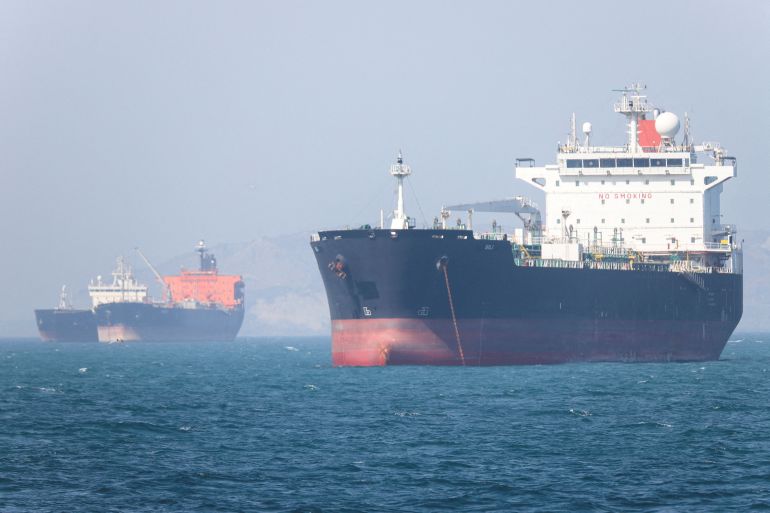
The ripple effects have been felt across energy markets, maritime transport, and global supply chains, with tanker traffic plummeting from an average of 129 in February to a virtual standstill.
Mohammad Reza Farzanegan, a professor of economics of the Middle East at Marburg University’s Center for Near and Middle Eastern Studies (CNMS), described Iran’s control of the Strait of Hormuz as a “strategic equalizer.”
Farzanegan, also a research fellow at the Hamburg Institute for Advanced Study (HIAS), told Al Jazeera, “It allows Iran to signal that pressure on Iran will not remain confined to Iran.”
He elaborated, “Iran cannot match US naval and air power symmetrically, but it has geography on its side. Hormuz is narrow, congested, and economically vital. In such a space, Iran does not need large-scale confrontation to impose costs. Mines, missiles, drones, fast boats, electronic disruption, and the threat of selective targeting can make transit risky even without a total closure.”
Essentially, Iran doesn’t need to defeat the US Navy to alter the economic calculus of war. “It only needs to make insurers, shippers, and energy traders understand that military pressure on Iran will carry costs for global markets. That uncertainty alone can raise oil and LNG prices, increase shipping costs, and transmit the conflict into inflation, food security, and financial markets,” Farzanegan explained.
Iran’s ability to deter oil tankers or LNG carriers can be achieved with various explosive projectiles. Throughout the conflict, Iran has demonstrated a sophisticated arsenal, including one-way attack drones, fast attack craft armed with anti-ship cruise missiles, rocket launchers, and potentially large numbers of anti-tank guided missiles, even from underground coastal facilities.
However, these disruptions come at a high cost for Iran. Since April 13, the US has imposed a naval blockade on all Iranian ports and shipping, severely limiting Iran’s ability to export oil, import essential goods, and maintain foreign-exchange inflows. This has led to surging prices and millions of job losses or suspensions, compounded by a near-total internet shutdown imposed by Tehran.
Farzanegan concluded, “Hormuz is probably Iran’s key leverage point at this stage, although it is a dangerous asset. It gives Iran bargaining power precisely because using it fully would damage everyone.”
Regional Power Dynamics and GCC Concerns
The fragile ceasefire between the US and Iran appeared strained on Tuesday following the UAE’s accusation that Iran attacked its Fujairah oil refinery, which exports over 1.7 million barrels per day of crude oil and refined fuels, representing about 1.7 percent of daily global demand.
This Monday attack occurred after the US military reported that two US merchant ships had successfully transited the strait with the support of Navy guided-missile destroyers. Iran denied any such crossings, despite shipping company Maersk confirming that the US-flagged Alliance Fairfax had exited the Gulf under US military escort.
Additionally, the US military claimed its forces destroyed six small Iranian boats, a claim Tehran also denied, instead asserting that the US attacks on Iranian vessels had killed five civilians.
Muhanad Seloom, assistant professor of international politics and security at the Doha Institute for Graduate Studies, noted that the Fujairah attack serves as a reminder that Iran doesn’t need to directly target US merchant ships in the Hormuz Strait; it can also strike Gulf states to maintain economic pressure on global markets.
Seloom told Al Jazeera, “[Iran is] trying to tell GCC countries that if the US attacks us, we will destroy all your infrastructure’ and cause an economic crash,” referring to the Gulf Cooperation Council members: Saudi Arabia, UAE, Qatar, Kuwait, Oman, and Bahrain.
Throughout the conflict, at least 6,413 missiles and drones have been launched at seven Arab countries in the region, with the majority targeting the UAE. Abu Dhabi has strengthened its strategic partnership with Israel – a US ally in its conflict with Iran – after normalizing ties through the Abraham Accords in 2020. The UAE also withdrew from the OPEC and OPEC+ oil cartels last month, which are effectively led by Saudi Arabia.
According to Seloom, Iran is leveraging these regional dynamics. “The bigger question [now] is what does this mean for GCC countries and how long will they practise their strategic patience?” Seloom questioned, referring to their current policy of restraint. “At some point, they may see this as an existential threat,” he warned.
#StraitOfHormuz #IranUSConflict #MiddleEastTensions #EnergySecurity #GlobalEconomy #HormuzControl #ProjectFreedom #UAEAttacks #Geopolitics #OilShipping


Leave a Reply