

More than 90 passengers from a hantavirus-stricken cruise ship will have been evacuated and flown home from the Canary Islands by the end of Sunday, Spain has announced. Fourteen Spanish nationals flown from Tenerife to Madrid face mandatory quarantine at a military hospital in the capital, followed by French and British nationals transported to Paris and Manchester, respectively.
Staff involved in the operation in Tenerife dressed evacuees in white hazmat suits over their clothes and hosed them down on the airport tarmac.
Outbreak Details and Evacuation Progress
Three people have died in the outbreak on the Dutch vessel MV Hondius, including two confirmed to have had hantavirus. Flights for Turkish, Irish, and US citizens are also scheduled for Sunday, leaving fewer than 60 passengers still aboard, according to Spain’s health secretary Javier Padilla.
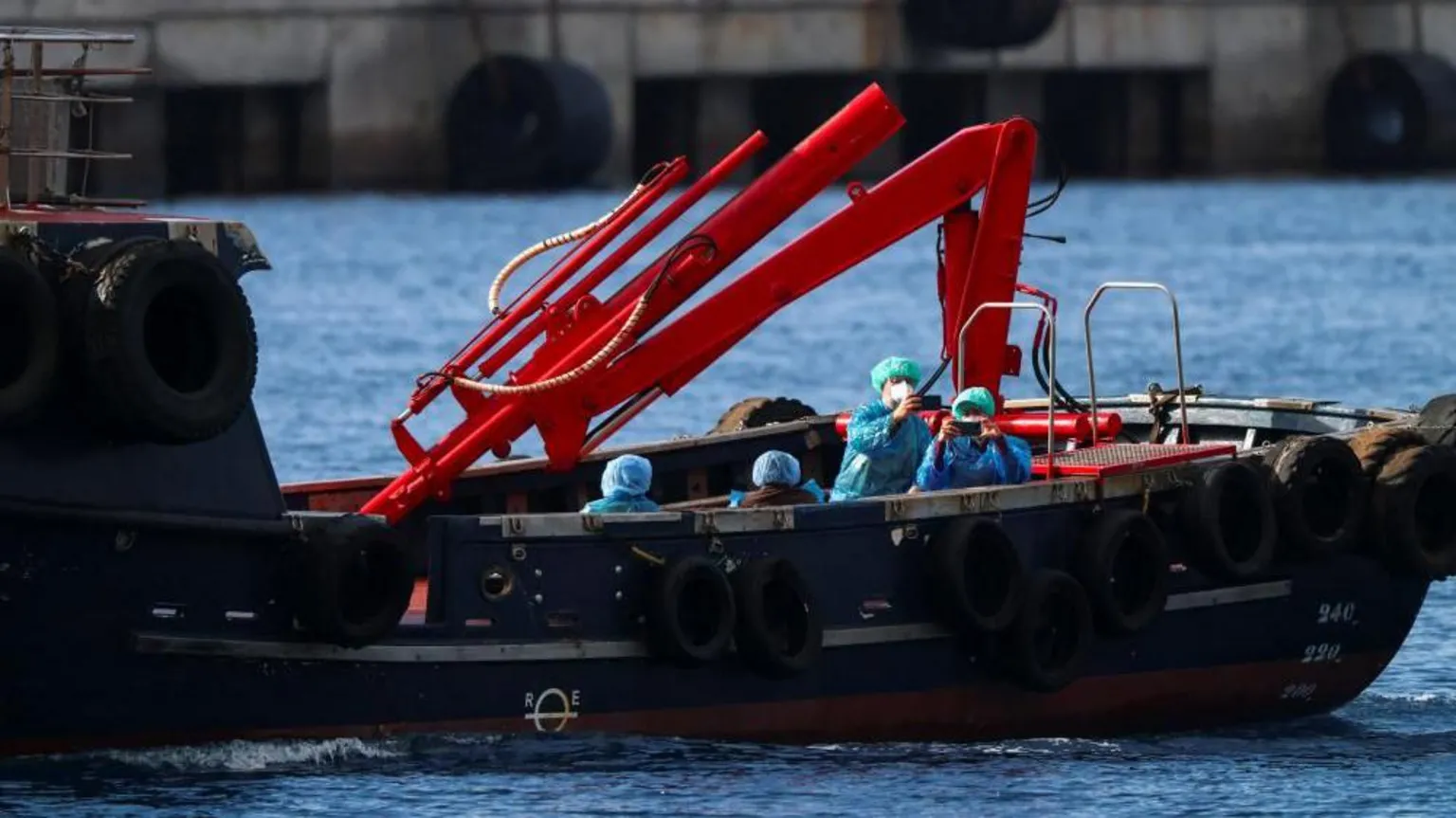
The MV Hondius docked at the port of Granadilla before dawn on Sunday, a month after the first passenger died. The sun revealed it anchored offshore, with military police boats on patrol and a major land operation to help more than 100 passengers and crew disembark. Around 07:00 local time (06:00 GMT), medical teams boarded to check everyone for signs of the virus. Passengers, all wearing white medical face masks, were seen on deck or at windows as the first evacuations began Sunday morning. Several sat socially distanced on the first evacuation boat, filming and taking photos as they approached land, where they were met by officials in white protective suits.
British passengers, clad in blue PPE, waved and gave thumbs up as they were driven past assembled media en route to the airport. They were followed by 27 individuals, including Belgian, Greek, German, and Argentine citizens, taken to the Netherlands, and then the ship’s Irish and Turkish passengers. Other flights, including to the US, are set to depart, with the final evacuation flight expected to leave for Australia on Monday.
Quarantine and Medical Preparedness
Cruise passengers face self-isolation after leaving Tenerife, a challenging prospect given the virus’s incubation period of up to nine weeks. The World Health Organization (WHO) has recommended a 42-day quarantine period from their last exposure. UK passengers will go to an isolation facility for up to 72 hours, after which medics will assess if they can isolate at home or another suitable location based on their living arrangements. Five French nationals from the Hondius will be placed in “strict isolation until further notice” after one developed symptoms on the flight home, as stated by Prime Minister Sebastian Lecornu.
Meticulous preparations were made for the ship, which was not permitted to reach shore; a one-nautical-mile security perimeter was enforced as it approached the island. Dozens of intensive care specialists were on standby at Candelaria hospital in Tenerife for any seriously ill MV Hondius passengers during transfer. A strict isolation facility with a fully equipped bed, testing kit, and ventilator for infectious diseases was prepared. “We are absolutely ready,” chief intensive care doctor Mar Martin stated, noting the abundance of protective suits, masks, and gloves. “We’ve never seen [hantavirus] before – but it’s a virus, with some complications, just like we manage every day. We are fully trained for that.”
Health minister Mónica García described the complex operation to prevent the spread of the rare Andes strain of this virus as “unprecedented.” On Saturday, she emphasized the low risk of contagion for the general population, stating, “We believe that alarmism, misinformation and confusion are contrary to the basic principles of preserving public health.”
Virus Origin and Public Reassurance
The WHO’s head, Tedros Adhanom Ghebreyesus, overseeing the disembarking in Tenerife, reported the operation was “going very well.” The outbreak has been linked to a landfill site in Argentina’s southernmost tip, popular with birdwatchers. The virus is carried by rodents, and it’s rare for it to pass between people, though rare instances of human transmission have been documented with the Andes virus strain. Infections in humans typically occur where people and rodents coexist, usually by breathing in air contaminated with virus particles from rodent urine, droppings, or saliva.
Symptoms of hantavirus infection can include fever, extreme fatigue, muscle aches, stomach pain, nausea, vomiting, diarrhoea, or shortness of breath. In severe cases, people may develop breathing difficulties, low blood pressure, and kidney failure, requiring hospital care. There is currently no widely available vaccine or specific antiviral treatment for hantavirus infections.
The WHO boss urged nervous Spaniards to trust those in charge. He acknowledged, “Your concern is legitimate, because of the experience of Covid: that trauma is still in our minds,” but added that the risk of wider contagion is low “because of how the virus works, and because of how the Spanish government has prepared to avoid any problem.”
Local Concerns and Resolution
Local anger arose when the Hondius was diverted to the island. On Friday, port workers protested outside the local parliament, concerned about safety measures. Plans were briefly disrupted when the Canary Islands president, Fernando Clavijo, initially refused port entry, citing the inability to complete disembarkation in a day, requiring central government intervention. Clavijo later claimed on TV that a hantavirus-carrying rat might “get off the ship in the middle of the night and endanger the people of the Canary Islands,” a scenario the health secretary insisted was “not a risk.”
Despite initial concerns, island residents generally seem reassured that the risk is low. Jennifer, a woman walking with her child in Santa Cruz, Tenerife’s capital, commented, “The virus is dangerous, of course. But they say you need to have very close contact to get it. If we’re careful, we hope it’s not too serious.” Not all will disembark in Tenerife; some 30 crew members will remain aboard to take the cruise ship back to the Netherlands. For most, however, weeks of fear and uncertainty at sea are finally ending, with long weeks of quarantine now ahead.
With additional reporting by Alys Davies and George Wright
#HantavirusOutbreak #CruiseShipEvacuation #MVHondius #CanaryIslands #GlobalHealth #QuarantineLife #VirusResponse #SpainHealth #WHO #PublicSafety





Leave a Reply