

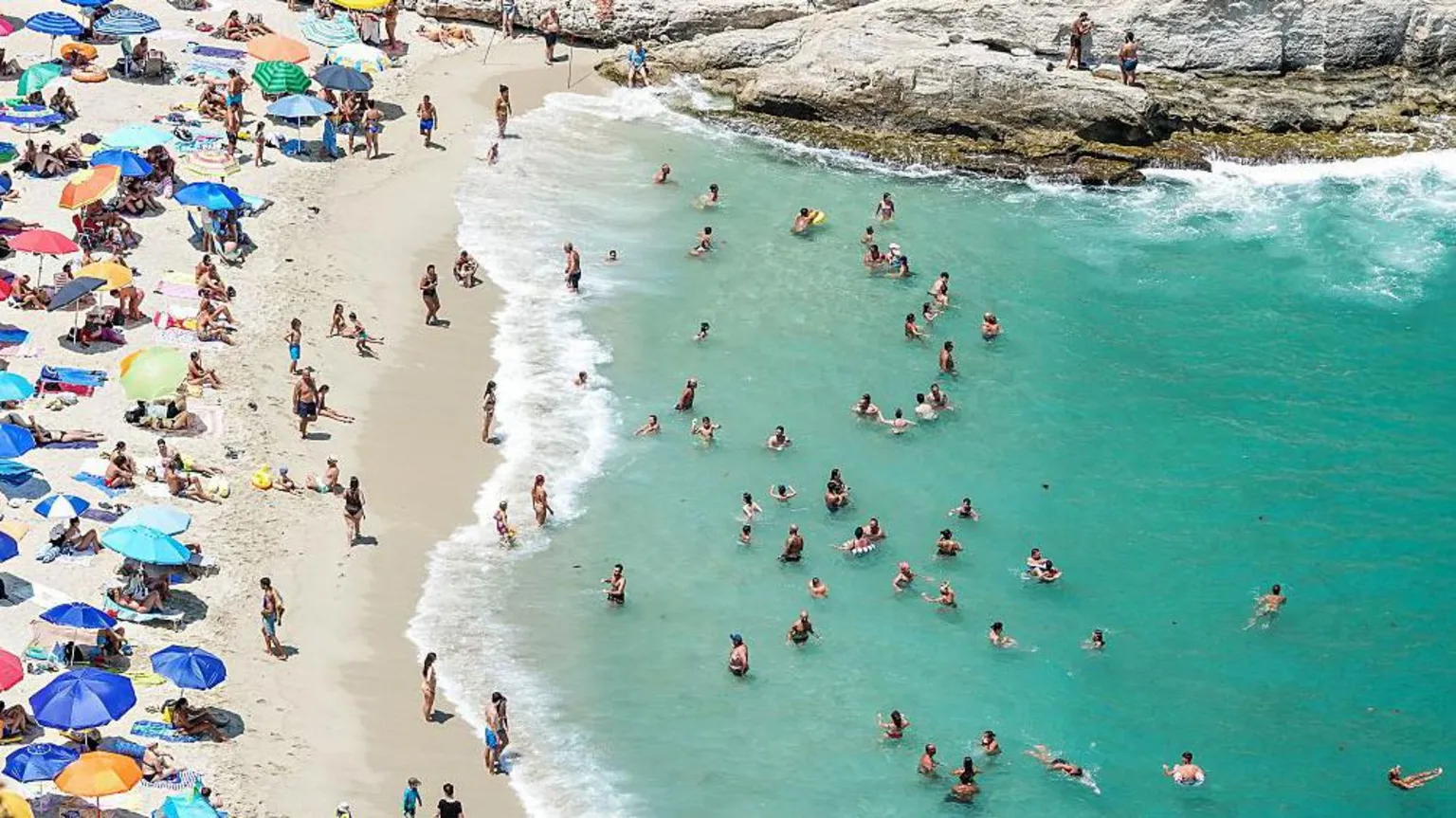
Europe’s leading travel operator, Tui, has observed a 10% fall in revenue from summer holiday bookings made by UK customers. This decline is attributed to increased caution among consumers, influenced by the ongoing geopolitical situation in the Middle East.
Shifting Demand and Capacity Adjustments
Overall, Tui noted a shift in demand from Eastern to Western Mediterranean destinations. Customers are also booking trips closer to their departure dates. In response, Tui plans to cut the number of seats it purchases from airline partners by 4-5% over the summer, while maintaining its own flying programme at current levels.
Despite reducing seat purchases, chief executive Sebastien Ebel stated he does not anticipate jet fuel shortages in the coming weeks. However, concerns have been raised that the effective closure of the Strait of Hormuz – a critical route for oil and liquefied natural gas – could lead to physical shortages in some areas in the coming months. This situation has already pushed up jet fuel prices, prompting some airlines to increase ticket prices and others to trim capacity to attract hesitant customers.
EU energy commissioner Dan Jorgensen recently told reporters that the European Union does not expect a serious jet fuel supply issue in the short term due to the broader Middle East conflict.
Financial Impact and Consumer Sentiment
In its results for the first three months of the year, Tui reported a €40 million euro (£34.7 million) hit to profits due directly to the Middle East conflict, covering repatriation, welfare costs, and lost income. The company reported an underlying loss before interest and tax of €188 million for the quarter, an improvement from the €207 million loss last year. Overall, Tui reported a 7% fall in revenue from bookings for this summer compared with last year.
Russ Mould, investment director at AJ Bell, commented that while the holiday and airline industry emphasizes no current fuel shortages, “consumers are getting jittery.” He added, “There needs to be greater clarity on alternative sources of fuel to the Middle East before the public feels convinced to hit the buy button for their summer holiday.”
Aarin Chiekrie, equity analyst at Hargreaves Lansdown, noted that consumers “have understandably become more cautious about splashing out on a holiday.” However, he observed that holidaymakers don’t appear to be abandoning their plans entirely, but rather “simply leaving it until later to book. And while that’s not ideal, it’s better than complete demand destruction.”
Broader Industry Trends
This trend aligns with recent research from Barclays, which indicated that spending at travel agents was down 7.5% in April, and overall spending on holidays and travel fell by 5.7% in April, compared with last year.
Dame Irene Hays, owner of UK independent travel agency Hays Travel, highlighted that the travel industry is “suffering” due to uncertainty surrounding the cost of living and the situation in the Middle East. However, she noted that the cruise industry is performing very well, and tour holidays are “incredibly buoyant.” Destinations outside of America and the Middle East, such as Canada, Japan, Australia, South Africa, and Thailand, have seen significant success.
Dame Irene also pointed out that over the last 12 months, people have been booking closer to their departure dates. “Where previously people would be booking seven months plus in advance, that’s narrowed to 16 weeks,” she said, advising that earlier booking is still beneficial for choice. She stressed the importance of “some removal of this level of uncertainty and some clarity as quickly as possible.”
#TravelIndustry #Tui #SummerHolidays #UKTravel #MiddleEastConflict #JetFuel #EconomicImpact #ConsumerConfidence #Tourism #TravelTrends







Leave a Reply