


United States President Donald Trump has announced the postponement of a “scheduled attack” against Iran, attributing the decision to requests from regional leaders in the Middle East. Trump stated that this reversal was prompted by the commencement of “serious negotiations.” On his Truth Social account, he expressed optimism, writing, “A Deal will be made, which will be very acceptable to the United States of America, as well as all Countries in the Middle East, and beyond.”
The specifics of any breakthrough in the stalled negotiations to resolve the conflict involving the US, Israel, and Iran remain unclear. However, Trump acknowledged that the intervention of leaders such as Qatari Emir Tamim bin Hamad Al Thani and Saudi Crown Prince Mohammed bin Salman influenced his change of mind.
“I have instructed Secretary of War, Pete Hegseth, The Chairman of The Joint Chiefs of Staff, General Daniel Caine, and The United States Military, that we will NOT be doing the scheduled attack of Iran tomorrow,” Trump further stated. He also clarified that he has “instructed them to be prepared to go forward with a full, large scale assault of Iran, on a moment’s notice, in the event that an acceptable Deal is not reached.”
This latest announcement follows days of heightened rhetoric directed at Iran, with Trump having previously warned that “the clock is ticking” for Iranian officials to reach an agreement, or face severe consequences. Pakistan has played a mediating role since the US, alongside Israel, engaged in attacks on Iran on February 28, which initiated the conflict.
Sputtering Negotiations
Trump has consistently maintained that the conflict was essential to prevent Iran from developing nuclear weapons, a claim Iran has repeatedly denied. In his recent post, the US president reiterated this stance, declaring nuclear weaponry a “red line.” He emphasized, “This Deal will include, importantly, NO NUCLEAR WEAPONS FOR IRAN.”
Beyond restricting Iran’s uranium enrichment capabilities, the Trump administration has aimed to disrupt Iran’s connections with regional allies and dismantle its missile and naval forces. Iran, however, has characterized Trump’s demands as excessive. In response, Iran has called for the unfreezing of its assets and the lifting of international sanctions on its economy.
The Strait of Hormuz has emerged as another contentious issue, with Iran impeding trade through the crucial waterway, prompting the US to impose its own naval blockade.
Earlier on Monday, Iran’s President Masoud Pezeshkian affirmed on social media that his government is committed to protecting the nation’s interests. “Dialogue does not mean surrender,” Pezeshkian stated. “The Islamic Republic of Iran engages in dialogue with dignity, authority, and in defense of the nation’s rights, and will not compromise on the legal rights of its people and country.”
Iran and the US reached a ceasefire agreement on April 8, which followed a series of strong warnings from Trump, including a statement that “a whole civilization will die” if Iran did not alter its governance. This ceasefire, however, has proven fragile, with both parties alleging violations by the other.
For example, in late April, Trump initially announced plans to send his envoy Steve Witkoff and son-in-law Jared Kushner to Pakistan for conflict negotiations, but later reversed this decision, withdrawing their participation due to dissatisfaction with the progress of the dialogue.
A Political Liability
The conflict with Iran has also presented a political challenge for Trump, as his Republican Party prepares for competitive midterm elections in the US this November. A New York Times poll released Monday morning indicated that 64 percent of US adults believed the decision to go to war with Iran was incorrect.
According to Pentagon officials, the war has incurred costs of at least $29 billion to date, with some experts suggesting the actual figure could be significantly higher.
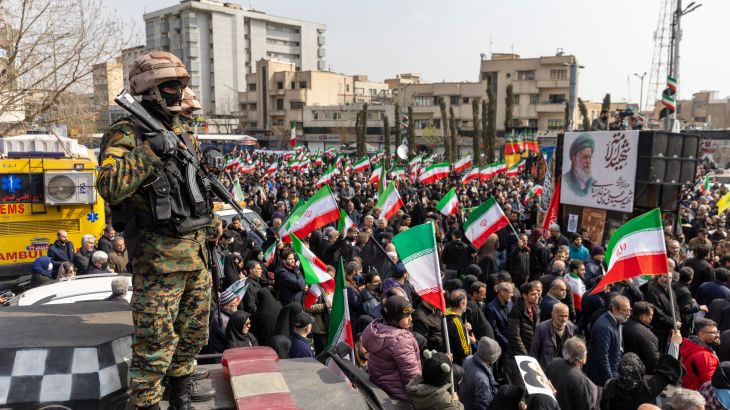
Reporting from Tehran, Al Jazeera correspondent Almigdad Alruhaid observed that Trump’s rhetoric has had little impact on Iranian leaders. “They are projecting defiance rather than concessions against this type of rhetoric from Donald Trump. And also they are insisting about mutual trust, mutual respect,” he stated, adding, “This type of language is not acceptable here.”
However, some analysts suggest that Trump’s latest message might be aimed at Gulf states such as Qatar, Saudi Arabia, and the United Arab Emirates, which have experienced missile attacks due to the ongoing conflict. Dania Thafer, executive director of the Gulf International Forum, an institute specializing in Gulf region analysis, noted that these countries are seeking to prevent further escalation. “What they want is a solution to the crisis that they are facing,” she explained.
Thafer further pointed out that Trump’s priorities for the conflict do not necessarily align with those of US allies in the Gulf. “It’s noteworthy to mention, from the Gulf states’ perspective, the nuclear issue is not the priority,” Thafer elaborated. “From their perspective, the opening of the Strait of Hormuz and addressing Iran’s missile programme that has launched thousands of missiles at the Gulf States are the core issues.”
With the closure of the strait contributing to rising fuel prices, US Treasury Secretary Scott Bessent announced that the Trump administration would grant “the most vulnerable nations” temporary access to blocked Russian oil for 30 days. “This extension will provide additional flexibility, and we will work with these nations to provide specific licenses as needed,” Bessent stated. “This general license will help stabilize the physical crude market and ensure oil reaches the most energy-vulnerable countries.”
#Trump #Iran #MiddleEast #Negotiations #USForeignPolicy #StraitOfHormuz #NuclearDeal #Diplomacy #Geopolitics #ConflictResolution



Leave a Reply