

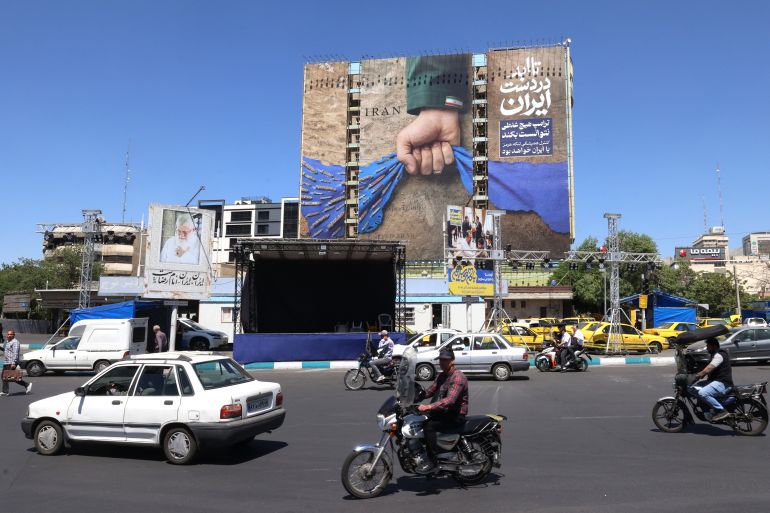
A high-level Iranian delegation has arrived in Qatar, engaging in crucial discussions with the United States aimed at securing a deal to end the ongoing conflict that has significantly impacted the Middle East and the global economy. Reports on Monday evening confirmed the presence of Iran’s Foreign Minister Abbas Araghchi, Parliament Speaker Mohammad Bagher Ghalibaf, and Central Bank Governor Abdolnaser Hemmati in Doha. Their agenda focuses on resolving key points of contention regarding a potential agreement to conclude the nearly three-month-long US-Israel war involving Iran.
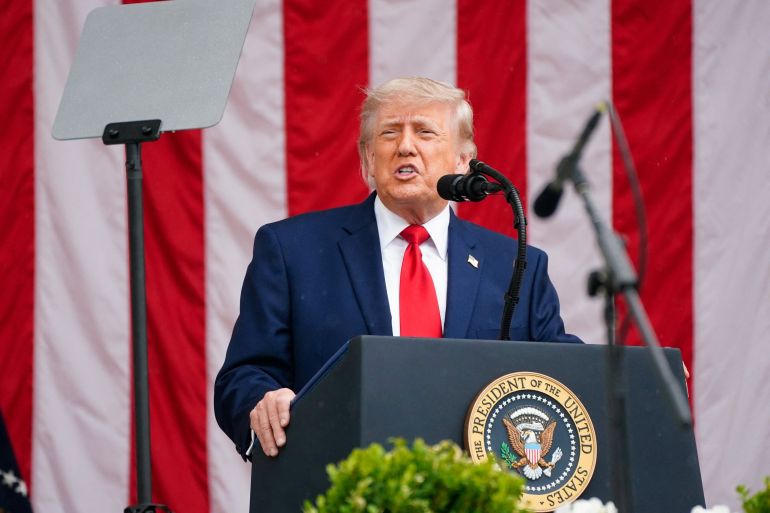
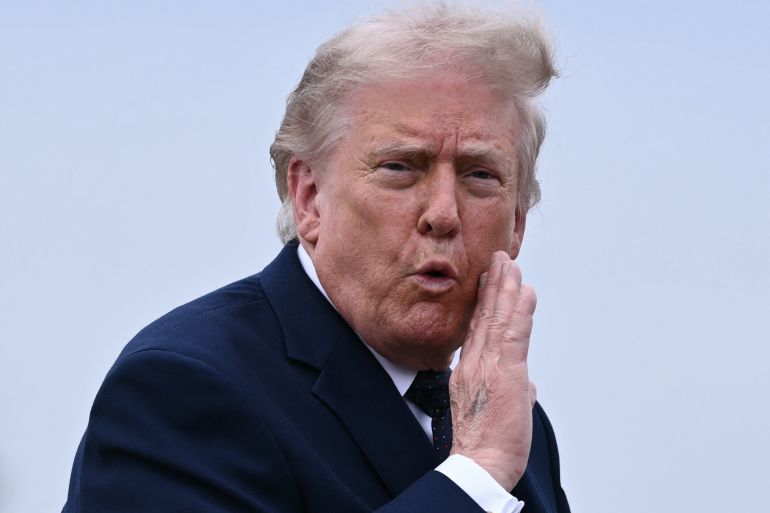
These diplomatic efforts in Qatar follow recent statements from US President Donald Trump, who emphasized earlier on Monday that any agreement with Iran must be “meaningful,” warning that “no deal” remains a viable alternative. This comes days after President Trump had suggested that an agreement with Tehran was “largely negotiated,” despite both sides periodically expressing fluctuating sentiments about the progress of the talks.
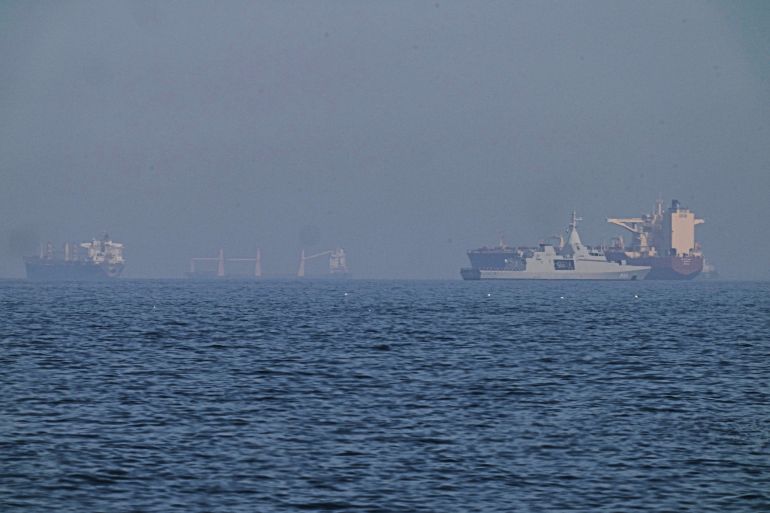
A ceasefire between Washington and Tehran has been in effect since April 8, with mediators actively working towards a negotiated settlement. Despite this, Iran has maintained its blockade of the Strait of Hormuz for most shipping, while the US continues to enforce a blockade on Iranian ports.
**Esmaeil Baghaei, spokesman for the Iranian Ministry of Foreign Affairs, indicated that Iran and the US “have reached a conclusion on a large portion of the discussion topics.”** However, he cautioned that this progress “does not mean that the signing of an agreement is imminent.” Speaking at a press conference in Tehran, Baghaei clarified that current discussions are not centered on the nuclear issue, but rather “on ending the war,” which commenced on February 28. He also reiterated concerns about “no guarantees” that the US would uphold its commitments in any future deal, adding that Tehran is not swayed by “threats.”
Earlier, US Secretary of State Marco Rubio stated that Washington aims to secure a robust agreement with Iran, implying that an alternative approach would be considered if a deal is not reached. During a visit to New Delhi on Monday, Rubio remarked, “We thought we might have some news last night, maybe today. I wouldn’t read too much into it.” He added, “We have what I think is a pretty solid thing on the table in terms of their ability to open up the strait, get the strait open.”
On Sunday, President Trump posted on Truth Social, asserting that the US blockade would “remain in full force and effect until an agreement is reached, certified, and signed.” He advised that “Both sides must take their time and get it right.”
Confidence Building Measures
Omar Rahman, a fellow at the Middle East Council on Global Affairs, viewed the Iranian delegation’s presence in Qatar as a **”good sign.”** However, he highlighted that unresolved issues, particularly concerning the Strait of Hormuz, continue to pose a significant obstacle. Rahman told Al Jazeera that “Iran has found a tremendous amount of leverage and power through its de facto control of the global economy.”
A senior Trump administration official informed Reuters on Monday that Iran had **”agreed in principle”** to dispose of its highly enriched uranium and reopen the Strait of Hormuz, in exchange for the US lifting its naval blockade. Japan’s Nikkei later reported that discussions regarding a plan to open this crucial waterway, responsible for approximately one-fifth of global oil and gas exports, were still underway. An unnamed Middle Eastern diplomatic source cited by Nikkei suggested that Iran would clear mines from the strait within a 30-day period post-agreement, allowing free and safe navigation for all ships, and would cease collecting transit fees. The Japanese publication also indicated that the latest talks proposed a 60-day extension of the ceasefire, during which discussions on Iran’s nuclear program would take place. While Al Jazeera could not independently verify these specific details, sources suggest that broader issues beyond the ceasefire and the strait, including Iran’s enriched uranium, are being deferred, with the immediate focus on confidence-building measures. The US official confirmed Washington’s priority of first reopening the strait and lifting the naval blockade, acknowledging that detailed negotiations on nuclear measures would require more time. The official, however, disputed claims that Iran had not accepted the disposal of its enriched uranium, clarifying that “It’s a question about how.”
The inclusion of Iran’s Central Bank governor in the delegation to Qatar suggests active discussions regarding the **unfreezing of assets**, a key demand for Iran, as reported by Al Jazeera’s Almigdad Alruhaid from Tehran.
Key Points of Contention and Mediation Efforts
Prior to the Iranian delegation’s arrival in Qatar, key mediator Pakistan saw its officials in China on Monday. Pakistan’s military chief Asim Munir and Prime Minister Shehbaz Sharif held talks with Chinese leaders in Beijing. China has affirmed its commitment to collaborate with Pakistan to “make positive contributions to the early restoration of peace and stability in the Middle East.” Munir had also been in Tehran last week with Interior Minister Mohsin Naqvi, participating in mediation efforts to de-escalate the conflict. Charles Kupchan, a senior fellow at the Council on Foreign Relations, commented on the fluctuating nature of US-Iran interactions, suggesting that a deal is unlikely to be reached soon. He told Al Jazeera, “I think this is kind of par for the course for the Trump administration. One day, they walk this way. The next day, they walk that way.” Kupchan added, “Part of the conversations are private. Part of it is public diplomacy, but until we have a concrete sense that the Iranians are likely to say ‘yes’ to getting rid of their highly enriched uranium … and to opening this Strait of Hormuz with no restrictions, I think one can say that we’re still far away from a lasting deal.”
Abraham Accords as a Condition
Despite acknowledging that no deal is imminent, President Trump has introduced a demand for Muslim-majority countries across the Middle East and beyond to sign the Abraham Accords, normalizing relations with Israel, as part of any agreement with Iran. In a detailed social media post on Monday, the US president insisted that leaders of countries he engaged with on Saturday—including Egypt, Jordan, Qatar, Pakistan, Saudi Arabia, and Turkiye—should join the accords. Trump wrote, “I stated that, after all the work done by the United States to try and pull this very complex puzzle together, it should be mandatory that all of these Countries, at a minimum, simultaneously, sign onto the Abraham Accords.” The Abraham Accords, signed in 2020, normalized ties between Israel and four Arab states: the United Arab Emirates, Bahrain, Sudan, and Morocco. While lauded by Washington as a diplomatic breakthrough, these agreements have faced considerable criticism for sidelining the issue of a Palestinian state, and public opposition across the region remains substantial. Trump allowed for limited exceptions for one or two countries with valid reasons but warned that any nation unwilling to sign would be signaling “bad intention” and would be excluded from the deal. He specifically urged Saudi Arabia and Qatar to sign the accords immediately, with other nations to follow.
#IranUSATalks #QatarDiplomacy #MiddleEastPeace #CeasefireNegotiations #StraitOfHormuz #GlobalEconomy #AbrahamAccords #IranNuclearDeal #InternationalRelations #DohaTalks


Leave a Reply