

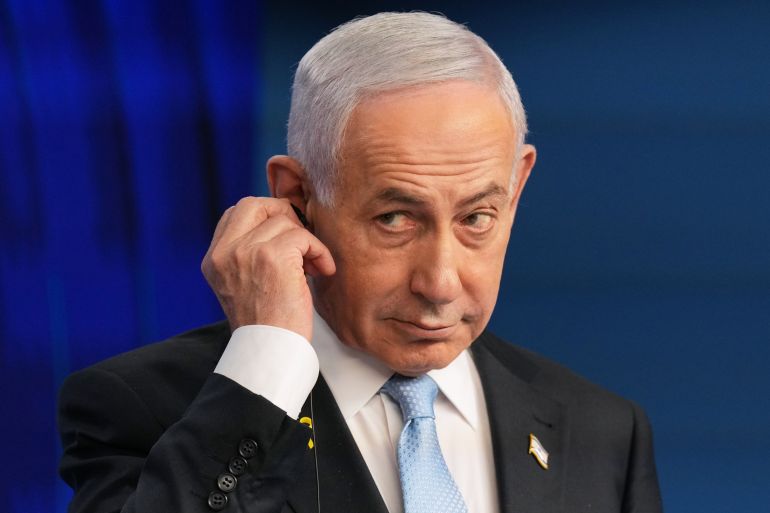
A recent poll has revealed that an overwhelming number of Israelis oppose the US-Iran ceasefire deal declared last week, and many anticipate a return to conflict. These findings align with observations from analysts who suggest that Israeli political leaders had promised a decisive confrontation with Iran, only for the conflict to conclude with the Iranian government still in power.
According to the poll, published by the Israeli Institute for National Security Studies (INSS) on Sunday, 61 percent of respondents expressed opposition to the ceasefire. This agreement was announced just 90 minutes before United States President Donald Trump’s Tuesday deadline, during which he had threatened to launch devastating attacks on Iran’s civilian infrastructure. Furthermore, 73 percent of those surveyed expected fighting with Iran to resume within the next year.
The poll also indicated that a majority of respondents – 69 percent – support continued military action in Lebanon, despite ongoing talks between the Lebanese and Israeli governments that commenced in the US on Tuesday. Israel has reportedly continued its attacks on Lebanon, claiming exclusion from the ceasefire, resulting in over 300 fatalities in the past week from strikes that have drawn widespread international condemnation.
Many Israelis had expected Prime Minister Benjamin Netanyahu to finally fulfill his long-standing promise to neutralize what he has consistently framed as an existential threat from Iran. However, the war launched by Israel with US support against Iran on February 28, despite its significant death toll and escalating economic costs, has reportedly failed to achieve that objective.
Instead, a two-week ceasefire has been negotiated, reportedly without Israel’s involvement, leaving the Iranian state enduring, though battered. Tehran’s ballistic missile arsenal remains partly intact, and its strategic influence may have even expanded, particularly through its control over the economically crucial Strait of Hormuz.
Dahlia Scheindlin, an American-Israeli political consultant, pollster, and journalist who has written about public resistance to a ceasefire, stated, “He [Netanyahu] did oversell how much the war could accomplish: regime collapse and completely destroying the nuclear program and ballistic missiles, which couldn’t be accomplished.” She suggested that a significant challenge for the Israeli leader stems from his long-standing public opposition to negotiations with Iran, including his resistance to previous agreements that aimed to limit its nuclear program in exchange for sanctions relief – a type of agreement the US now appears to be considering.
Scheindlin added, “For many years and decades, [Netanyahu] had completely destroyed and delegitimised the idea that diplomacy and agreements – negotiated agreements – would have any impact,” referring to Netanyahu’s past characterization of US-Iran talks as an existential threat to Israel.
Not Just Netanyahu
None of Israel’s leading political figures have questioned the rationale behind attacking Iran. Instead, opposition leaders, such as Yair Lapid, have largely supported Netanyahu’s stance. Lapid reportedly told journalists he backed a “just war against evil,” expressing doubt about Iran’s ability to sustain a prolonged conflict against Israel and the US.
However, Lapid has criticized the US ceasefire, viewing it as an apparent concession by Netanyahu. “[Netanyahu] has turned us into a protectorate state that receives instructions over the phone on matters pertaining to the core of our national security,” Lapid wrote on social media following the ceasefire.
Similarly, left-wing Democrats leader Yair Golan was sharply critical. “Netanyahu lied,” he wrote. “He promised a ‘historic victory’ and security for generations, and in practice, we got one of the most severe strategic failures Israel has ever known.”
Alon Pinkas, a former Israeli ambassador and consul general in New York, told Al Jazeera that none of Netanyahu’s critics or rivals questioned the narrative of Iran posing an existential threat – a consensus largely fostered by Netanyahu across Israel’s public and political spheres. “This is why they’re disappointed and this is why they’re beginning to blame Netanyahu,” Pinkas stated, pointing to the deadly attacks on Lebanon a day after the ceasefire as an attempt to divert attention from the US agreement and gain public favor by targeting the Lebanese armed group, Hezbollah. He noted that the long-term effectiveness of this strategy in placating the Israeli public remains uncertain.
Constrained
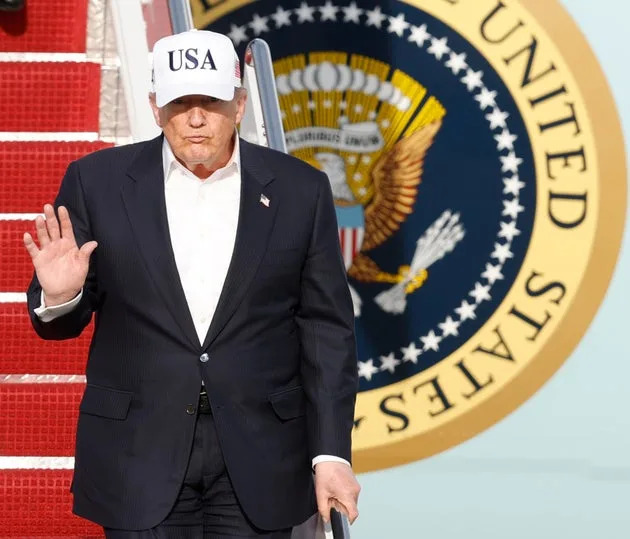
While many in Israel may express frustration with the ceasefire, they appear to have little alternative but to align with the leadership of the US and President Trump.
Despite seemingly falling short of his electorate’s expectations and appearing diplomatically marginalized, Netanyahu has publicly endorsed the US blockade of the Strait of Hormuz, asserting that the two nations “are in constant coordination.”
“The claims that there is a rift between us are completely false,” he declared on Monday. “The exact opposite is true. Anyone who was present in these conversations, and in the daily discussions we hold with the president and his team, can attest to that.”
Mitchell Barak, a political pollster and former Netanyahu aide from the 1990s, suggested that Israel is unlikely to diverge from the US while it leads negotiations with Iran, regardless of the actual state of their relationship. “I really can’t see Netanyahu attacking Iran without Trump’s green light,” he told Al Jazeera. “It’s like I’ve said before, Israel has no foreign policy. It handed it over to the US years ago.”
Regarding any potential political embarrassment for Netanyahu, Barak was dismissive. “You cannot humiliate Netanyahu. Trust me. It cannot be done. He is always convinced he has made the right decision at the right time.”
However, Pinkas cautioned that while Netanyahu might be immune to personal embarrassment from setbacks with Iran, he is not immune to political reversals. Pinkas noted, “A victory over Iran, and especially a victory that he had been seen as enlisting US support for, would have eclipsed the conversation over the events of October 7, which many people still associate him with,” referring to the Hamas-led attack that day, which resulted in 1,139 deaths and for which Netanyahu is still accused of avoiding responsibility, preceding Israel’s war on Gaza, which has led to over 70,000 Palestinian fatalities. “Obviously, things are unlikely to remain as they are, but as they stand – in the public mind – that’s now two disasters Netanyahu will be associated with,” Pinkas concluded.
#Netanyahu #IsraelPolitics #Ceasefire #USIran #MiddleEastConflict #GazaWar #StraitOfHormuz #IsraeliPublicOpinion #PoliticalBacklash #IranThreat





Leave a Reply