

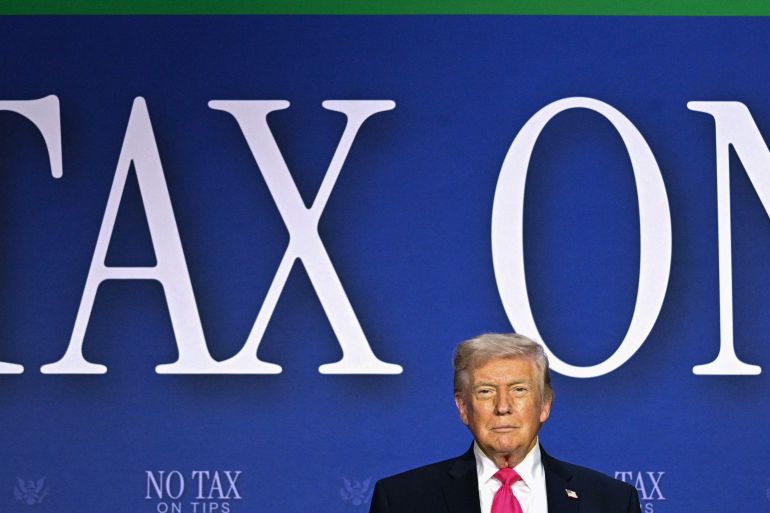
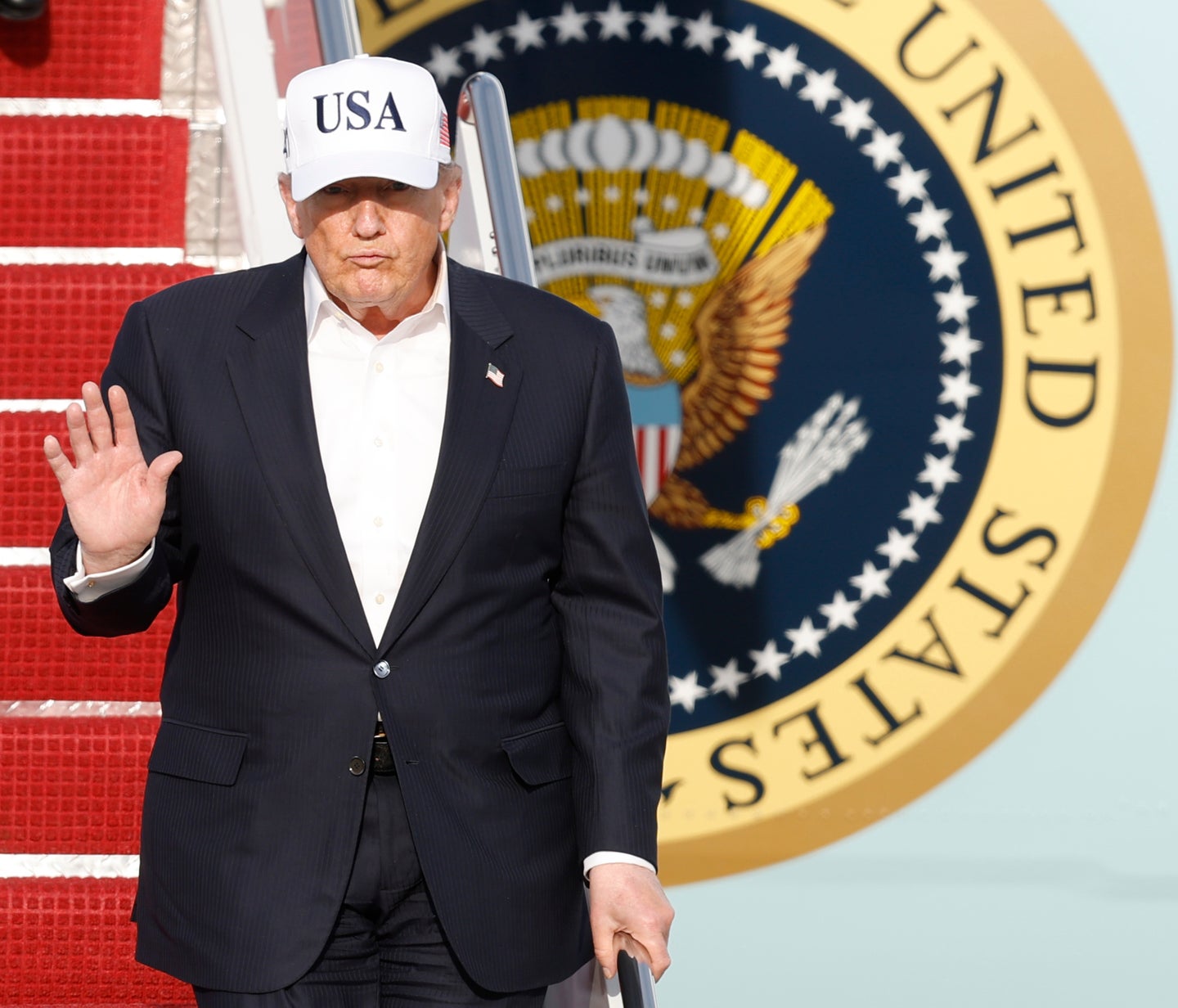
United States President Donald Trump has issued a series of rapid-fire messages regarding the US-Israeli war with Iran, asserting that his administration has secured significant concessions ahead of a potential new round of ceasefire discussions.
Posting on Truth Social on Friday, Trump’s statements included claims that Iran had agreed to open — and “never close” — the Strait of Hormuz. He also alleged that Tehran would hand over its “nuclear dust” and that Israel would be “prohibited” from launching attacks in Lebanon.
Iran has confirmed the re-opening of the Strait of Hormuz for the “duration” of the current pause in fighting, which is scheduled to conclude early next week unless a new agreement is reached. However, Tehran has not officially responded to many of Trump’s more far-reaching claims.
Despite these outstanding questions, the US president adopted a celebratory tone, declaring Friday “A GREAT AND BRILLIANT DAY FOR THE WORLD!” Separately, he informed Bloomberg News that he anticipated talks to progress on Sunday, with a permanent ceasefire deal seemingly within reach.
Expert Analysis on Trump’s Claims
Yezid Sayigh, a senior fellow at the Carnegie Middle East Center, told Al Jazeera, “We’re not seeing the full picture,” highlighting Trump’s tendency for hyperbole and several unresolved issues. “But this does suggest a positive momentum towards something that may end up being a comprehensive deal.”
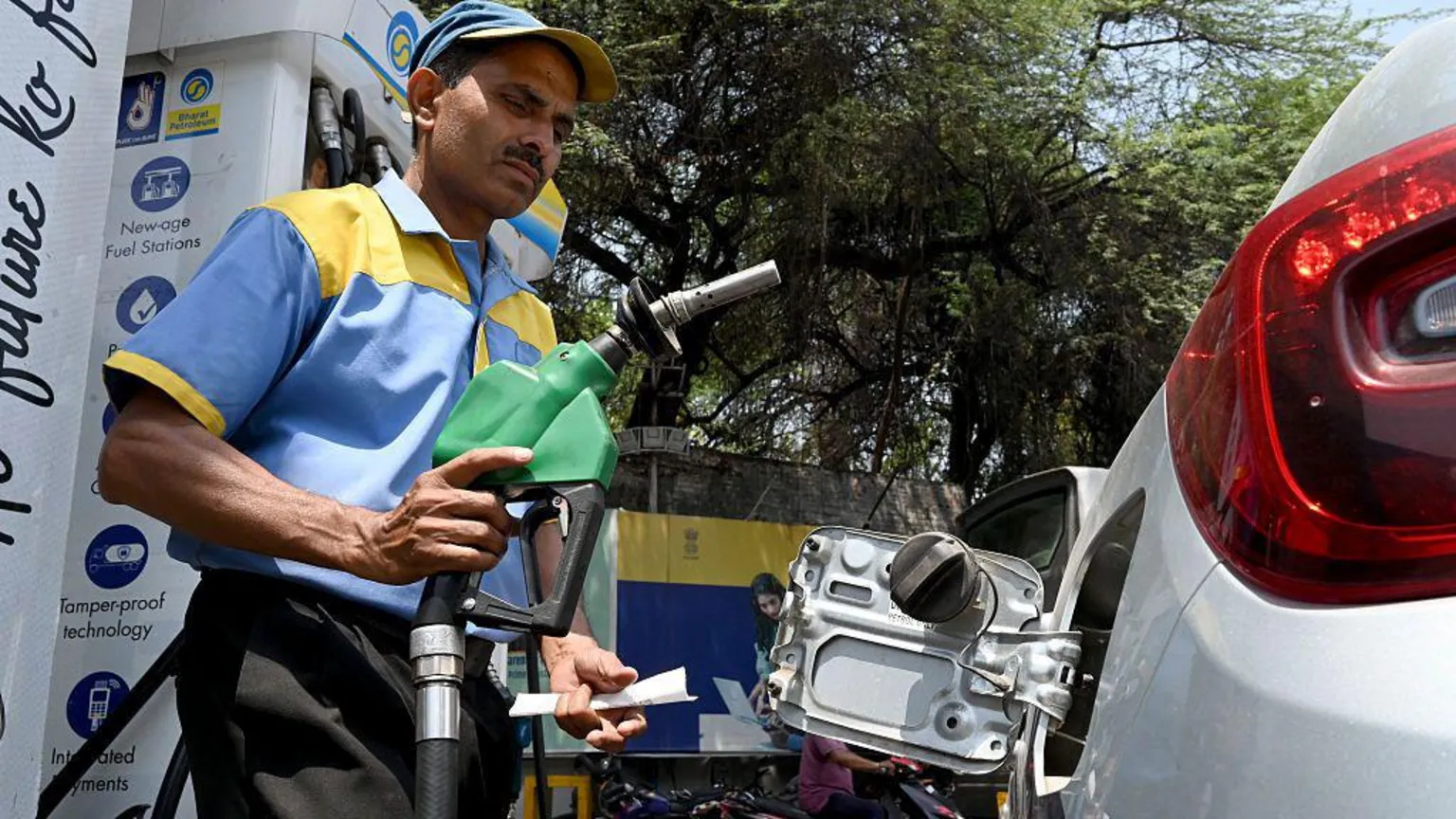
Sayigh further suggested that Trump might have ulterior motives for his optimistic tone, especially at a time when restrictions in the Strait of Hormuz have been driving up prices for various commodities, from fuel to fertilizer. “It is very interesting that President Trump is putting such a positive spin on things, not only to encourage markets and talk down oil prices and talk stock market prices up,” Sayigh noted, “But also, I suspect, because he’s preparing the ground for more revelations about what is being negotiated with Iran.”
Strait of Hormuz: Conflicting Details
While some of Trump’s social media claims appeared to be partially corroborated by a separate statement from Tehran, the details revealed discrepancies between Trump’s position and Iran’s.
Iran’s Foreign Minister Abbas Araghchi announced on Friday that, in light of a 10-day pause in fighting in Lebanon, “the passage for all commercial vessels through Strait of Hormuz is declared completely open for the remaining period of ceasefire.” Trump swiftly echoed this, writing that the strait is “FULLY OPEN AND READY FOR FULL PASSAGE.”
However, a senior Iranian military official reportedly told state media that only non-military vessels would be permitted to transit the strait, and only with permission from the Iranian Revolutionary Guard Corps (IRGC) Navy. Trump subsequently went further, claiming “Iran has agreed to never close the Strait of Hormuz again.”
Alexandru Hudisteanu, a maritime security expert, told Al Jazeera that there has been no confirmation from Iran regarding such a long-term pledge. “We know, for instance, that over the last six weeks or so of the war, the Iranian leadership grasped the fact that its control over the Strait of Hormuz gave it the kind of deterrence that its nuclear programme, its ballistic missiles, its regional proxies, had never actually given it,” he explained. “So I don’t think that the Iranian leadership would have made this kind of commitment unequivocally and irrevocably.”
US Blockade and Sea Mines
Lingering questions also surrounded another of Trump’s posts concerning the US decision to blockade the strait. Trump stated that the ongoing US naval blockade of Iranian ports in the Gulf “WILL REMAIN IN FULL FORCE AND EFFECT AS IT PERTAINS TO IRAN, ONLY, UNTIL SUCH TIME AS OUR TRANSACTION WITH IRAN IS 100% COMPLETE.”
However, media reports suggest that Iran might close traffic in the Hormuz Strait if such a blockade were to remain in effect. Iran’s Fars News Agency, closely aligned with the IRGC, reported that Tehran considers the continuation of the US blockade a violation of the current ceasefire and would again close the strait if it was not lifted.
Regarding sea mines, Trump also posted on Truth Social that “Iran, with the help of the U.S.A., has removed, or is removing, all sea mines!” Yet, Reuters reported that a US Navy advisory on Friday stated the “status of TSS mine threat is not fully understood. Consider avoidance of that area,” referring to the Traffic Separation Scheme, the two-way shipping lane in the strait.
Iran’s Nuclear Programme and ‘Nuclear Dust’
A significant point of contention in US-Iran negotiations has been the future of Iran’s nuclear programme. While Iran denies seeking nuclear weapons, the US and Israel asserted that their initial attacks in the war, on February 28, were aimed at preventing Iran from developing one.
On Friday, Trump again appeared to claim that Iran would surrender its enriched uranium stockpile, writing on Truth Social that “the U.S.A. will get all Nuclear ‘Dust’.” The term “dust” seems to refer to the US decision to bomb three key nuclear sites in Iran on June 22, 2025. Trump has repeatedly claimed these attacks “obliterated” Iran’s nuclear programme, despite conflicting evidence.
Following his post, Trump clarified to Reuters that the US would work with Iran “at a nice leisurely pace, and go down and start excavating with big machinery” to retrieve the uranium stockpile at the sites. “We’ll bring it back to the United States,” he added, also telling Bloomberg that Iran had agreed to suspend its nuclear programme indefinitely.
Reporting from Tehran, Al Jazeera correspondent Ali Hashem stated there has been no confirmation of such an agreement. “This is a big claim here, because the Iranians have always said that they’re not going to accept such a condition,” Hashem said. “What we’ve heard from our sources is that the issue of enrichment and the sunsets of any conditions is going to be left till the end of the talks.”
Trump also maintained that “no money will exchange hands in any way, shape, or form,” another claim unconfirmed by Iran. Hashem added that the release of billions of dollars in frozen Iranian funds, the lifting of US sanctions, and reparations for war damages have been key priorities for Tehran. He believes Iran will leverage issues like the free flow of traffic through the Strait of Hormuz to extract concessions. “What’s the price for this?” Hashem queried. “And what are the Iranians going to take in return? These are big questions.”
Israel and Lebanon: A “Prohibition”?
Another issue threatening ceasefire talks was Israel’s ongoing bombing campaign in Lebanon. Iran and mediators in Pakistan had insisted Lebanon was part of the initial ceasefire, a claim denied by the US and Israel.
However, a breakthrough was announced on Thursday: Israel had agreed to a 10-day pause in its invasion and bombardment of Lebanon. On Friday, Trump seemed to imply this halt would be long-term. “Israel will not be bombing Lebanon any longer,” he wrote. “They are PROHIBITED from doing so by the U.S.A. Enough is enough!!!” He added that Washington would work with Lebanon and “deal with the Hezboolah [sic] situation in an appropriate manner.”
Al Jazeera correspondent Alan Fisher, reporting from Washington, DC, noted that this statement represents a particularly firm US stance on Israel, but whether Trump would indeed seek to punish Israel for non-compliance remains to be seen. “That’s not what the United States tends to do,” Fisher said, questioning, “Is Donald Trump actually going to change the norms of American politics when it comes to dealing with the Israelis and treat them like he’s treated other countries in the past, and effectively cut them off?”
Trump Thanks Allies, Criticizes NATO
While Trump’s posts on Friday were largely celebratory, he also offered both praise and criticism to various parties involved in the ceasefire negotiations.
Trump thanked Saudi Arabia, the UAE, and Qatar for their “great bravery and help.” He also extended gratitude to Pakistan’s Prime Minister Shehbaz Sharif and Field Marshal Asim Munir for their role in coordinating US-Iran contacts, calling them “two fantastic people.”
However, Trump directed criticism at NATO, which he has previously faulted for not supporting the US and Israeli war against Iran, nor subsequent efforts to re-open the Strait of Hormuz. “Now that the Hormuz Strait situation is over, I received a call from NATO asking if we would need some help. I TOLD THEM TO STAY AWAY, UNLESS THEY JUST WANT TO LOAD UP THEIR SHIPS WITH OIL,” Trump wrote. “They were useless when needed, a Paper Tiger!”
The Trump administration has indicated it is considering a withdrawal from NATO, though such a move would require congressional approval. Despite Trump’s recent statements, UK Prime Minister Keir Starmer announced that European allies had agreed to accelerate military planning for a multinational force to secure the waterway during a summit in Paris on Friday.
#USIranTalks #DonaldTrump #StraitOfHormuz #IranNuclearDeal #MiddleEastPeace #CeasefireNegotiations #Geopolitics #InternationalRelations #EnergySecurity #Diplomacy


Leave a Reply