

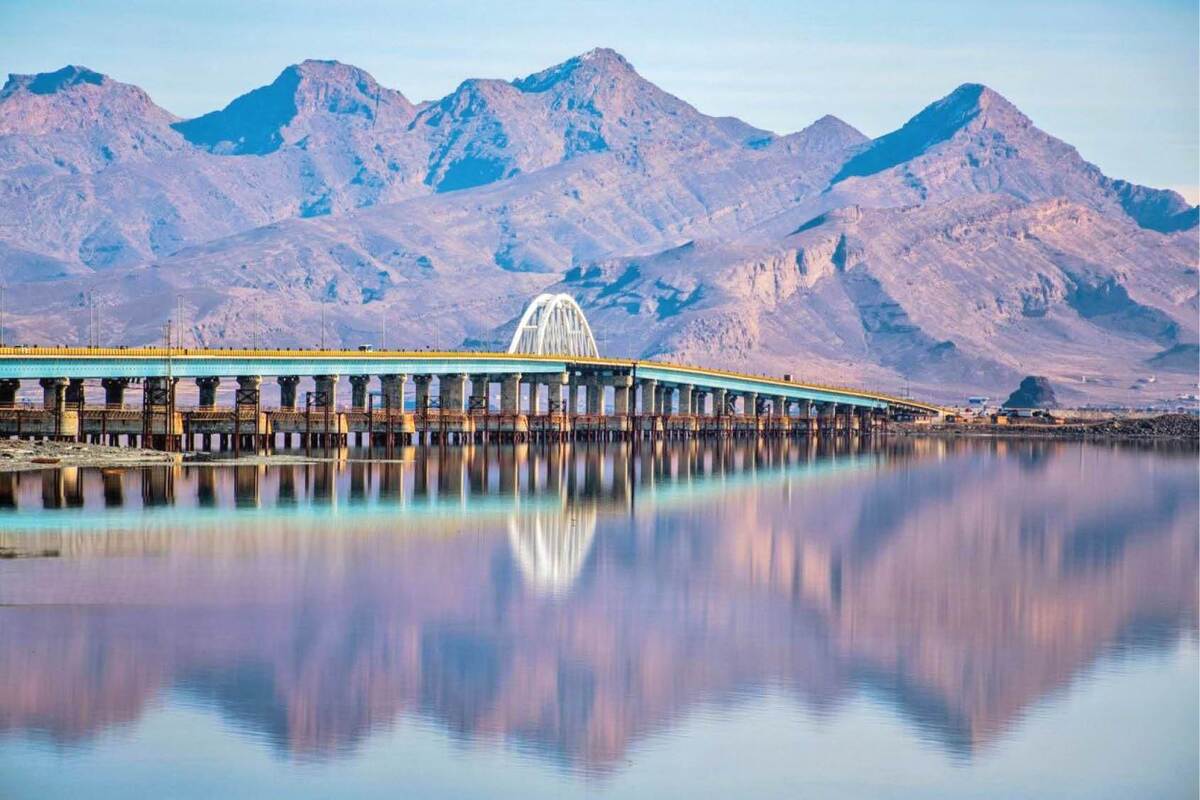
Javan Online: Significant rainfall in April 2026 has once again brought hope to the ailing body of Lake Urmia. This body of water, which for years struggled with drought and excessive withdrawals, now shows signs of revival with increased water levels, and the presence of people alongside this water body has uplifted the spirit of Iran. Despite this, experts emphasize that this relative improvement is only the beginning, and it is now the responsibility of officials to prevent the lake from returning to crisis by seriously implementing revival plans, securing its water rights, transferring water from dams, and preventing excessive extraction from surrounding wells.
Lake Urmia, which in recent years had become one of the country’s most significant environmental crises, is now experiencing signs of improvement due to adequate rainfall in winter 2025 and spring 2026. Satellite images and official statistics indicate that the lake’s water level has increased compared to previous years, and parts of the salt flats that had dried up last summer are now submerged again.
Data released by responsible authorities shows that the volume of water in Lake Urmia has reached its highest level for this season compared to the past four years. Although this change in status is still far from the lake’s optimal condition, it is considered a promising sign for environmental activists and local residents.
The Director General of Environmental Protection of West Azerbaijan, during a visit to Lake Urmia, commented on this improving trend, stating: “The water level of Lake Urmia has increased by approximately one meter since the beginning of the 2025-2026 water year. Effective rainfall and the formation of surface flows in rivers leading to the lake have been among the most important factors in this increase.”
Hojjat Jabbari continued: “By analyzing meteorological data and maps, as well as the amount of water rights released into the basin, we predict that the trend of water entering the lake will continue in the coming weeks, and the water level may even rise further from its current amount.”
He also added, referring to the changing conditions in the lake: “The increase in water level has allowed motorboats to resume activity in Lake Urmia National Park. This is very important for the movement of rangers and monitoring of habitat islands, helping to better protect the region’s habitats.”
The World’s Most Beautiful Blue Gem
Lake Urmia was once considered one of the largest and most important saline lakes in the world. With an area of nearly 6,000 square kilometers in 1998, it ranked as the 25th largest lake globally and was known as Iran’s largest inland lake and the Middle East’s largest saltwater lake.
In 1995, the lake’s water volume reached approximately 32 billion cubic meters, a figure indicating its stable and abundant condition in past decades. Numerous rivers, including Zarrineh-rud, Simineh-rud, Talkheh-rud, Godar-chai, Baranduz-chai, Shahr-chai, Nazli-chai, and Zola-chai, constituted the main sources feeding this lake.
However, in recent decades, this valuable ecosystem gradually entered a crisis phase. Experts attribute this situation to a combination of factors, including the construction and operation of over 90 dams in the basin, excessive extraction of groundwater resources, unsustainable agricultural development, water transfer without environmental assessments, as well as reduced rainfall and increased evaporation due to climate change.
Mojahid Rahmanzadeh, an environmental expert, told “Javan” that the drying up of Lake Urmia is not just a local issue: “The unfortunate consequences of this event could affect vast parts of the country. Increased salt storms, destruction of agricultural lands, threats to the health of local residents, and population migration are among the consequences that, if the lake completely dries up, will face the northwestern provinces of the country and even more distant areas with serious crises.”
Water Resource Management, The Main Condition for Revival
Despite increased rainfall, experts believe that the sustainable revival of Lake Urmia is only possible with precise water resource management. In this regard, water consumption patterns in the agricultural sector play a very important role, as the majority of the lake basin’s water resources are consumed in this sector.
The Head of Lake Urmia Basin explains in this regard: “The agricultural sector has a dominant share in the consumption of water resources in the Urmia basin, and the majority of surface and groundwater resources in this region are used for agriculture.”
Farhad Iman Shoar emphasizes that the status of water resources does not solely depend on rainfall, and management methods also play a decisive role.
He continues: “The status of water resources in this basin is not solely dependent on rainfall. Even in years with relatively adequate rainfall, inefficient consumption patterns and unsustainable exploitation can exacerbate water stress.”
According to the Head of Lake Urmia Basin, approximately 155 millimeters of rainfall have been recorded in the Lake Urmia basin since the beginning of the current water year.
Iman Shoar states: “This amount has increased by about 97% compared to the same period last year, when 78 millimeters were recorded, and is also about 18% higher than the long-term average.”
However, he warns that the status of dam reserves is still concerning and emphasizes: “Currently, the total reserves of the basin’s dams are about 392 million cubic meters, whereas this figure was 633 million cubic meters during the same period last year. This difference indicates that the current water year began with lower reserves.”
Protection of Water Rights, A Serious Demand
One of the most important issues on the path to Lake Urmia’s revival is securing its water rights from upstream rivers and dams; an issue repeatedly emphasized by experts and officials.
The Secretary of the National Task Force for Lake Urmia, during a visit to the rivers leading to Lake Urmia, said: “Protecting Lake Urmia’s water rights and preventing any intervention that hinders water from reaching the lake’s body must be a serious priority for the responsible agencies.”
Reza Rahmani considered the revival of Lake Urmia a national priority and added: “Implementing effective programs in riverbed dredging, organizing branches, controlling withdrawals, and reviewing water resource exploitation methods are serious requirements to help the stability of the region’s ecosystem.”
This official emphasized the necessity of coordination among executive agencies and said: “Saving Lake Urmia is not possible with temporary measures alone. This issue requires coherent planning, continuous monitoring, and the cooperation of all responsible agencies.”
Rahmani also highlighted the important role of people and farmers in this process, adding: “Success in the lake’s revival will be achieved when basin management is carried out with a responsible, scientific, and long-term perspective, and all stakeholders participate in this process.”
A New Opportunity to Save the Lake
Although the increase in Lake Urmia’s water level this spring is a sign of life returning to this valuable ecosystem, experts warn that this situation should not lead to neglecting fundamental actions.
Past years’ experience has shown that without long-term planning, precise water resource management, and cooperation between the public and officials, any short-term improvement can revert to a critical situation.
Now that spring rains have provided a new opportunity for the lake’s revival, many environmental activists believe it is time for the lake’s revival plans to be implemented with greater seriousness; from securing water rights and controlling water withdrawals to reforming agricultural patterns and protecting the rivers leading to this water body. We must not forget that Lake Urmia is not only a natural asset for the northwest of the country but also a part of Iran’s environmental heritage.
#LakeUrmia #EnvironmentalRevival #IranEnvironment #WaterManagement #SpringRains #EcosystemRestoration #ClimateAction #WaterCrisis #SustainableAgriculture #SaveLakeUrmia







Leave a Reply