


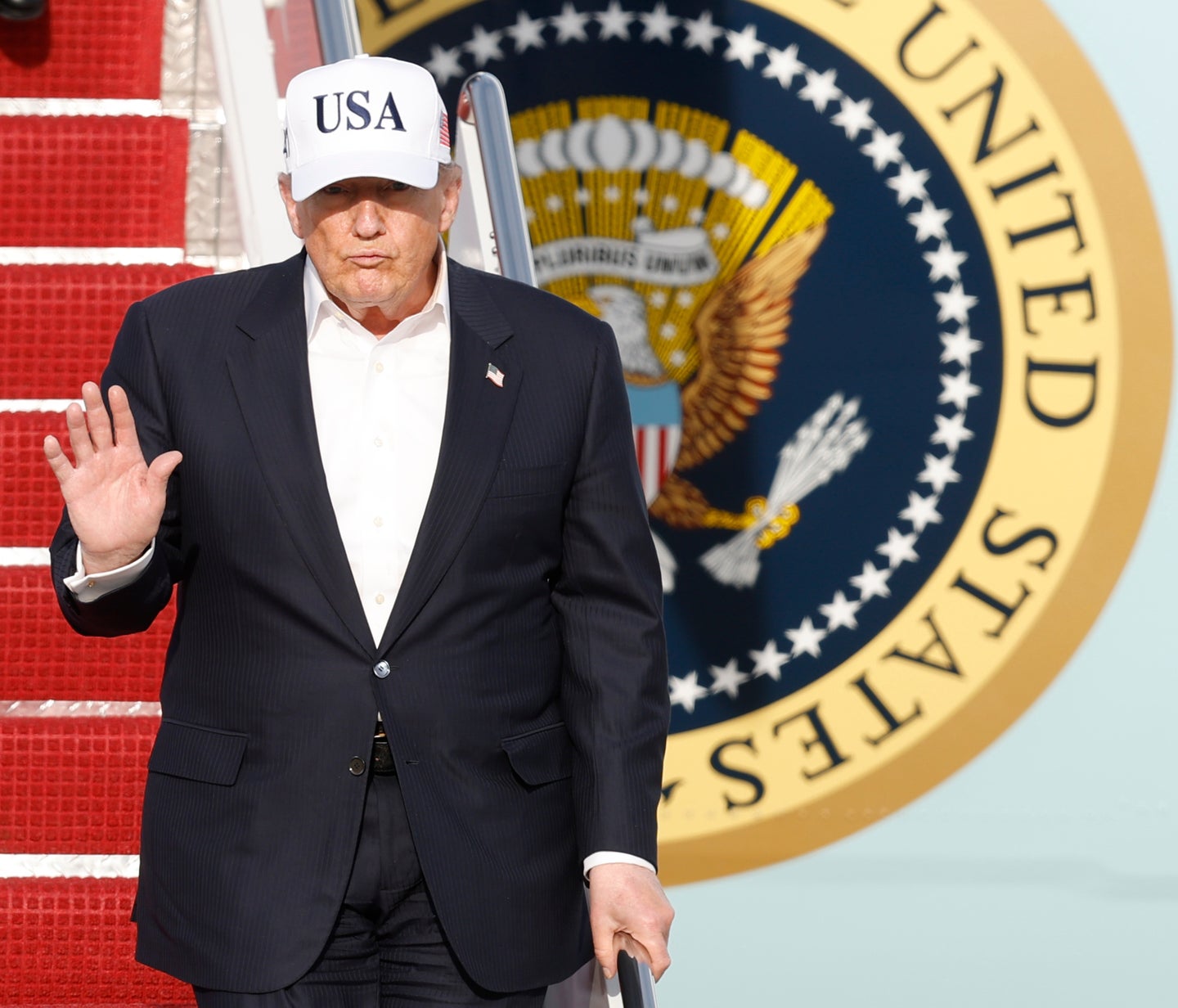
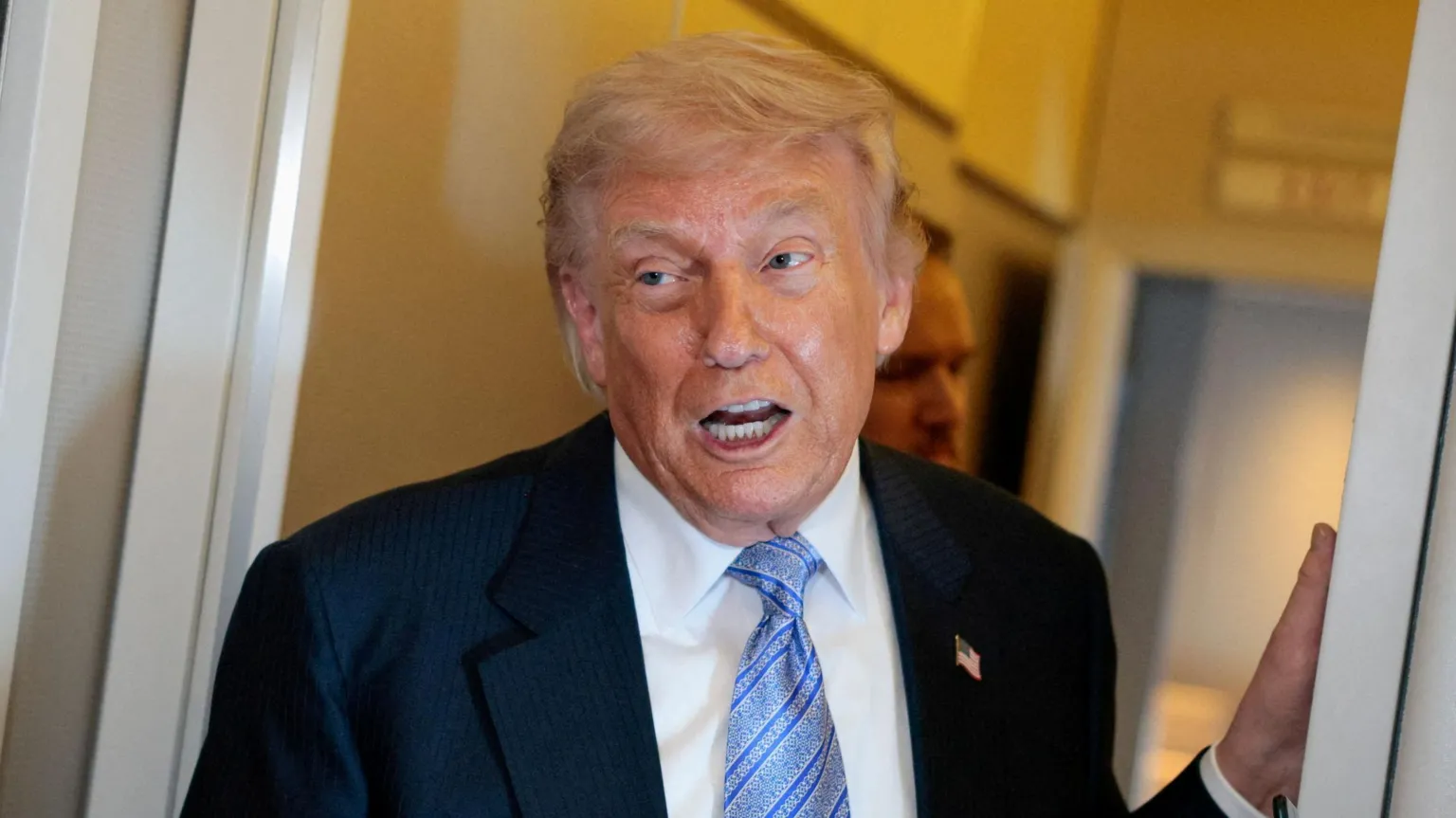
US President Donald Trump departed Beijing after a two-day summit, declaring he had secured “fantastic trade deals, great for both countries.” However, concrete details regarding the agreements between the two superpowers remain scarce. Trump’s visit for a high-stakes summit with Chinese leader Xi Jinping was accompanied by a high-profile business delegation, including several CEOs from sectors like agriculture, aviation, electric vehicles, and artificial intelligence (AI) chips.
Trade Discussions and Expectations
Trade was a top agenda item, despite recent tensions over the situation in Iran. Businesses had hoped for significant deals and an extension of the tariff truce set to expire in November. The visit was characterized by warm rhetoric and symbolic gestures, with Trump receiving a packed itinerary that included an honor guard, a state banquet, and an invitation to the exclusive compound where China’s Communist Party leaders reside. The US president appeared impressed, inviting Xi to the White House in September, and described the talks as “very successful.” Xi, in turn, called the visit “historic and landmark.” China’s Foreign Minister Wang Yi later confirmed Xi’s autumn visit to the White House.
Key Agreements and Discrepancies
Despite the positive atmosphere, neither side announced major trade breakthroughs or significant business deals. President Trump, speaking to reporters aboard Air Force One, stated that China had agreed to purchase 200 Boeing jets, with a potential commitment for an additional 750 aircraft. Boeing subsequently confirmed this deal, marking the plane-maker’s first major Chinese deal in nearly a decade after being largely excluded from the market due to trade tensions. Trump also claimed that American farmers would benefit from his deals, as China would be buying “billions of dollars” worth of soybeans. However, there has been no confirmation of these deals or purchases from the Chinese side. When questioned about Trump’s earlier comments regarding deals, Chinese foreign ministry spokesperson Guo Jiakun emphasized that the “essence of China-US economic and trade relations is mutual benefit and win-win co-operation,” urging both sides to implement the “important consensus” reached by the leaders to stabilize bilateral trade and the global economy.
Tariffs, Technology, and Market Access
Surprisingly, Trump told reporters that he and Xi did not discuss tariffs at all. The White House, however, stated that both leaders agreed to establish a “Board of Trade” to manage the relationship without reopening tariff negotiations. The trade truce agreed in October involved Washington suspending steep tariff increases on Chinese goods, while Beijing eased restrictions on rare earth exports. US Treasury Secretary Scott Bessent anticipated progress on a mechanism to support future investment. US officials cautioned that significant work remained before these announcements could take effect.
Prominent figures like Tesla CEO Elon Musk and Nvidia’s boss Jensen Huang were part of the delegation, signaling the crucial economic agenda. Their presence fueled speculation that AI and access to chips were more central to the talks than initially thought, especially given that electric vehicles, AI, and semiconductors are key battlegrounds in the US-China rivalry. Both Tesla and Nvidia have significant exposure to China, with Tesla relying on its Shanghai gigafactory and Nvidia seeking to resume advanced chip sales to China, currently restricted by US export controls. Trump mentioned discussing “guardrails” for AI cooperation. While US trade representative Jamieson Greer confirmed deals on Chinese purchases of US agricultural products, China’s foreign ministry only affirmed stable trade ties and expanded cooperation based on “equality, mutual respect and mutual benefit.” Xi assured US business leaders that China’s “doors will open wider” and American firms would have “broader prospects” in the Chinese market.
Strategic Issues: Taiwan and Iran
Taiwan, a self-governed island claimed by Beijing and a US ally, was explicitly linked to the broader economic relationship. Xi warned that the “Taiwan question is the most important issue in China-US relations,” stating that mishandling it could lead to conflict. The conflict concerning Iran and the resulting blockade of the Hormuz Strait was also a key agenda item. Trump sought Chinese cooperation to encourage Iran to stabilize flows through the Strait of Hormuz, quoting Xi as willing to help. The Chinese foreign ministry issued a statement calling for “a comprehensive and lasting ceasefire” and the reopening of shipping lanes, though details on Middle East discussions were limited.
Historical Context of Trade Tensions
Tariffs have been central to Trump’s economic vision, aiming to grow the US economy, protect jobs, and raise tax revenue. In 2018, Trump initiated successive rounds of tariffs on Chinese imports, prompting Beijing to retaliate. US tariffs on Chinese goods remained around 20% during Trump’s first term and throughout Joe Biden’s presidency. In April 2025, Trump imposed a 34% levy on Chinese goods, making the total tariffs on China the highest of any country. Beijing responded with duties on US agricultural goods and plans to tighten rules for rare earth exports. Unlike 2018, the Chinese economy showed greater resilience to Trump’s tariffs in 2025, partly due to its near monopoly on key materials and advancements in renewables and electric vehicles. In February 2026, the US Supreme Court ruled many of Trump’s 2025 tariffs illegal. A meeting between Trump and Xi Jinping in October 2025 led to a cooling of trade tensions, with Beijing suspending rare earth export controls and agreeing to resume purchases of US agricultural goods.
Discussions are expected to continue ahead of a second summit, with hopes for a major trade breakthrough that proved elusive this time.
#USTrade #ChinaUSRelations #TrumpXiSummit #TradeDeals #Boeing #Soybeans #AITechnology #Semiconductors #TaiwanStrait #HormuzStrait



Leave a Reply