

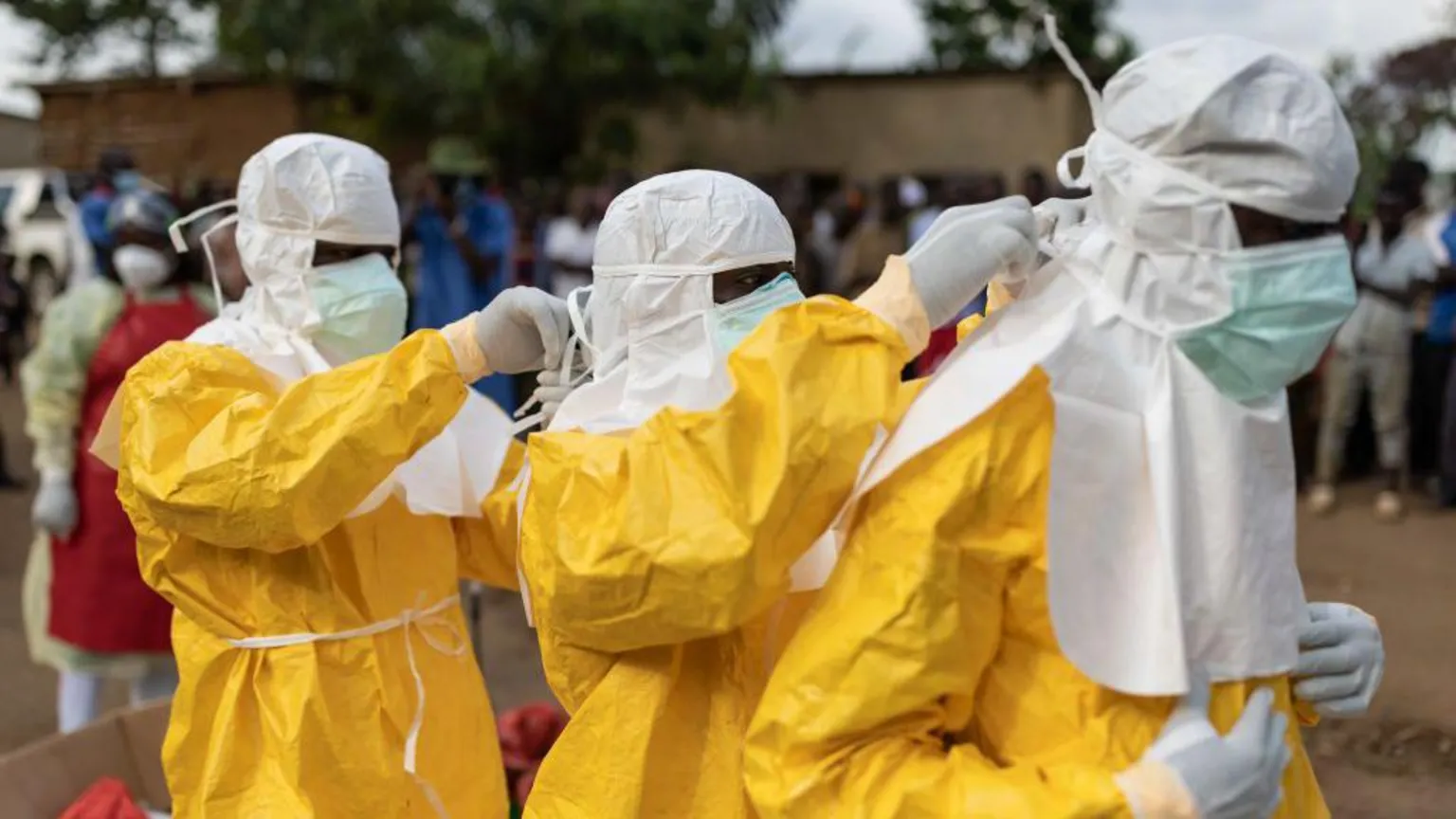
Current Situation in DR Congo
The Ebola outbreak in the Democratic Republic of Congo is a significant concern. The virus has been spreading undetected for weeks in a region grappling with civil war, making containment efforts particularly challenging. The specific strain of Ebola involved is rare, limiting the available tools to combat a virus that tragically claims the lives of approximately one-third of those infected.
This is a critical juncture for the outbreak, with uncertainty surrounding its full extent. Already, there are nearly 250 suspected cases and 80 deaths reported.
While most Ebola outbreaks are typically small, specialists are mindful of the devastating 2014-16 outbreak in West Africa, which infected 28,600 people, marking the largest incidence of the disease ever recorded.
The World Health Organization (WHO) has declared a public health emergency of international concern. However, this declaration does not signify the early stages of a Covid-style pandemic. The global risk posed by Ebola remains minimal. Even during the 2014-16 outbreak, the UK recorded only three cases, all involving healthcare workers who had volunteered to assist.
Dr. Amanda Rojek from the Pandemic Sciences Institute at the University of Oxford notes, “But it does reflect that the situation is complex enough to require international coordination.”
Neighboring countries such as Uganda, South Sudan, and Rwanda face a significant threat due to close trade and travel links, placing them at high risk. Two cases have already been confirmed in Uganda, one of which resulted in a fatality.
Understanding Ebola and the Bundibugyo Strain
Ebola is a severe and often fatal disease, though fortunately rare. Ebola viruses naturally reside in animals, primarily fruit bats, but can transmit to humans through close contact.
This particular outbreak is caused by the Bundibugyo species of Ebola. It is one of three known species capable of causing outbreaks but is relatively unfamiliar. Bundibugyo has only been responsible for two previous outbreaks, in 2007 and 2012, with a mortality rate of approximately 30%.
Challenges Posed by Bundibugyo
The Bundibugyo strain presents several unique challenges. Unlike other Ebola virus species, there are no approved vaccines or drug treatments specifically for Bundibugyo, though experimental options are being explored.
Furthermore, diagnostic tests for this infection have proven unreliable. Initial test results during the outbreak were negative for Ebola virus, necessitating more sophisticated laboratory tools to confirm the presence of Bundibugyo.
Prof. Trudie Lang from the University of Oxford states that dealing with Bundibugyo is “one of the most significant concerns” in this outbreak.
Symptoms and Treatment
Symptoms typically manifest between two and 21 days post-infection. Initially, they resemble flu-like symptoms: fever, headache, and tiredness. As Ebola progresses, it can lead to vomiting, diarrhea, and organ failure. Some patients also experience internal and external bleeding.
Given the absence of approved drugs specifically targeting the Bundibugyo virus, treatment focuses on “optimised supportive care.” This includes pain management, addressing other infections, maintaining fluid balance, and providing nutrition. Early intervention significantly improves survival rates.
Response and Future Outlook
The first known case was a nurse who developed symptoms on April 24. It took three weeks to officially confirm the outbreak. Dr. Anne Cori from Imperial College London remarked, “Ongoing transmission has occurred for several weeks, and the outbreak has been detected very late, which is concerning.”
This delay means health officials are behind in their efforts to contain the outbreak, suggesting a “potentially much larger outbreak than what is currently being detected and reported,” according to the WHO.
The primary strategy involves rapid identification of infected individuals and tracing their contacts. Efforts are also underway to prevent the spread of Ebola within hospitals and treatment centers, where patients are most infectious. Ensuring safe burials for those who die with infectious bodies is also crucial.
These efforts are complicated by the already high number of infected individuals and the fact that the outbreak is occurring in a conflict-ridden part of DR Congo, where over 250,000 people are displaced from their homes.
Prof. Lang highlights, “Many of the affected areas are mining towns with highly mobile and transient populations. This mobility increases risk as people move between communities and across borders.”
Despite these challenges, DR Congo possesses extensive experience in managing Ebola outbreaks, and the current response is “significantly stronger today than it was a decade ago,” according to Dr. Daniela Manno from the London School of Hygiene & Tropical Medicine.
The success in containing this outbreak and preventing a recurrence of the events from just over a decade ago will hinge on the effectiveness of the current response.
#EbolaOutbreak #DRCongo #PublicHealth #Bundibugyo #WHO #GlobalHealth #DiseaseControl #Epidemiology #AfricaHealth #EmergencyResponse







Leave a Reply