

The United States has initiated a naval blockade against Iran. This move by President Donald Trump’s administration aims to exert pressure on Tehran, forcing it to accept terms for ending their conflict by severely impacting the Iranian economy.
The blockade commenced on Monday at 14:00 GMT. Iran’s armed forces have condemned it as an “illegal act” and characterized it as “piracy.”
While Iran has grown accustomed to US sanctions and managed to sustain its economy during the ongoing conflict, analysts suggest that a naval blockade of this nature could inflict substantial damage on the Iranian economy.
The critical question is, how severely will this blockade impact Iran? Here’s an overview of the situation:
How will Iran’s oil revenue be affected by the blockade?
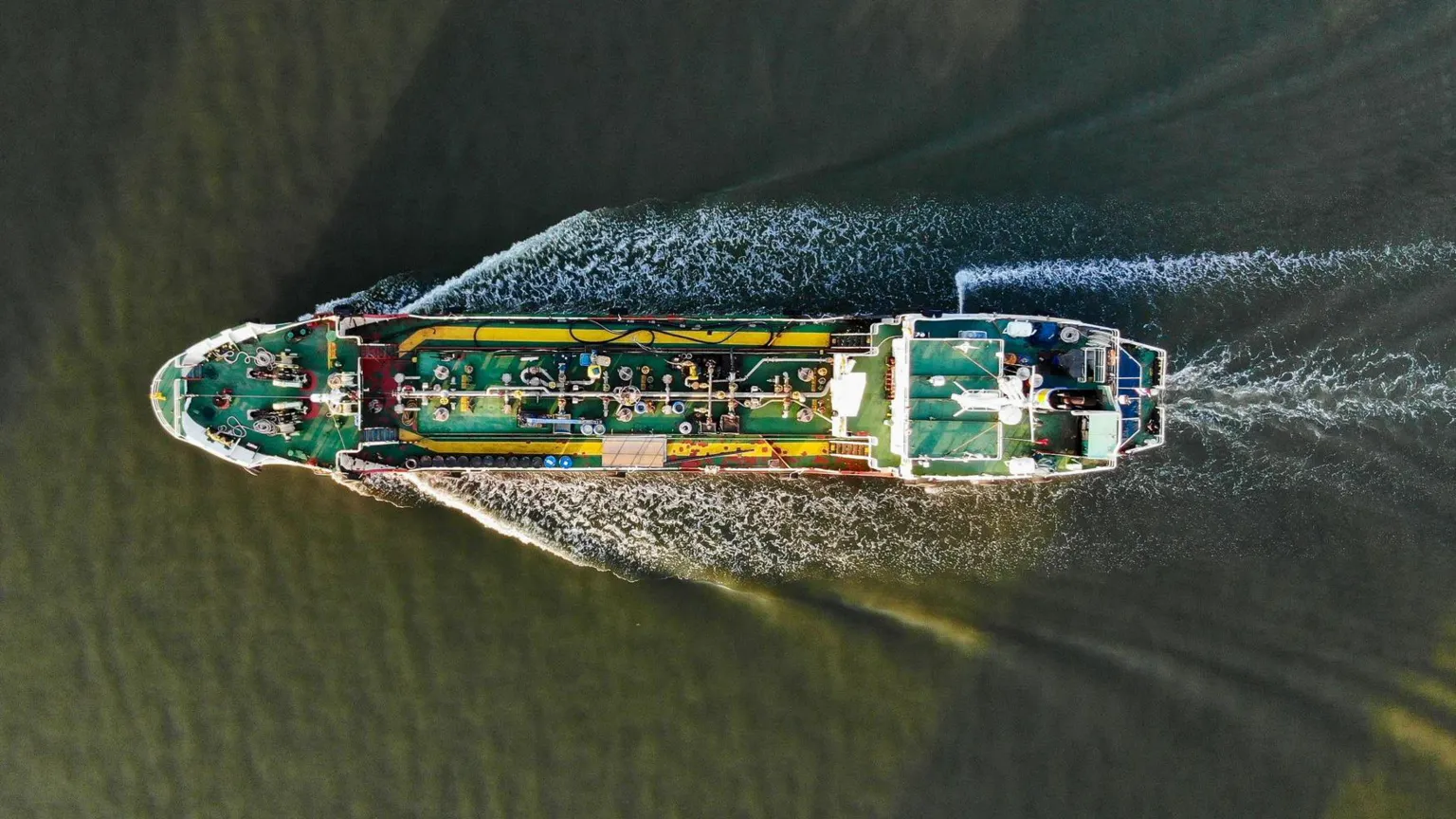
Iran primarily relies on its ports for oil and gas exports. Following the outbreak of the US-Israel conflict with Iran on February 28, Tehran’s authorities declared what was effectively a closure of the Strait of Hormuz. This strait is the sole maritime exit from the Gulf and, in peacetime, facilitates the passage of 20 percent of global oil and gas supplies.
The near-closure of this crucial chokepoint caused global oil and gas prices to skyrocket. Since then, Iran has maintained control over the strait, permitting passage only to vessels from a select few countries that had negotiated individual agreements with Tehran.
Despite these restrictions, Iran itself continued to export its own energy products via the strait during that time.
Oil exports through the Strait of Hormuz constitute approximately 80 percent of Iran’s total exports. Data from Kpler, a trade intelligence firm, indicates that Iran exported 1.84 million barrels per day (bpd) of crude oil in March and 1.71 million bpd in April to date, surpassing its 2025 average of 1.68 million bpd.
This means that Iranian exports through the strait actually saw an increase in March and early April.
Between March 15 and April 14, Iran exported 55.22 million barrels of oil. The price for Iranian crude, encompassing its three main variants (Iranian light, Iranian heavy, and Forozan blend), consistently remained above $90 per barrel over the last month, frequently exceeding $100 a barrel on several occasions.
Even with a conservative estimate of $90 per barrel, Iran would have generated $4.97 billion from oil exports over the past month.
In contrast, prior to the war’s commencement in early February, Iran’s crude oil exports brought in approximately $115 million daily, totaling $3.45 billion per month.
In essence, Iran’s oil export earnings in the last month were 40 percent higher than its pre-war figures.
However, experts now state that with the US military enforcing a blockade on Iran’s ports and the Strait of Hormuz, Tehran’s ability to export crude oil has been directly and dramatically impacted.
Mohamad Elmasry, a professor at the Doha Institute for Graduate Studies, told Al Jazeera that “Iran would not be able to export oil, at least not at the same level.” He also noted that Tehran would lose the “tolls” it reportedly collected from non-Iranian vessels allowed to pass through the strait.
Frederic Schneider, a nonresident senior fellow at the Middle East Council on Global Affairs, concurred with this assessment.
He informed Al Jazeera that while the preceding six weeks had been highly beneficial for Iran’s oil revenues, the imposition of the US blockade would alter this situation significantly.
Schneider explained that “Iran possesses a buffer in the form of crude oil reserves stored in floating tanks – essentially parked tankers – estimated at approximately 127 million barrels in February. However, this does not imply that the blockade will not harm Iran.”
According to maritime intelligence agency Windward, as of Monday, Iran had approximately 157.7 million barrels of oil at sea, with 97.6 percent of it en route to China.
Windward cautioned that this entire volume of oil could be affected by the US blockade.
Will the trade of other goods also be impacted?
Beyond oil, the US blockade on Iranian ports could also disrupt Tehran’s trade in other commodities.
Key exports shipped via its ports include petrochemicals, plastics, and agricultural products, mainly destined for countries such as China and India. Major imports, primarily sourced from China, the United Arab Emirates, and Turkiye, consist of industrial machinery, electronics, and food.
A February 18 report by the Tehran Times, citing data from Iran’s Customs Administration, indicated that the country’s total non-oil trade reached $94 billion from March 21, 2025, to January 20. Imports exceeded exports during this period, leading to a trade deficit.
Analysts predict that the current blockade will negatively affect Iran’s overall trade and further damage its economy.
Schneider noted that if non-hydrocarbon trade is disrupted, it would not only reduce revenues but also impact supplies, potentially leading to increased domestic shortages in an economy already strained by pre-war sanctions.
He posed the question: “The key question is whether this intensified suffering will compel Iran to concede defeat, or if it will strengthen its resolve and lead to an escalation of the situation. However, I doubt this blockade will be fully implemented or sustained for an extended period.”
Are there alternative routes Iran can explore?
Yes, there are. To lessen its reliance on vital global trade chokepoints like the Strait of Hormuz in the Gulf and the Strait of Malacca in Southeast Asia, Iran and China have jointly developed a railway line.
Utilizing existing railway networks through Central Asian nations such as Kazakhstan, Uzbekistan, and Turkmenistan, the first freight train carrying commercial goods from China reached Iran in February 2016. Subsequently, in May, Iran’s Tasnim news agency reported the arrival of the first freight train from Xi’an, China, at Iran’s Aprin dry port, officially inaugurating a direct rail link between the two countries.
A report by the geopolitical consulting agency SpecialEurasia suggests that the China-Iran railway “helps mitigate the risks of naval interdiction by Western forces that hinder Iranian trade, particularly the transport of crude oil by Tehran’s so-called ‘ghost ships’.”
“Dark ships” or “ghost ships” are vessels that deactivate their automatic identification systems to evade detection and circumvent sanctions. Throughout the conflict involving Iran, shipping data has indicated the presence of such ships transporting oil and other commodities.
The SpecialEurasia report further noted, “Nevertheless, it is important to acknowledge that transporting hydrocarbons by rail presents significant logistical challenges.”
Currently, there is no credible evidence to suggest that oil has been transported by rail from Iran to China.
Schneider stated that a prolonged blockade would undoubtedly harm Iran’s economy. However, he added that the duration of the standoff over the Strait of Hormuz remains uncertain.
He remarked, “It’s very difficult to ascertain the seriousness of the US regarding this blockade, how long it will endure, how it will conclude, and what developments will follow.”
China also represents a significant unknown factor.
Schneider pointed out, “Most Iranian tankers are bound for China, and I don’t foresee China yielding to this blockade. Furthermore, I don’t anticipate the US Navy seizing or even sinking these ships.”
He concluded, “Therefore, this is a highly volatile situation that could rapidly move in one of two directions: either towards a ceasefire and détente, or towards escalation with renewed bombings and missile strikes.”
#IranBlockade #StraitOfHormuz #USSanctions #IranianEconomy #OilExports #Geopolitics #MiddleEast #ChinaIranRelations #NavalBlockade #EnergySecurity
How much will US Hormuz blockade hurt Iran, and does Tehran have an escape?






Leave a Reply