

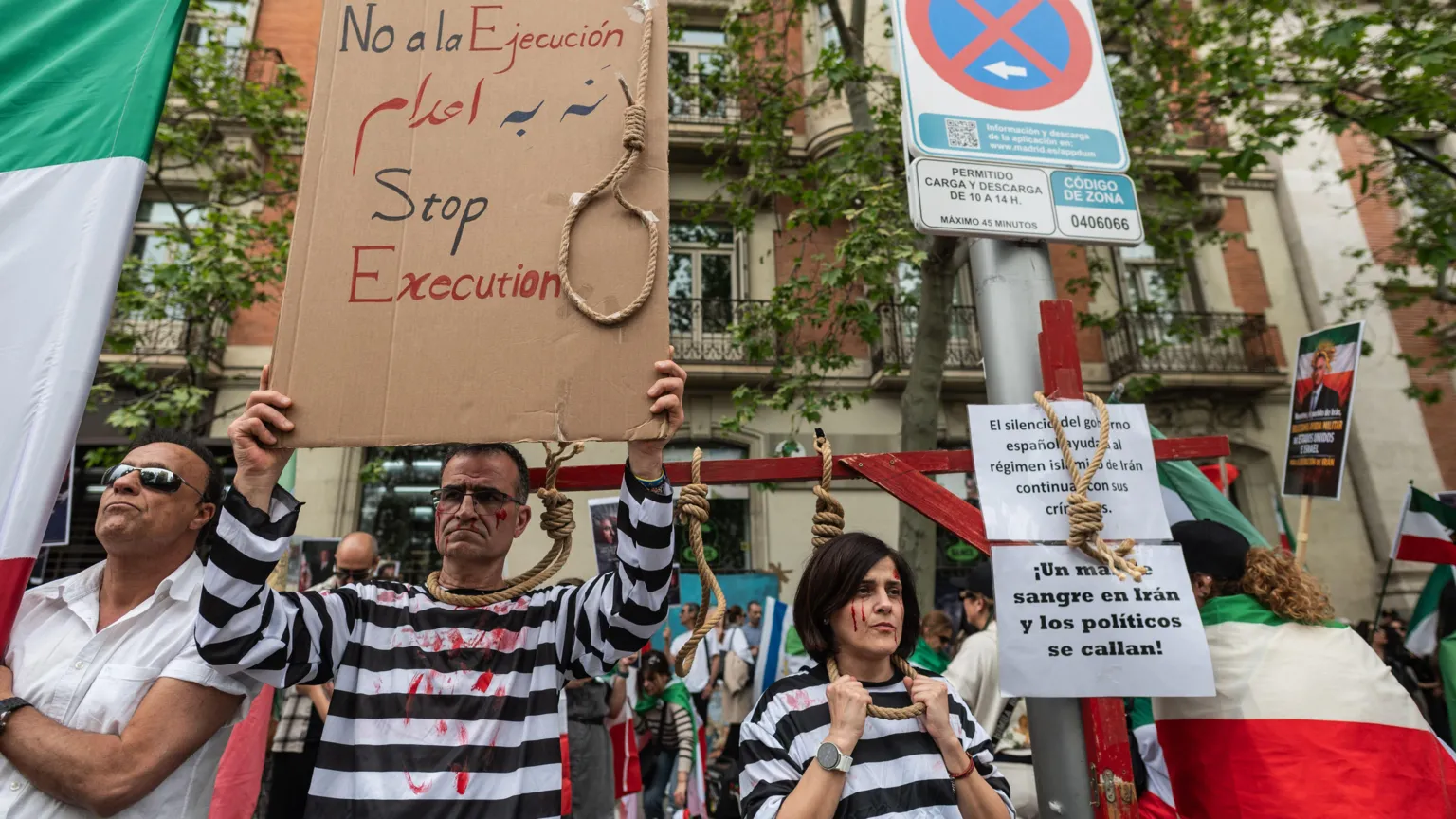
Iran executed at least 1,639 people last year, marking the highest number recorded since 1989, according to two non-governmental organizations. This figure represents a 68% increase compared to 2024, when 975 executions were documented, states a report by Norway-based Iran Human Rights (IHR) and Paris-based Together Against the Death Penalty (EPCM).
The majority of those executed were convicted of drug-related offenses or murder. However, at least 57 individuals faced security-related charges, including two protesters. The NGOs caution that Iranian authorities might intensify the use of executions this year, particularly in the aftermath of January’s protests and the ongoing conflict with the US and Israel.
Since the conflict began on February 28, seven people have been executed in connection with the protests, which saw thousands killed and tens of thousands detained during a severe crackdown by security forces. Additionally, six individuals convicted of membership in the exiled opposition group Mujahideen-e Khalq (MEK) have been executed, along with one person found guilty of spying for Israel.
Iran remains the world’s second most prolific executioner after China, where the precise number of executions is a state secret but is estimated by human rights activists to be in the thousands. Last year, however, saw the highest number of recorded executions in the Islamic Republic in 36 years, averaging four per day, as per the IHR and EPCM report.
The report details that 795 of the 1,639 people hanged were convicted of drug-related offenses, a 58% increase from 2024, and 747 were convicted of murder, a 79% increase. Another 37 individuals were executed for rape. At least 48 women were executed, a 55% increase compared to 2024 and the highest number in over two decades.
The NGOs highlight that ethnic minorities and other marginalized groups were disproportionately represented among those executed. Furthermore, just over half of the executions stemmed from sentences handed down by Revolutionary Courts following what the NGOs describe as “grossly unfair trials and without due process.”
IHR and EPCM warn that if the Islamic Republic “survives the current crisis, there is a serious risk that executions will be used even more extensively as a tool of oppression and repression.” At least 16 individuals sentenced to death in connection with the 2022 “Woman, Life, Freedom” protests are still at risk of execution. Twenty-seven others have been sentenced to death over protests earlier this year, with hundreds more facing charges that carry the death penalty.
Raphaël Chenuil-Hazan, executive director of ECPM, emphasized that abolishing the death penalty must be “at the heart” of any talks between the US and Iran aimed at ending their conflict, according to AFP. IHR director Mahmood Amiry-Moghaddam noted the absence of “mention of the Iranian people’s rights” in recent negotiations and stated that a death penalty moratorium and the release of all political prisoners should be “demand number one.”
#Iran #HumanRights #Executions #DeathPenalty #IranProtests #PoliticalPrisoners #Oppression #Justice #MiddleEast #IHR




Leave a Reply