

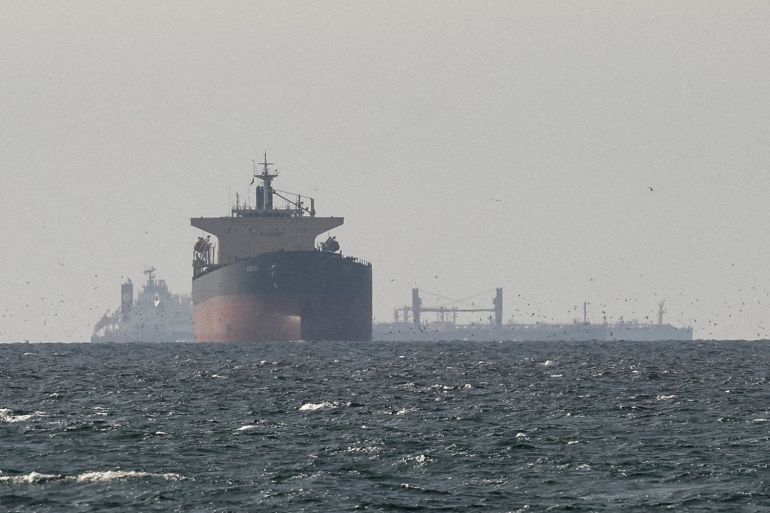
Shipping data indicates that at least three vessels, two of which are US-sanctioned tankers, transited the Strait of Hormuz into the Gulf on the initial full day of the US blockade targeting ships bound for Iranian ports. These three vessels, which passed through the strait on Tuesday, were not destined for Iranian ports and thus remained unaffected by the blockade.
LSEG data revealed that the Panama-flagged medium-range tanker, Peace Gulf, is en route to Hamriyah port in the United Arab Emirates. Kpler data further indicated that this vessel commonly transports Iranian naphtha, a petrochemical feedstock, to non-Iranian ports in the Middle East for subsequent export to Asia.
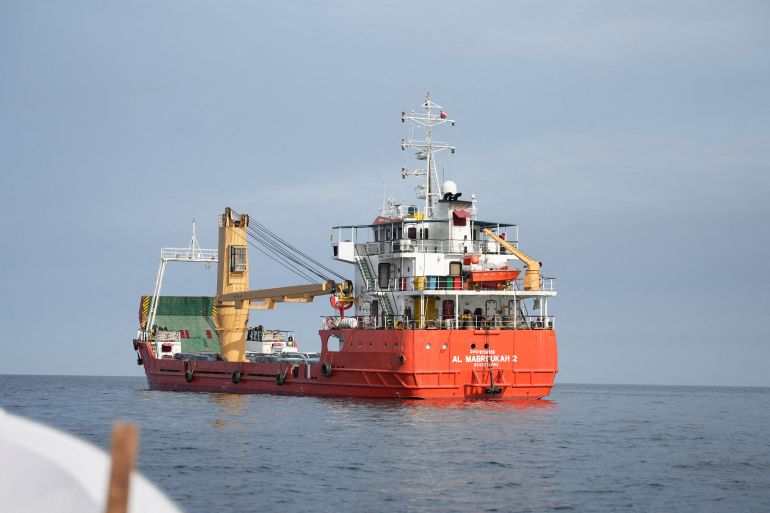
Earlier, two US-sanctioned tankers also navigated the narrow waterway, a critical route for a fifth of global energy exports. Kpler data showed that the handy tanker Murlikishan is bound for Iraq to load fuel oil on Thursday. This vessel, previously named MKA, has a history of transporting Russian and Iranian oil.
Data from LSEG and Kpler indicated that another sanctioned tanker, Rich Starry, was set to be the first to successfully traverse the strait and exit the Gulf since the blockade commenced on Monday. Both the tanker and its owner, Shanghai Xuanrun Shipping Co Ltd, were sanctioned by the US due to their dealings with Iran.
According to the data, Rich Starry is a medium-range tanker carrying approximately 250,000 barrels of methanol. Its last port of call, where it loaded its cargo, was Hamriyah. The data also confirmed that the Chinese-owned tanker operates with a Chinese crew.
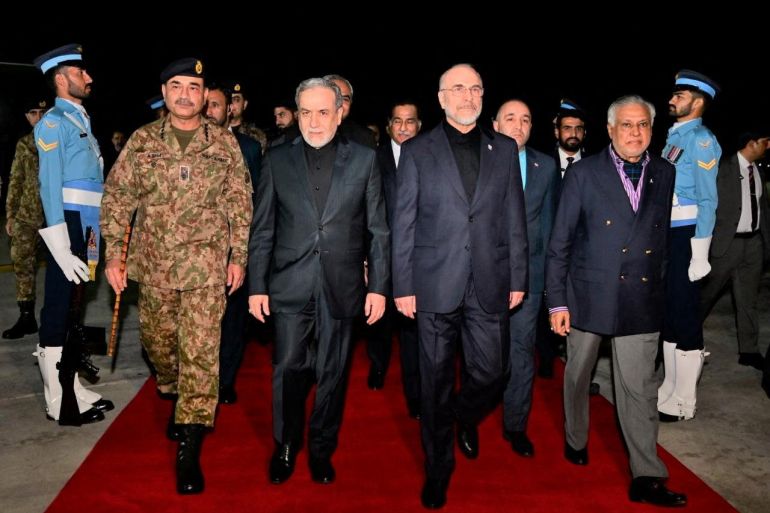
US President Donald Trump declared a blockade of Iranian ports on Sunday. This announcement followed the failure of weekend peace talks between the US and Iran, held in Pakistan’s capital, Islamabad, to yield an agreement. Prior to this, Iran had almost entirely halted traffic through the strait – a vital artery for global energy shipments – in retaliation for US-Israeli attacks on its territory since February 28.
Iran’s de facto control over this critical chokepoint had previously caused global gas and petrol prices to surge. Washington’s current objective is to strip Tehran of its control over the strait, thereby preventing Iranian tankers, which have continued daily transits, from passing through.
“This complicates everything for commercial vessels that have been stranded in the Gulf. They now have to get permission from Iran to pass through, as well as the US,” stated Al Jazeera’s Malik Traina, reporting from Kuwait City. Traina warned, “There’s a real risk of escalation here, because if Iranian vessels are stopped, if Iranian oil is stopped, Iran could perhaps stop other vessels from the Gulf coming and entering the strait.”
On Tuesday, Chinese Ministry of Foreign Affairs spokesman Guo Jiakun asserted that the US “increased military operations and took a targeted blockade action, which will only exacerbate tensions and undermine the already fragile ceasefire agreement.” He further characterized the US move as “dangerous and irresponsible behaviour,” stating that it “further jeopardises safety of passage through the strait.”
China sources over half of its oil from the Middle East, with Iran being a significant supplier. Kpler data indicates that China purchased over 80 percent of Iran’s shipped oil last year. China’s imports of Iranian crude amounted to 1.4 million barrels per day last year, contributing to its total seaborne crude imports of 10.4 million barrels per day.
Despite the ongoing blockade, the prospects for a diplomatic breakthrough are not entirely diminished. Trump stated that there remains an opportunity for Iran to reach a deal, while a Pakistani official informed Al Jazeera that Pakistan is prepared to host as many rounds of peace talks as necessary, confirming that diplomatic contact among all parties is ongoing.
#StraitOfHormuz #USBlockade #IranSanctions #OilTankers #GlobalEnergy #Geopolitics #MiddleEast #InternationalRelations #Diplomacy #ShippingNews



Leave a Reply