

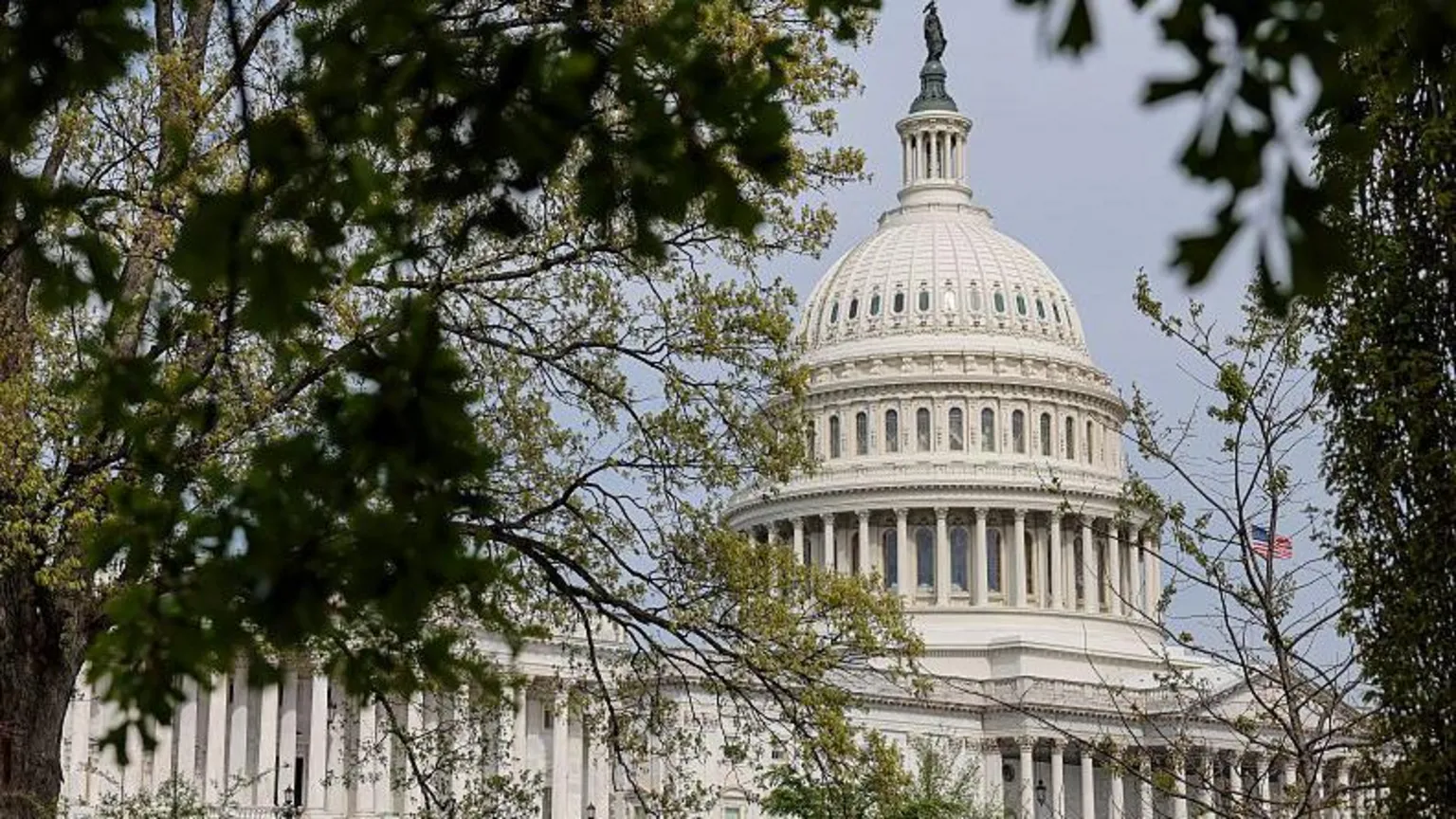
House Rejects Measure to Curb Trump’s Authority on Iran Conflict
A Democratic-backed initiative aimed at restricting President Donald Trump’s power to engage in military action against Iran has once again failed in the House of Representatives. This rejection comes just a day after a similar resolution met the same fate in the Senate.
Symbolic Vote and Expected Veto
The House war powers resolution, which saw a narrow defeat with a vote of 213-214, was largely considered symbolic. Even if it had passed, it faced minimal prospects of overcoming an anticipated presidential veto.
The majority of Republicans in both chambers opposed the resolution. However, some lawmakers have indicated a potential shift in their stance should the conflict extend beyond the current month. President Trump has offered varying timelines regarding the conflict’s duration, recently stating the situation was “close to over.”
Divisions Within Parties
During Thursday’s House vote, Representative Thomas Massie of Kentucky was the sole Republican to support the measure alongside Democrats. Conversely, Jared Golden of Maine was the only Democrat to oppose it. Warren Davidson of Ohio, who had previously backed Democratic efforts in March, voted “present,” signifying an abstention.
Democrat Gregory Meeks of New York, who introduced the resolution, informed reporters post-vote that he intends to lobby Golden and other members to garner support for the legislation. Meeks also signaled his intention to introduce another war powers resolution, underscoring ongoing Democratic efforts to reassert congressional authority over military actions.
Previous Attempts and Legislative Hurdles
An earlier attempt to pass a similar resolution narrowly failed in the House last month, with two House Republicans voting in favor and four Democrats opposing. Even if the resolution had cleared the House, it would have faced significant challenges in the Senate, where a similar measure was rejected yesterday in a largely party-line vote of 47-52. Furthermore, even if it managed to pass both legislative bodies, it was unlikely to survive a presidential veto.
Some Republicans have hinted that their opposition to such resolutions could change if the scope or persistence of the conflict expands.
War Powers Resolution Context
Federal law mandates congressional approval for military actions extending beyond 60 days. The US-Israel strikes commenced on February 28. The War Powers Resolution of 1973, which sets these timelines for congressional approval, was originally enacted by Congress to limit then-President Richard Nixon’s ability to continue the war in Vietnam.
#USPolitics #WarPowers #IranConflict #CongressionalAuthority #DonaldTrump #HouseOfRepresentatives #SenateVote #ForeignPolicy #DemocraticEfforts #NationalSecurity






Leave a Reply