

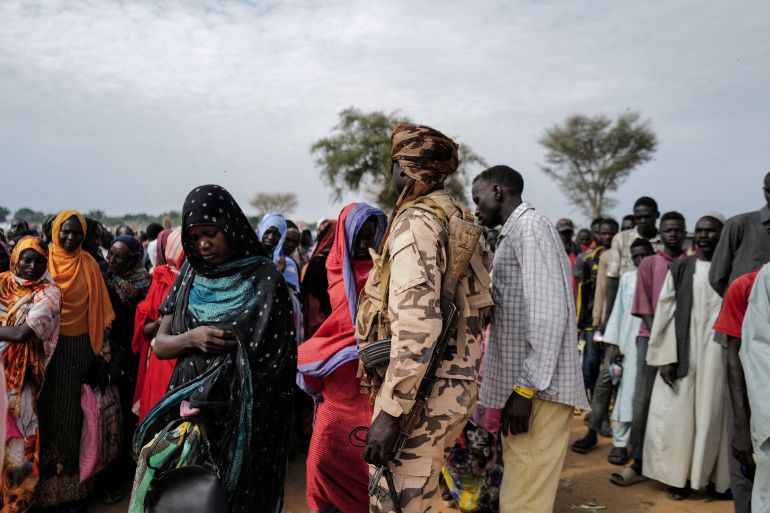
As the brutal conflict in Sudan enters its fourth year, the humanitarian situation has reached unprecedented levels of horror, marked by a surge in drone strikes and exacerbated by regional geopolitical tensions impacting aid supply chains. The United Nations reports that nearly **700 civilians** have tragically lost their lives due to drone attacks in Sudan since the conflict began, while aid organizations express deep concern that broader conflicts in the Middle East are severely complicating efforts to deliver vital humanitarian assistance to millions in desperate need.
Escalating Drone Warfare Claims Civilian Lives
The increasing deployment of drones in the conflict has been a grave concern, as highlighted by the UN’s humanitarian chief, Tom Fletcher. His statement on Tuesday underscored the world’s ‘failure to meet the test of Sudan’ as the nation commemorates the third anniversary of the devastating clashes between the army and paramilitary forces.
**Near-daily drone strikes** have shattered daily life across Sudan, particularly in the southern Kordofan region, now a primary battleground, and in areas of the west controlled by the paramilitary Rapid Support Forces (RSF). Doctors Without Borders (MSF) confirmed two additional deaths following Sudanese army drone strikes in Darfur, reporting that **56 wounded individuals** received treatment from their teams.
The UN Children’s Fund (UNICEF) revealed the devastating impact on the youngest victims, stating that drones are ‘responsible for nearly 80 percent’ of the at least **245 children reported killed or injured** during the first three months of the year. A UNICEF spokeswoman lamented, ‘Drones are killing and wounding girls and boys in their homes, in markets, on the roads, near schools and health facilities.’
Sudan’s Humanitarian Crisis Deepens
Fletcher’s statement also warned of a high risk of ‘wider regional instability,’ noting that millions have been displaced both within Sudan and across its borders. He emphasized that nearly **34 million people**, almost two-thirds of the population, require humanitarian support, making Sudan ‘the world’s largest humanitarian crisis.’
The crisis is multifaceted: ‘Hundreds of thousands of children are acutely malnourished, with millions being deprived of an education,’ Fletcher stated, adding that ‘Women and girls are facing systemic and brutal sexual violence.’
According to the UN’s World Food Programme (WFP), over **19 million people face acute hunger**, with famine threatening vast areas of Darfur and Kordofan.
Regional Tensions Disrupt Aid Supply Chains
Ross Smith, WFP’s head of emergency preparedness and response, cautioned that the already dire situation is ‘being dangerously compounded’ by **geopolitical tensions and conflicts in the Middle East**. These regional challenges have significantly disrupted supply chains for aid groups, forcing them to resort to costlier and more time-consuming alternative routes.
Crucial maritime passages, such as the Strait of Hormuz, have been severely impacted, alongside routes from strategic logistical hubs like Dubai, Doha, and Abu Dhabi. This disruption has also led to a sharp increase in the cost of essential goods, including food, fuel, and fertilizer. ‘This will have a knock-on effect on the price of all stable goods and food commodities, pushing more people into hunger,’ Smith warned, underscoring the interconnectedness of global crises.
#SudanWar #HumanitarianCrisis #DroneStrikes #UNICEF #WFP #MSF #AidDisruption #MiddleEastConflict #GlobalCrisis #SudanAid








Leave a Reply