

European nations are increasingly distancing themselves from Israel, expressing frustration over its intensified actions against neighboring countries and the broader global economic repercussions. Israel’s international standing has reportedly diminished, with its military operations in Gaza, alongside actions in Lebanon and Iran, significantly shifting Western public opinion. This sentiment has become challenging for European governments to disregard, despite their historical close ties with Israel.
Italy’s right-wing government has recently joined a growing number of European states, including the United Kingdom, Ireland, and Spain, in criticizing Israel’s conduct. There are increasing calls for Israel to cease its operations in Lebanon and Iran and step back from a conflict that analysts warn could lead to a global recession. Earlier this month, Spain advocated for the suspension of the European Union’s trade agreement with Israel, citing its “intolerable” actions in Lebanon. France has previously excluded Israeli companies from major defense exhibitions. Even Germany, often considered Israel’s staunchest European ally, has voiced concerns regarding what it described as Israel’s “de facto partial annexation of the West Bank.”
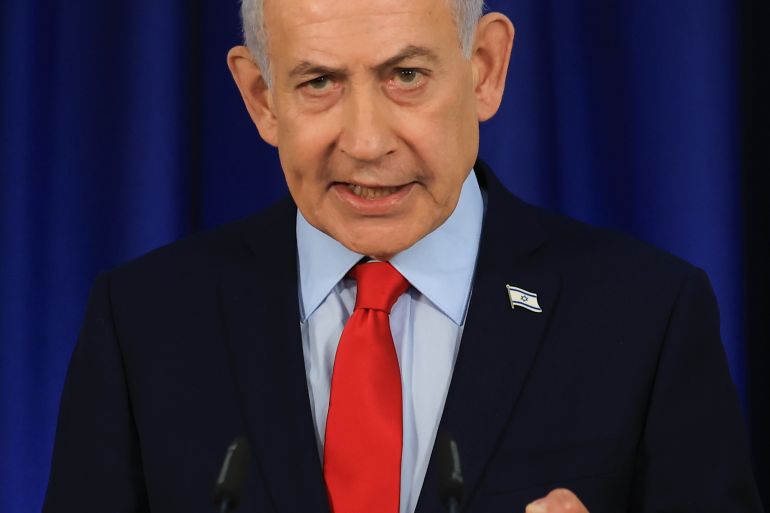
On Monday, Israeli Prime Minister Benjamin Netanyahu responded to his European critics, asserting that Israel is a defender of their shared values. He suggested that Europe is “afflicted by deep moral weakness” and is “losing control of its identity, of its values, of its responsibility to defend civilisation against barbarism,” using language reminiscent of the European far-right. Netanyahu, who faces an outstanding arrest warrant from the International Criminal Court for alleged war crimes in Gaza, stated, “It has much to learn from us, especially the essential lesson of the clear moral distinction between good and evil, which in moments of truth demands that we go to war for the sake of what’s good, for the sake of life.”
Israel’s Self-Perception as a Western Defender
The notion that Israel is fighting on behalf of many states now critical of its actions is not new within the Israeli right-wing, according to Eva Illouz, an Israeli professor of sociology. She noted that this perspective has been consistent for years, with the Israeli right often criticizing what it perceives as the “dark role played by radical Islamism.” “Israelis view themselves as the elite combat unit defending the West,” Illouz explained, though she questioned whether Israel and the West are truly fighting the same war.
Israel’s self-image as a state compelled by circumstances to undertake the West’s “dirty work,” rather than an equal partner in liberal democracies, has been evolving. The increasing influence of religious and political extremes in mainstream politics, marked by appointments like Itamar Ben-Gvir as National Security Minister and Bezalel Smotrich as Finance Minister, further indicates a departure from its earlier aspirations as a liberal democracy. Yossi Mekelberg, a senior consulting fellow at Chatham House, suggested this rift has been developing for some time, accelerating after the far-right’s opposition to the 1990s Oslo Accords.
Challenges to Liberal Democratic Identity
The establishment of Israel in 1948, which involved the displacement of 750,000 Palestinians in what is known as the “Nakba,” along with its ongoing occupation of Palestinian territories and treatment of Palestinians, has consistently conflicted with its claim of being a liberal democracy. Accusations of land grabs and human rights abuses have persisted despite Israeli leaders’ efforts to portray the nation as a liberal outpost. For a significant period, Western political and public support largely endured, bolstered by strategic alliances, Holocaust memory, and shared security interests.
Israeli academic and filmmaker Haim Bresheeth commented, “You can’t style yourself a liberal democracy if you’re occupying someone else’s land and committing ethnic cleansing and genocide. This isn’t the sort of thing liberal democracies do.” He added that in Israel, if one exclusively consumes Hebrew media, it’s possible to believe in living in a liberal democracy.
Western criticism has seemingly had limited impact on Israel’s political discourse. Earlier this month, in response to growing tensions with Spain, Netanyahu stated on social media that “Israel will not remain silent in the face of those who attack us.” He defended the Israeli military as “the most moral army in the world,” despite accusations of genocide and torture.
Finance Minister Smotrich responded even more forcefully to relatively subdued concerns from Berlin regarding Israel’s policy in the occupied West Bank. He wrote on social media, “The days when Germans dictated to Jews where they were permitted or forbidden to live are over and shall not return. You will not force us into ghettos again, certainly not in our own land.” He further asserted, “Our return to the Land of Israel – our biblical and historical homeland – is the answer to anyone who tried or tries to destroy us, and we do not apologize for it for a single moment.”
Mekelberg concluded that there is “no chance of self-reflection or internal reckoning” among Israel’s political leadership and their supporters, noting a prevalent sentiment that “if they don’t like us, then we must be doing something right.”
#Israel #EuropeanRelations #MiddleEastConflict #InternationalRelations #Gaza #WestBank #Netanyahu #Diplomacy #HumanRights #Geopolitics




Leave a Reply