


Last week, prior to the deadline set by United States President Donald Trump for Iran, Israeli Prime Minister Benjamin Netanyahu urgently contacted the White House. He cautioned the president against pursuing a ceasefire agreement with Tehran.
Following the announcement of a temporary truce, Netanyahu swiftly clarified that the Israeli army would not halt its operations in Lebanon. Many interpreted his actions as an attempt to secure his political survival by extending the conflict.
Yet, the desire for the US to continue the war with Iran extends beyond Netanyahu and his allies; it is also shared by his political opponents. This consensus stems from the belief among Israeli political and security elites that Iran’s defeat is a crucial step toward achieving the “Greater Israel” project.
The “Greater Israel” concept has evolved into a Zionist political strategy that transcends the traditional Talmudic vision of a Jewish state situated between the Euphrates and the Nile. Its realization involves not only the occupation of additional territory but also the establishment of military dominance across significant portions of the Middle East, alongside continuously expanding spheres of influence. Iran has consistently posed a significant impediment to all these objectives.
Border Expansions
At the core of the “Greater Israel” vision lies territorial expansion. For decades, Israel has been involved in the colonization of Palestinian territories occupied in 1967, which are now widely regarded as de facto annexed. The Palestinian population in these areas faces the specter of an impending “transfer.”
After consolidating control over Palestinian land, Israel is now reportedly looking to expand northward, eastward, and southward. These territorial ambitions align with plans proposed by the World Zionist Organization in 1919, which encompassed parts of southern Lebanon and Syria, the West Bank of the Jordan River (currently within Jordan), and portions of Egypt’s Sinai Peninsula.
Israel has occupied and colonized Syria’s Golan Heights for almost 60 years, and in the last two years, it has reportedly sought to acquire additional Syrian territory. Expanding to the north and south of the Golan Heights would improve access to vital water resources and bolster Israel’s strategic vantage point overlooking Damascus. Such a presence could subject the Syrian capital to continuous military pressure, potentially forcing the Syrian regime to seek political concessions to maintain stability.
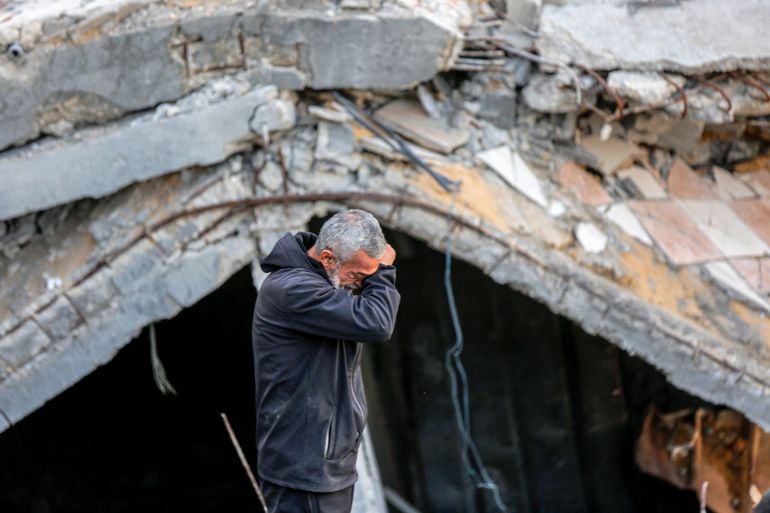
Southern Lebanon is a territory Israel has long aimed to control and has invaded multiple times. Its army currently occupies the region and has reportedly begun destroying villages to prevent the return of their inhabitants. The area is strategically important not only for its mountainous landscape but also for its water resources.
Israel also seeks control over the East Bank of the Jordan River due to economic and strategic considerations. Gaining control would not only expand access to arable land but also offer enhanced strategic depth against potential eastern threats, historically linked to Iraq and Iran. Furthermore, control over this area would bring crucial regional transit routes, especially those connecting the Arabian Peninsula to the eastern Mediterranean, under Israeli influence.
Collectively, these expansionist scenarios would provide Israel with improved access to strategic waterways like the Red Sea and closer proximity to significant energy resources. This, in turn, could substantially augment its geopolitical influence in shaping regional dynamics.
Military Dominance
The “Greater Israel” project is not solely focused on territorial expansion; it also encompasses establishing regional control to ensure the freedom to conduct military operations with minimal restrictions. This approach reflects Israel’s actions in the West Bank and the Gaza Strip since 1948, in Lebanon since September 2024, and in Syria since the collapse of the al-Assad regime in December 2024.
In this context, “dominance” signifies the capability to act unilaterally and project military force across international borders. Israel seeks operational freedom not only over its immediate neighbors—Jordan, Syria, and Lebanon—but also over Egypt, Iraq, Iran, Yemen, the Gulf states, and even portions of the Horn of Africa, such as Somalia.
Israel has reportedly advanced this aspect of the project through the use of force against its neighbors. It has also entered into various peace and security agreements with nations in the Eastern Mediterranean.
A significant development was also its successful lobbying to be placed under the jurisdiction of the United States Central Command (CENTCOM), which oversees the Middle East, rather than the US European Command. This integration into CENTCOM granted Israel access to Identification Friend or Foe (IFF) systems within the region, facilitating the operation of its warplanes across the area.
Looking ahead, to achieve regional military dominance, Israel could leverage normalization agreements that include military cooperation clauses. This might involve stationing Israeli warplanes at United States and United Kingdom facilities in the region and potentially establishing its own bases in Arab nations.
Such arrangements could be justified under the guise of security and military collaboration, enabling Israel to launch preemptive attacks against perceived imminent threats. This would also entail demilitarized zones equipped with Early Warning Systems (EWS) and intelligence facilities.
Similar mechanisms are already in place in the Sinai Peninsula under the Camp David Accords. This agreement serves Israel’s security interests by maintaining a demilitarized buffer zone, imposing limitations on Egyptian forces, including airspace restrictions, and sustaining the Multinational Force and Observers (MFO), which operates an early-warning system.
Current negotiations with the emerging Syrian leadership reportedly aim to establish a comparable security arrangement.
Furthermore, intelligence infrastructure might be integrated into surveillance and cloud-based technologies provided to Arab countries, with data processing connected to Israeli-controlled systems.
Sphere of Influence
The third component of the “Greater Israel” project involves establishing a geopolitical sphere of influence. Under this strategy, Israel aims to become a pivotal actor in shaping the domestic politics of countries it considers to be within this sphere.
In pursuing this, it seeks to emulate historical great powers, such as colonial Britain. Over the past two years, Israel has reportedly tested aspects of this approach in Lebanon, actively attempting to influence the political landscape and government formation by applying military pressure and empowering groups more amenable to Israeli political arrangements.
Israel aims to expand its sphere of influence primarily by utilizing US soft and hard power projection in the region. The pro-Israel lobby in Washington has been effective in integrating Israeli regional interests into US foreign policy concerning the Middle East.
US military and financial support for several regional states has often been contingent upon their acceptance of Israeli directives in regional matters.
International organizations largely influenced by the US have also played a role, alongside financial networks that impact credit markets. Through US and major investment entities, pressure can be applied to states to adopt specific policies, thereby aligning them more closely with Israeli strategic interests.
Iran as a Barrier
Over the past few decades, Israel has systematically removed various obstacles to its “Greater Israel” project. Iran has emerged as one of the last remaining impediments.
In this context, reports in US media suggesting Israel played a pivotal role in convincing the US to initiate war on Iran are not surprising. What proved unexpected—at least for the Israeli government—was the significant underestimation of Iranian resilience.
A month and a half into the conflict, Iran has secured a geopolitical victory by solidifying its position as a dominant regional power. It has notably strengthened its control over the Strait of Hormuz, a crucial waterway through which approximately 20 percent of global oil supplies transit.
Israel’s inability to defeat Iran—even with full US support—constitutes a significant setback for its “Greater Israel” strategy. The conflict has highlighted Israel’s reliance on external backing: it necessitated direct US involvement to defend against Iranian missile attacks, revealing a lack of independent capacity to conduct a large-scale offensive. This development casts serious doubt on Israel’s ability to pursue its expansionist ambitions autonomously.
The ramifications of this war extend beyond the immediate Israel-Iran confrontation. The perceived recklessness of the Israeli government is likely to alter strategic calculations among other regional actors, many of whom have historically been rivals of Iran. While Israel’s objective in initiating the war on Iran was to pave the way for its regional hegemony, it may soon encounter far more robust and widespread regional resistance than that posed by Iran’s “axis of resistance.”
The US itself may also become an impediment, or at least decline to provide the unconditional assistance it has offered thus far. Consecutive polls indicate dramatic shifts in US public opinion regarding Israel, with negative attitudes reaching unprecedented levels.
This trend could erode the Israeli lobby’s capacity to influence Washington in Israel’s favor. The upcoming midterm elections in 2026 and the presidential and congressional elections in 2028 could potentially introduce more critics of Israel into the US legislature, severely curtailing US support for Israel, particularly concerning its offensive operations.
The window of opportunity for realizing the “Greater Israel” project with US support may be diminishing, potentially leading to more desperate and risky Israeli actions in the months and years ahead.
#GreaterIsrael #IranIsraelConflict #MiddleEastPolitics #Geopolitics #RegionalHegemony #USForeignPolicy #IsraeliExpansionism #StraitOfHormuz #ZionistStrategy #InternationalRelations





Leave a Reply