

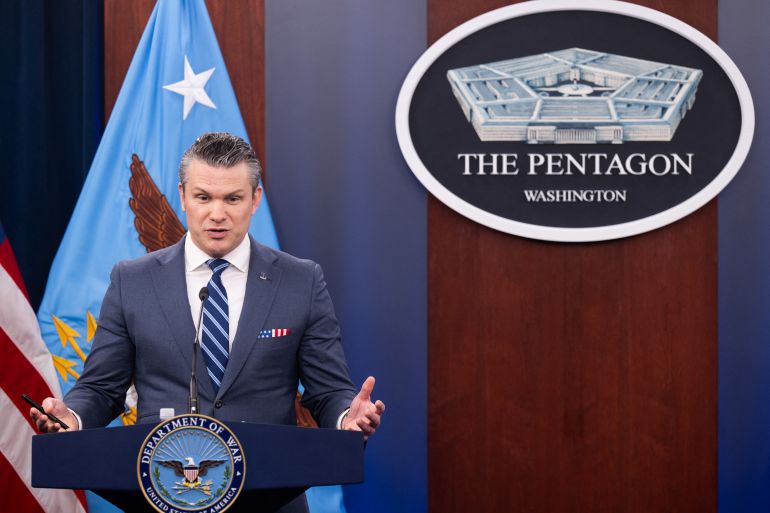
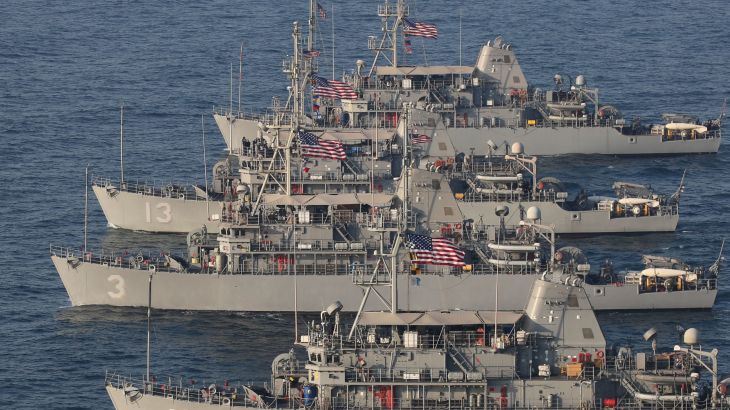
US Pentagon chief Pete Hegseth has declared that the military blockade of Iran’s ports will persist “as long as it takes,” emphasizing Washington’s readiness to launch attacks on Iran’s energy infrastructure.
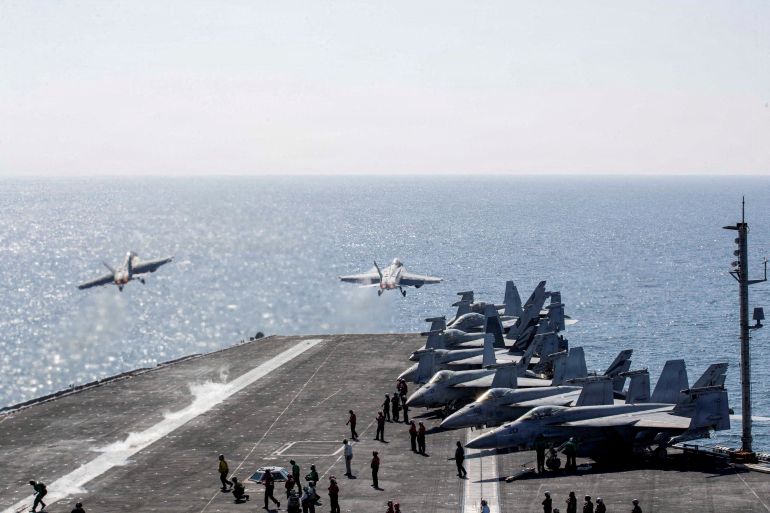
Hegseth’s remarks came on Thursday amidst a fragile ceasefire, which was established last week and remains in effect. Earlier in the week, President Donald Trump had announced the imposition of a military blockade on Iran’s ports in the Strait of Hormuz and the Gulf, following the unsuccessful US-Iran talks held in Pakistan.
The defense secretary adopted a firm stance, stating that the US is closely monitoring Iran’s military activities throughout the current pause in hostilities, which is scheduled to continue until early next week.
Hegseth asserted, “We are rearming with unprecedented power, and crucially, with superior intelligence.”
He added, “As your movements become visible to our surveillance, we are prepared to target your critical dual-use infrastructure, remaining power generation capabilities, and energy industry.”
Despite the strong warnings, the Pentagon chief indicated that the US prefers a diplomatic resolution to the conflict, which originated from US-Israeli attacks on Iran on February 28.
“Iran has the opportunity to choose a prosperous future, a ‘golden bridge,’ and we hope this choice is made for the benefit of the Iranian people,” he stated. “Meanwhile, and for the necessary duration, we will uphold this effective blockade. However, if Iran makes an unfavorable decision, they will face both the blockade and airstrikes on their infrastructure, power, and energy sectors.”
On Wednesday, a Pakistani delegation arrived in Tehran to facilitate a new round of discussions. While both parties have expressed openness to continued negotiations, Major-General Ali Abdollahi, commander of the Khatam al-Anbiya Central Headquarters of the Islamic Revolutionary Guard Corps (IRGC), cautioned that the US blockade could jeopardize the ongoing ceasefire.
Concurrently, White House spokesperson Karoline Leavitt conveyed that the US maintains an optimistic view regarding future negotiations.
She affirmed, “At this moment, we remain deeply committed to these negotiations and discussions.”
However, reporting from Tehran on Thursday, Al Jazeera’s Ali Hashem highlighted persistent deep-seated distrust. He noted that the US, under the Trump administration, had previously launched two attacks on Iran amidst ongoing indirect talks concerning Iran’s nuclear program, a factor that has significantly impacted the latest diplomatic efforts.
Hashem observed, “While multiple messages have been delivered to the Iranians, instead of fostering trust and optimism, the sentiment appears to be already unsettled.”
He further mentioned, “A platform closely linked to the foreign ministry tweeted today, citing a source who suggested that any optimism displayed or reported in the media is merely hype, serving public relations purposes and intended for President Trump’s use in the markets.”
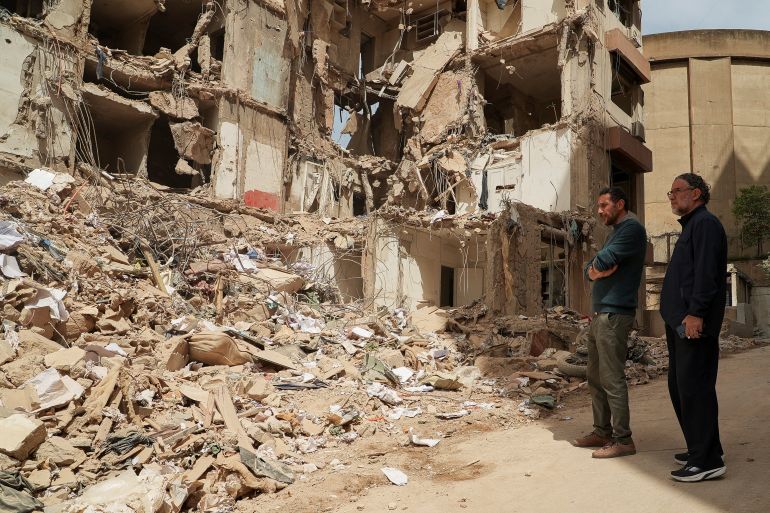
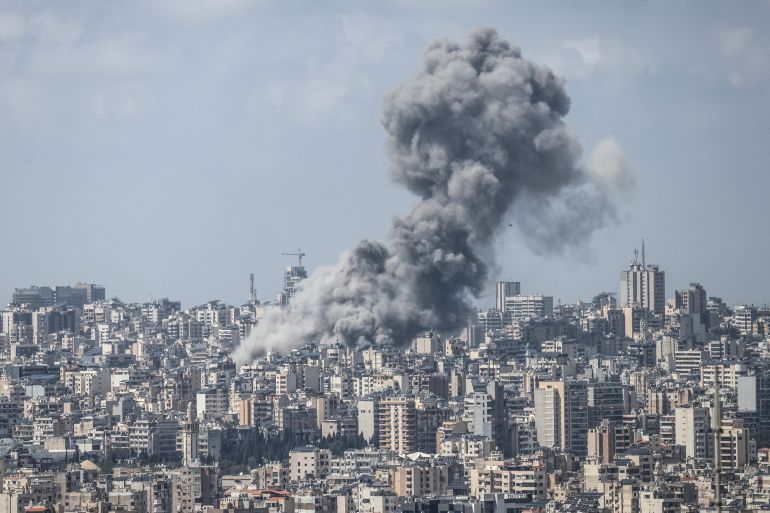
Iran’s Parliament Speaker, Mohammad Bagher Ghalibaf, who headed the Iranian delegation in talks, informed his Lebanese counterpart on Thursday that a ceasefire in Israel’s invasion and continuous bombardment of Lebanon holds “equal importance” to the current pause in fighting in Iran.
Securing Israel’s agreement for a ceasefire in Lebanon has become a significant obstacle in the ongoing negotiations, which also address the control of the Strait of Hormuz and the future of Iran’s nuclear program.
‘Force Will Be Used’
During the Thursday news conference, General Dan Caine, Chairman of the Joint Chiefs of Staff, reported that 13 vessels departing Iranian ports have turned back following warnings from the US military.
Caine unequivocally stated, “Non-compliance with this blockade will result in the use of force.”
Meanwhile, Admiral Brad Cooper, head of US Central Command (CENTCOM), noted that the US is utilizing the current conflict to rearm and reposition its forces.
He explained, “We are rearming, retooling, and refining our tactics, techniques, and procedures. No other military adapts as effectively as ours, and this is precisely what we are doing during the ceasefire.”
During the Q&A session with reporters, Hegseth also dismissed reports suggesting China intended to supply weapons to Iran during the ceasefire, stating that Washington had received assurances from Beijing denying such plans.
Hegseth dedicated a significant part of the news conference to criticize US media coverage of the conflict, particularly its critiques of the Trump administration’s evolving objectives and justifications for initiating the hostilities.
He labeled the coverage as “incredibly unpatriotic.”
#IranBlockade #USIranTensions #MiddleEastDiplomacy #EnergySecurity #StraitOfHormuz #Geopolitics #MilitaryBlockade #InternationalRelations #CeasefireTalks #PentagonBriefing


Leave a Reply