

Modern warfare has undergone a significant transformation, evident in conflicts such as the Russia-Ukraine war, engagements involving Gaza, India and Pakistan, and recent US-Israeli actions targeting Iran. This evolving landscape highlights a growing global dependence on advanced drone and missile technologies, alongside sophisticated air defence systems.
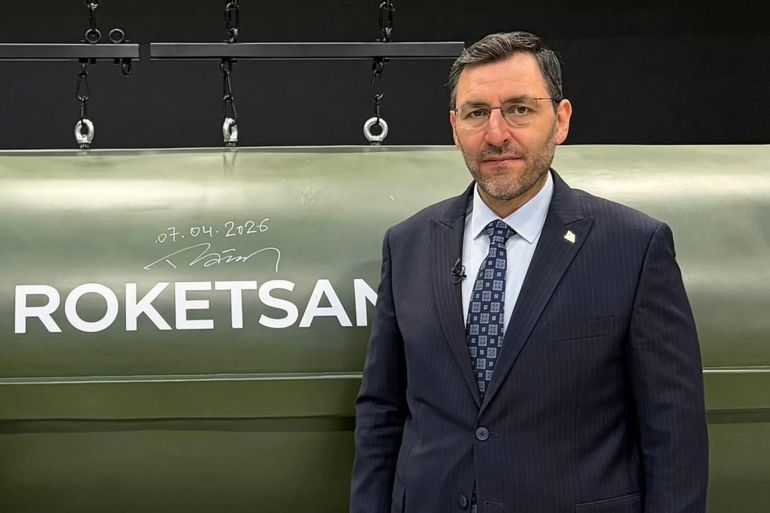
Turkiye, recognized as a prominent military power in the Middle East, is actively enhancing its role as a key supplier within the international defence industry. A cornerstone of this strategy is Roketsan, a company established in 1988 to serve the Turkish Armed Forces, which has since become the nation’s leading producer of missile and rocket systems.
With exports reaching approximately 50 countries, Roketsan stands out as one of the world’s most rapidly expanding defence enterprises. This raises the question: How has Roketsan managed to capture such a substantial portion of the global arms market?
Bypassing Western Embargoes
Turkiye’s rapid expansion in defence was significantly propelled by external restrictions. Western embargoes, intended to impede its military progress, inadvertently prevented Ankara from procuring essential technical systems and components.
In 2020, the United States implemented Countering America’s Adversaries Through Sanctions Act (CAATSA) restrictions against Turkiye, a vital NATO ally. These sanctions specifically targeted Turkiye’s military procurement agency, its head Ismail Demir, and three other high-ranking officials. Furthermore, Washington removed Ankara from the F-35 stealth jet program in July 2019.
These measures were enacted after Ankara’s acquisition of Russia’s S-400 missile defence system, which was perceived as a potential risk to NATO security. The European Union also considered limited sanctions and discussed curbing arms exports due to ongoing energy exploration disputes in the Eastern Mediterranean.
To overcome these challenges, Turkiye developed a robust, integrated domestic defence ecosystem. Currently, the nation leverages an extensive supply chain comprising nearly 4,000 small and medium-sized enterprises (SMEs) nationwide. Consequently, the Turkish defence industry now boasts a local production rate exceeding 90 percent.
This strategic shift has generated substantial financial benefits for Ankara. In 2025, Turkiye’s defence industry recorded $10 billion in exports. Murat Ikinci, Roketsan’s General Manager, informed Al Jazeera that the company presently holds the 71st position among global defence firms, with aspirations to climb into the top 50, then the top 20, and eventually the top 10.
To bolster this expansion, Turkish President Recep Tayyip Erdogan recently inaugurated several significant facilities. These include:
- Europe’s largest warhead production facility.
- A new research and development (R&D) centre accommodating 1,000 engineers.
- The “Kirikkale” facility, specifically designed for rocket fuel technology.
- New infrastructure dedicated to the mass production of ballistic and cruise missiles.
These projects collectively represent a $1 billion investment, with Roketsan planning an additional $2 billion injection to further enhance its mass production capabilities.
The ‘Tayfun’ Project and Modern Warfare
Roketsan’s R&D strategy, which involves 3,200 engineers and positions the company as Turkiye’s third-largest R&D institution, is significantly shaped by insights derived from current global conflicts.
According to Ikinci, the conflict in Ukraine underscored the effectiveness of affordable, first-person view (FPV) and kamikaze drones, often augmented by artificial intelligence. In response, Roketsan has developed air defence systems such as “ALKA” and “BURC,” in addition to the “CIRIT” laser-guided missile.
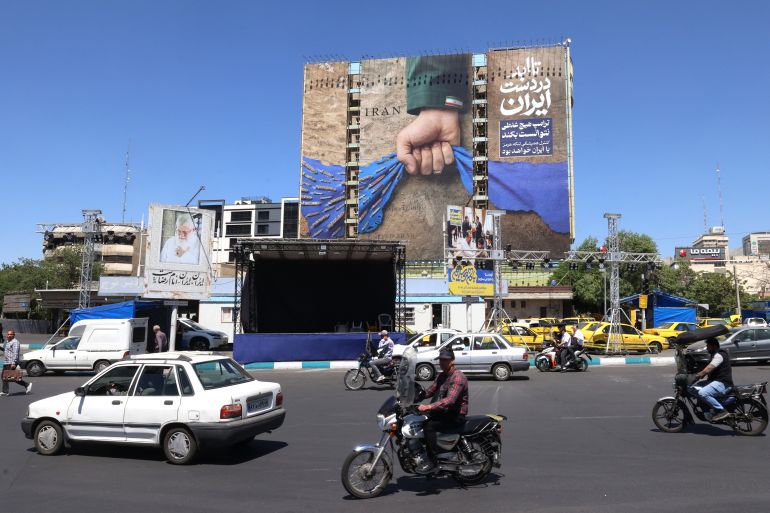
The regional security environment became more intricate during the period of US-Israeli actions involving Iran. Affordable Iranian-designed Shahed drones, recently enhanced by Russia with “Kometa-B” anti-jamming modules, reportedly overwhelmed defence systems and even hit a British base in Cyprus in March 2026. In the same month, NATO air defences were compelled to intercept three Iranian ballistic missiles that intruded into Turkish airspace.
Concurrently, the recent escalation between Israel and Iran demonstrated sophisticated attacks involving ballistic missiles combined with “swarms” of kamikaze drones, engineered to saturate air defences. This operational context underscores the critical importance of hypersonic technology.
This brings the Tayfun (Typhoon) project into sharp focus. Tayfun represents a developing family of long-range ballistic missiles. Its most advanced version, the Tayfun Block 4, is a hypersonic missile designed to breach sophisticated air defence systems through extreme velocity.
When questioned by Al Jazeera about the precise operational range of the Tayfun, Ikinci remained circumspect, stating, “We avoid mentioning its range; we just say its range is sufficient.”
Likewise, past Western sanctions have spurred Turkiye to forge new cooperative ventures, effectively fostering an “Eastern shift” away from reliance on Western defence. Turkish drones are now deployed by an increasing number of nations, notably by Pakistan during its conflict with India last May.
Based on these strategic threat assessments, Roketsan has identified and prioritized five critical areas for production:
- Long-range ballistic and cruise missiles.
- Advanced air defence systems, including the “Steel Dome”, Hisar-A, Hisar-O, and Siper.
- Submarine-launched cruise missiles, leveraging the AKYA system to enhance Turkiye’s substantial submarine fleet.
- Smart micro-munitions specifically engineered for armed drones.
- Long-range air-to-air missiles, a requirement underscored by the recent India-Pakistan skirmish.
A Strategic Export Model
Diverging from conventional arms procurement, Turkiye is positioning its defence industry to international buyers as a model of strategic partnership.
Ikinci articulated Roketsan’s unique proposition to its partners: “Our offer to our partners… is as follows: Let’s produce together, let’s develop technology together.”
Through the establishment of joint facilities and R&D centres in allied countries across the Middle East, the Far East, and Europe, Turkiye aims to cultivate enduring geopolitical alliances beyond mere transactional sales. Ikinci cited Qatar as an exemplary case of this model, characterizing it as a standard for technological, military, and security collaboration in the region.
Filling the Global Stockpile Gap
This accelerated expansion by Turkiye coincides with a crucial period for the global arms trade. Ongoing conflicts have significantly diminished worldwide stockpiles of advanced weapon systems.
During recent US-Israeli actions involving Iran, Washington extensively utilized multimillion-dollar Patriot and Terminal High Altitude Area Defense (THAAD) systems to intercept more affordable Iranian drones targeting US assets across Qatar, Kuwait, Bahrain, Saudi Arabia, and the United Arab Emirates. Amid increasing concerns about dwindling US interceptor supplies, Gulf states—which have collectively identified over 1,000 drones in their airspace—are actively exploring alternative defence technologies. This situation presents a highly opportune moment for Turkiye’s missile industry.
Defence analyses suggest that even major military powers such as the US will need considerable time to replenish their current air defence inventories, owing to the intricate nature and extensive infrastructure necessary for their production.
Turkish defence officials perceive this global shortage as a strategic advantage. By successfully localizing its supply chain, Turkiye asserts its capability to independently manufacture and export these highly demanded complex systems.
As the global demand for air defence and ballistic technologies continues to grow, Roketsan is vigorously reinvesting its earnings into production infrastructure, aiming to significantly expand its presence in the international arms market.
#TurkiyeDefence #Roketsan #DefenceIndustry #MissileTechnology #DroneWarfare #AirDefence #MilitaryExports #GeopoliticalAlliances #HypersonicMissiles #GlobalSecurity



Leave a Reply