

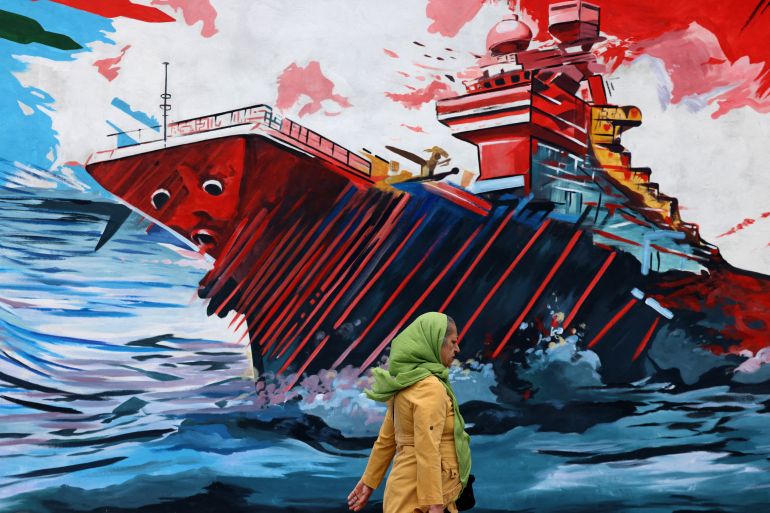
United States President Donald Trump has issued a stark warning, stating that American forces will maintain their deployment around Iran and threatening severe military action should Tehran fail to comply with Washington’s demands. This declaration casts significant doubt over a recently established, fragile ceasefire.
In a social media post late Wednesday, Trump affirmed that US troops, aircraft, and naval assets would stay in their current positions until what he termed the “REAL AGREEMENT” is fully implemented.
“All US ships, aircraft, and military personnel… will remain in place in, and around, Iran, until such time as the REAL AGREEMENT reached is fully complied with,” Trump wrote on Truth Social. He added a menacing caveat: “If for any reason it is not… the ‘Shootin’ Starts,’ bigger, and better, and stronger than anyone has ever seen before.”
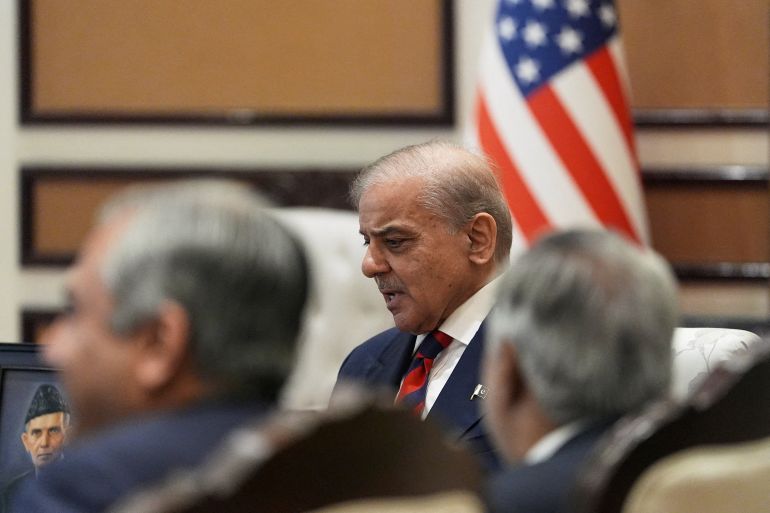
These remarks came just a day after a two-week ceasefire, brokered by Pakistan, had paused six weeks of intense fighting between Washington and Tehran. The truce had briefly eased global market anxieties concerning potential disruptions in the vital Strait of Hormuz.
However, Trump’s choice of words underscored the precariousness of the truce. He reiterated US demands for Iran to abandon any nuclear weapons ambitions and ensure safe passage through the crucial shipping lane. He also boasted that US forces were “Loading Up and Resting, looking forward, actually, to its next Conquest,” suggesting readiness for further military engagement.
Meanwhile, in Iran on Thursday, the semi-official ISNA and Tasnim news agencies published a graphic indicating that the country’s paramilitary Islamic Revolutionary Guard Corps (IRGC) had deployed sea mines in the Strait of Hormuz during the recent conflict.
This chart depicted a large Farsi-labeled “danger zone” over the Traffic Separation Scheme, the customary route for ships through the strait. It suggested that vessels should navigate further north, closer to Iran’s mainland near Larak Island—a route some ships were observed using during the hostilities. The chart was dated from February 28 to April 9, leaving uncertainty about whether the IRGC had since cleared any mines from this alternative route.
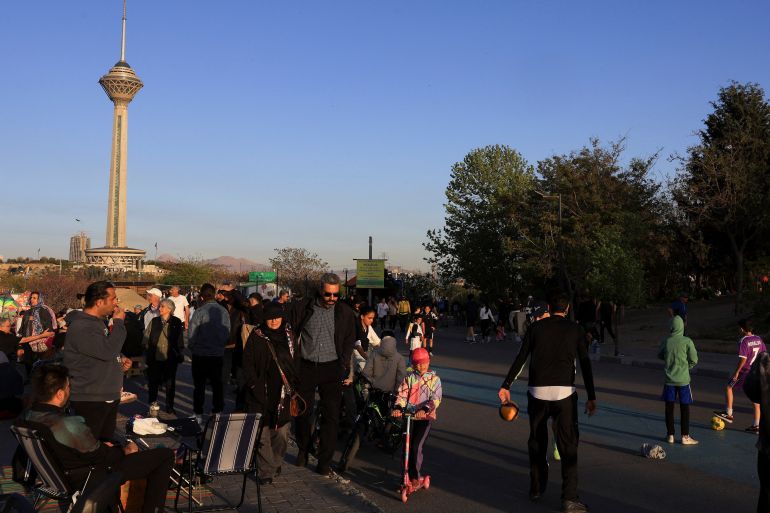
On the ground in Iran, skepticism regarding the ceasefire runs deep.
Many residents in Tehran questioned the viability of diplomacy amidst ongoing US threats and Israel’s persistent military campaign across the region.
“If even one day passes without killing and bloodshed, that would be very good. It would make us happy. I swear to God, when I saw all this killing, I was so upset, I couldn’t even stay in my own home,” one woman shared with Al Jazeera.
Another man outright dismissed the truce, citing Israel’s continued bombardment of Lebanon. “A ceasefire has no meaning at all when our martyred leader has not even been buried yet, and when the rules of war are still being violated,” he stated.
A third resident was even more direct: “It’s all a theatrical show that Trump is playing. We have no belief in this ceasefire.”
The ceasefire itself remains fraught with contradictions. Tehran has rejected a comprehensive US proposal, instead presenting its own demands, which include an end to Israeli attacks on Lebanon and the lifting of sanctions—conditions Washington has not accepted.
Despite the prevailing uncertainty, Iranian officials seemed to confirm that a delegation would travel to Islamabad for discussions with US representatives in the coming days. Iran’s ambassador to Pakistan, Reza Amiri Moghadam, initially posted on X (formerly Twitter) on Thursday that a “delegation arrives tonight in Islamabad for serious talks based on 10 points proposed by Iran,” though he later deleted the post.
This development coincided with authorities in the Pakistani capital declaring two days of local holidays on short notice Wednesday, without providing a specific reason.
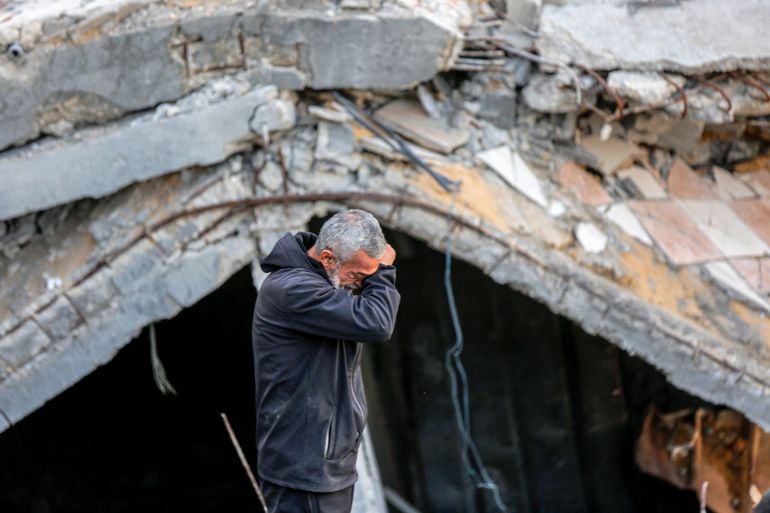
Israel has already moved to undermine the truce’s credibility. While seemingly supporting Washington’s pause in direct strikes on Iran, it has intensified its assault on Lebanon, launching some of its deadliest attacks since February and resulting in at least 182 fatalities in a single day.
This escalation has prompted warnings from Tehran that continuing negotiations under such conditions may be deemed “unreasonable.”
Meanwhile, in the US, opposition to the war is growing. Senator Cory Booker indicated that Democrats would seek to force a vote under the War Powers Resolution to curb what he described as unauthorized military action.
“Trump’s unauthorized military actions and reckless war-mongering must stop,” Booker asserted. “The American people do not want and have not authorized [this war], but nonetheless keep paying the price.”
#USIranTensions #MiddleEastConflict #TrumpStatement #CeasefireDoubts #StraitOfHormuz #Geopolitics #IranNuclearDeal #MilitaryAction #Diplomacy #InternationalRelations





Leave a Reply