

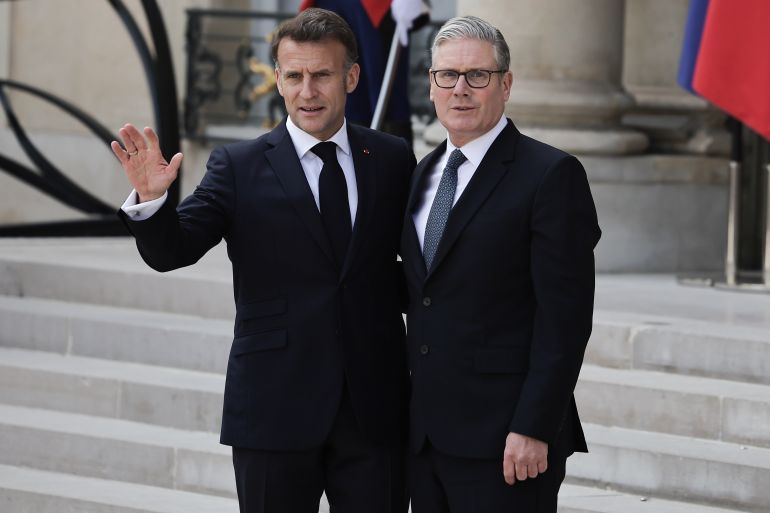
France and the United Kingdom are leading an initiative, convening dozens of nations to develop plans for a multinational maritime force aimed at securing the Strait of Hormuz. Notably, Washington is not participating in these discussions.
The high-level meeting is taking place at the Elysee presidential palace in Paris on Friday, co-chaired by French President Emmanuel Macron and British Prime Minister Keir Starmer. Approximately 30 to 40 countries are represented, either in person or via video conference. Among the notable attendees are German Chancellor Friedrich Merz and Italian Premier Giorgia Meloni, though a complete list of participants has not been released.
The discussions are centered on the “Strait of Hormuz Maritime Freedom of Navigation Initiative.” This proposed mission is strictly defensive, designed to restore free passage through the critical waterway once a lasting ceasefire is achieved in the ongoing regional conflict.
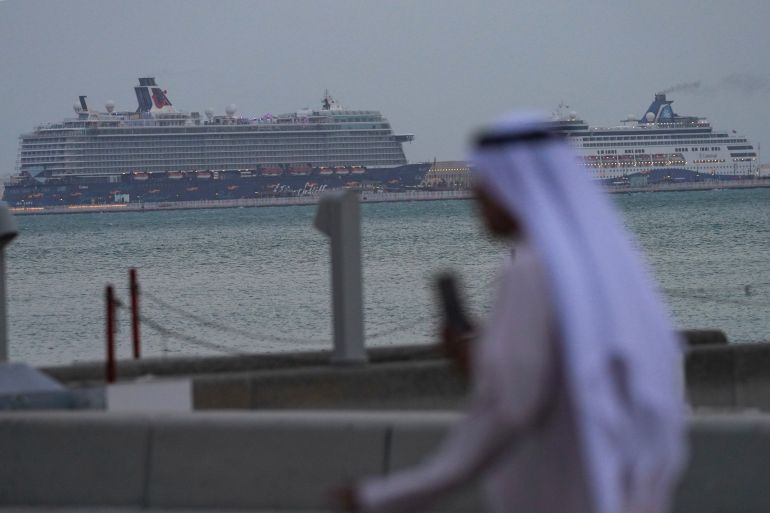
The strait has been closed since February 28, following a blockade imposed amidst regional tensions. This development occurred after military actions by the US and Israel. This vital chokepoint typically handles a fifth of the world’s oil supply. The disruption has been further complicated by the US, which has since imposed its own blockade on Iranian ports.
European leaders have voiced concerns that the continued closure poses a threat to consumers, potentially leading to higher inflation, food shortages, and flight cancellations due to dwindling jet fuel supplies. Furthermore, over 20,000 seafarers are reportedly stranded on hundreds of vessels caught in the blockade.
Strictly Defensive Mission
Before the meeting, Prime Minister Starmer underscored the global responsibility for the unconditional and immediate reopening of the strait, emphasizing the necessity for global energy and trade to flow freely again. French Foreign Minister Jean-Noel Barrot described the economic consequences of the blockade as “major” for both French citizens and businesses.
The initiative draws parallels with Europe’s previous efforts to establish a security force for Ukraine, sharing similar conditions: deployment would only occur once the conflict concludes and security conditions permit. A French presidential official, speaking to AFP, indicated that allies would require “an Iranian commitment not to fire on passing ships and a US commitment not to block any ships leaving or entering the Strait of Hormuz” before any mission could proceed.
Washington’s absence from the discussions is intentional. President Macron clarified that the mission to ensure shipping security through the strait would be “strictly defensive” and limited to non-belligerent nations. The operation is also seen partly as a response to past criticisms from former US President Trump, who had previously admonished European allies for not joining conflicts, labeled NATO members “cowards,” and remarked to the UK, “You don’t even have a navy.” The US blockade on Iranian ports, initiated by Trump, has further escalated the economic risks.
Military planning for the initiative is already in progress. The UK has explored deploying mine-hunting drones from the ship RFA Lyme Bay, while France has dispatched its nuclear-powered aircraft carrier, a helicopter carrier, and several frigates to the region. French military spokesman Colonel Guillaume Vernet, however, cautioned that the mission remains “in construction.”
#StraitOfHormuz #MaritimeSecurity #GlobalTrade #EnergySecurity #FranceUKSummit #EmmanuelMacron #KeirStarmer #FreedomOfNavigation #InternationalCooperation #RegionalStability



Leave a Reply