

The recent conflict involving the US, Israel, and Iran has brought to light the limitations of containment strategies, created divisions among international allies, and presented the global community with a stark choice: cautious diplomacy or the potentially high-risk path of regime change.
This confrontation is more than just a localized military action or a continuation of a deterrence cycle. It serves as a critical juncture, revealing fundamental shifts in the international order. Geopolitical lines have been redrawn in an unprecedented manner, challenging long-held assumptions by major powers that conflicts could be managed through neutrality or traditional diplomatic tools.
From the outset of the conflict, it became evident that the world has moved beyond a framework of carefully managed tensions. We now operate in a deeply interconnected environment where geographical boundaries blur with transnational networks, allowing regional crises to quickly escalate into global shocks. For instance, in the initial days, Iran conducted strikes across multiple regional countries, targeting American assets and critical Gulf energy infrastructure, leading to immediate global market disruptions.
The Limits of Neutrality
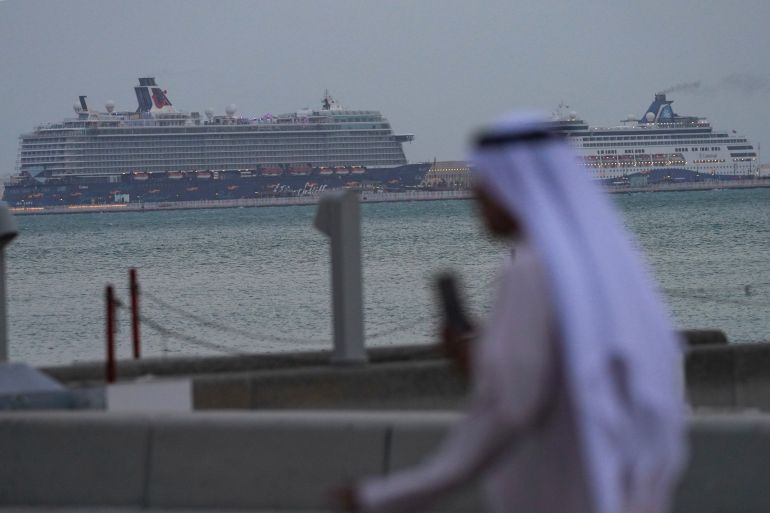
The conflict has highlighted that the notion of neutrality is increasingly difficult to maintain in modern regional contexts, especially in the Middle East. When conflicts involve armed proxies, the disruption of vital maritime routes, and threats to global energy supplies, states often find themselves inevitably drawn into the crisis, despite their efforts to remain neutral. For example, Qatar, which had spent years fostering mediation between Washington and Tehran and maintaining open communication with all parties, experienced Iranian strikes on its civilian infrastructure and energy facilities shortly after the war commenced.
Declaring neutrality is often simpler than upholding it. Strikes by Iran on energy infrastructure across various Gulf states compelled several producers to invoke force majeure and suspend operations. In Qatar, Qatar Energy ceased LNG production, and the repercussions were swiftly felt in Europe, with gas prices surging by nearly 50 percent in the Netherlands and the UK. This served as a stark reminder of how directly the global economy, energy security, and supply chains are linked to the stability of this region.
When Allies Disagree
Engaging with challenging or unyielding regimes continues to be a persistent hurdle. Several NATO members expressed reluctance or outright declined to support Washington’s call for broader cooperation. On the multilateral front, divisions within the UN Security Council became apparent: while some members condemned Iran’s strikes on Gulf states, the Council could not achieve consensus on the US-Israeli strikes, highlighting significant disagreements among major powers on how to engage with Iran.
The perspective advocating for a ceasefire is supported by substantial historical evidence. Past military interventions, such as those in Iraq and Libya, have shown that forcibly overthrowing regimes does not guarantee the establishment of stable systems; instead, it frequently leads to chaos and institutional breakdown. In both Iraq and Libya, external military actions contributed to extended conflicts, fragmentation, and institutional collapse, from which these nations are still striving to recover.
This viewpoint asserts that war exacerbates crises, and therefore, the primary focus should be on stopping humanitarian and economic damage and returning to diplomatic channels, even if it entails coexisting with a challenging or unyielding regime. It also prioritizes relative stability over unpredictable chaos.
However, this argument encounters a fundamental challenge: it presumes that the Iranian government can be contained within the bounds of conventional diplomacy. This assumption has been questioned by Iran’s actions since February 28, including strikes on several Gulf states like Qatar and Saudi Arabia, despite explicit assurances from these nations that their territories would not be used for offensive operations against Iran.
Conversely, the camp advocating for regime change argues that the conflict did not originate the crisis but rather exposed its underlying nature. They contend that Iran’s actions, such as targeting maritime corridors and expanding proxy conflicts, demonstrate that the government cannot be contained or moderated through traditional means. Decades of diplomatic efforts and sanctions, for instance, did not prevent the closure of the Strait of Hormuz.
Supporters of this stance assert that decades of diplomacy, including the nuclear agreement and regional mediation, have inadvertently contributed to the expansion of Iran’s capabilities and influence, rather than containing them. For this group, the ultimate solution involves altering the fundamental structure of the government itself.
Nevertheless, this argument presents a deeply complex question: what follows regime change? Historical precedents in the region offer no clear successful model for state rebuilding after the overthrow of governments, suggesting that this option might carry risks disproportionate to its potential benefits. The initial strike of this conflict, the assassination of Iran’s Supreme Leader Ayatollah Ali Khamenei, was based on the premise that removing the head of state would lead to collapse. Instead, a successor was chosen shortly after, and state institutions continued to operate.
The International Order at a Crossroads
Indeed, this conflict underscores a profound shift in the nature of threats facing the international order. Threats are no longer solely conventional or confined by national borders; they are now interconnected and can rapidly propagate across military, economic, and digital domains simultaneously. Their origins extend beyond regular armies to a convergence of various instruments: militias, cyberattacks, economic targeting, and the disruption of maritime passages. This intricate complexity makes it exceptionally challenging to rely on traditional diplomatic or military tools for effective crisis resolution.
Advocating for a cessation of hostilities without addressing the underlying causes of the crisis might merely delay an inevitable escalation, while pursuing radical change without a clear post-transition plan could lead to even greater instability.
Caught between these two approaches, the world faces a fundamental dilemma: How can it address a government widely perceived by many states as a source of problems, without allowing efforts to transform it to inadvertently create an even larger crisis?
It appears evident that the upcoming period will offer limited scope for the “grey zone” in which states have traditionally operated. The choice will likely be between a strategy of cautious containment and one of decisive resolution. In either scenario, the consequences of such decisions will be significant, not only regionally but also for the global order as a whole.
**Disclaimer:** The views expressed in this article are solely those of the author and do not necessarily reflect the editorial stance of Al Jazeera.
#IranConflict #MiddleEastCrisis #Geopolitics #InternationalRelations #NeutralityLimits #DiplomacyVsRegimeChange #GlobalSecurity #EnergySecurity #UNSecurityCouncil #RegionalStability




Leave a Reply