

Islamabad, Pakistan – Pakistan’s Foreign Ministry confirmed on Thursday that the United States and Iran are engaged in discussions, facilitated by Islamabad, to arrange a second meeting between their negotiators. The aim is to end their nearly seven-week conflict, with a fragile ceasefire, announced on April 8, nearing its expiration.
However, the ministry added that **no specific date has been set** for this next round of negotiations, even as Islamabad intensifies its parallel diplomatic efforts to sustain the process.
Foreign Ministry spokesperson **Tahir Andrabi** told reporters in Islamabad, regarding the potential structure of upcoming talks: “Who will come, how big the delegation will be, who will stay, and who will go is for the parties to decide. As a mediator, it’s important for us to keep the talks confidential. We had the details and information of the talks entrusted to us by the negotiating parties.”
Speaking about the first round of talks on April 12 in Islamabad, which concluded without a deal, Andrabi stated: “There was neither a breakthrough nor a breakdown.” He confirmed that **nuclear issues remain among the key subjects** under discussion but declined to elaborate.
His comments coincide with a regional tour by Pakistan’s civil and military leadership, an initiative some observers are calling the “**Islamabad Process**.” This reflects the government’s strategy to frame negotiations as an ongoing diplomatic endeavor rather than a one-off event.
Parallel Diplomatic Tracks
Pakistan’s Prime Minister **Shehbaz Sharif** arrived in Doha on Thursday, the second stop of a four-day regional tour that began in Jeddah on Wednesday and will include a visit to Antalya.
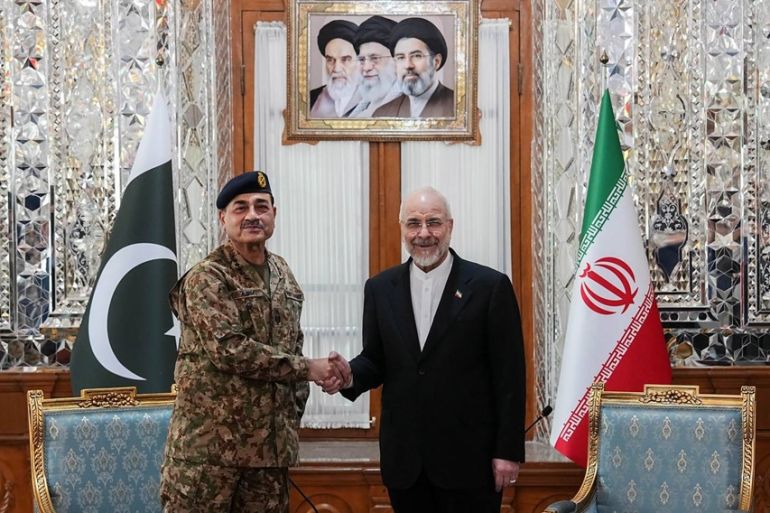
Concurrently, Pakistan’s Chief of Defence Forces (CDF) **Asim Munir** arrived in Tehran on Wednesday with a delegation, including Interior Minister Mohsin Naqvi.
Munir was warmly received at the airport by Iranian Foreign Minister **Abbas Araghchi**, who expressed delight and gratitude for Pakistan’s “gracious hosting of dialogue.” On Thursday, Iranian Parliamentary Speaker **Mohammad Bagher Ghalibaf**, who led Tehran’s delegation at the Islamabad talks, also met Munir.
**Reza Amiri Moghadam**, Iran’s ambassador to Pakistan, affirmed at an event in Islamabad that Tehran would consider no venue other than Pakistan for talks with Washington. “We will do talks in Pakistan and nowhere else, because we trust Pakistan,” he stated.
**Muhammad Faisal**, a Pakistani security analyst, described the parallel outreach as a deliberate division of labor. He told Al Jazeera: “Pakistan’s strategy appears to be dual-tracked: PM Sharif is reassuring Gulf allies and attempting to build a broader support coalition, while CDF Munir is engaged in hard negotiations between the two sides to narrow gaps between Iran and the US, with an eye on extending the ceasefire and reaching a broader understanding.”
Reports of Munir potentially traveling to Washington, DC, after Tehran were denied by security officials as “speculative,” and Andrabi stated he was unaware of such developments.
In Jeddah on Wednesday, Sharif met Saudi Crown Prince **Mohammed bin Salman** and conveyed “full solidarity and support” for the kingdom following regional escalation. The crown prince praised the “constructive role” played by both Sharif and Munir.
In Doha, Sharif discussed “the regional situation, particularly in the Gulf region,” with Qatar’s Emir **Sheikh Tamim bin Hamad Al Thani**, emphasizing “the importance of de-escalation, dialogue and close international coordination to ensure peace and stability.”
Sharif is set to travel from Doha to Antalya with Deputy Prime Minister and Foreign Minister **Ishaq Dar**, where they are expected to meet counterparts from Saudi Arabia, Turkiye, and potentially Egypt on the sidelines of the Antalya Diplomacy Forum on April 17.
Regional Security Push
The Antalya meeting is part of a broader diplomatic initiative. Turkiye is preparing to host discussions on a regional security platform involving Pakistan, Saudi Arabia, and possibly Egypt, according to officials familiar with the talks. This would be the third such meeting in a month, following earlier rounds in Riyadh and Islamabad.
The goal is to establish a platform for regular, structured cooperation on regional security issues, distinct from current efforts to end the Iran war.
Turkish Foreign Minister **Hakan Fidan** confirmed ongoing discussions but stated no agreement had been finalized. “This pact is necessary so that countries can be assured of one another,” he told the state-run Anadolu Agency.
Turkiye also reaffirmed its support for the US-Iran peace process, with its Defence Ministry stating it expects “the parties will be constructive in the ongoing negotiation process” and will continue to support the ceasefire in its transition to a permanent truce.
Ceasefire Under Strain
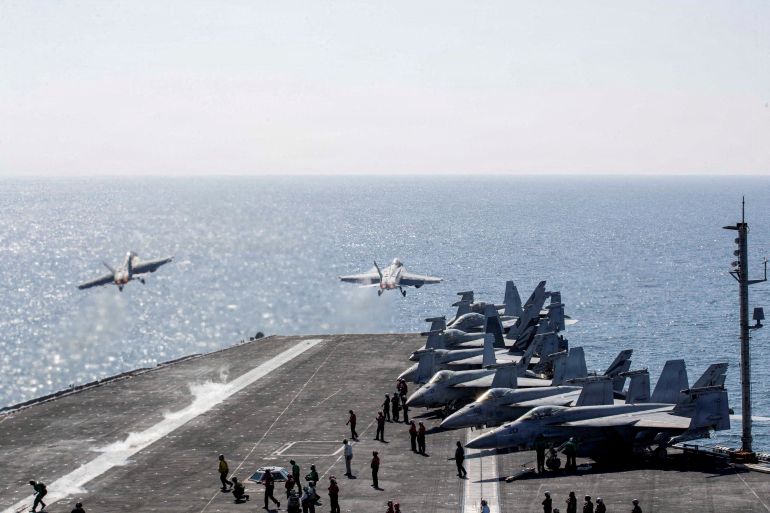
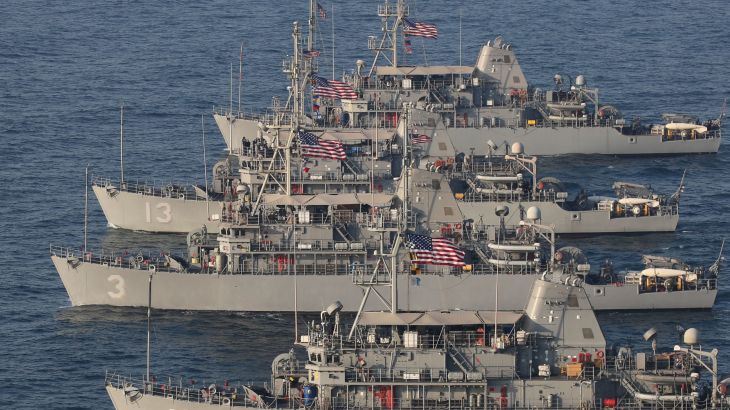
The two-week ceasefire, brokered by Pakistan on April 8, which halted attacks in Iran and the Gulf, is due to expire on April 22. While still holding, it is under increasing strain. A US naval blockade on Iranian ports remains in place, with the US Central Command reporting nine ships turned away as of Wednesday.
**Kamran Yousuf**, an Islamabad-based journalist, anticipates the ceasefire will be extended. “I would be really surprised if the current ceasefire is not extended. There is little appetite on both sides to go back to war. There are enough signs on the ground that if there is no deal before the truce expires, the ceasefire will be extended,” he told Al Jazeera.
However, Faisal offered a more cautious assessment, warning that failure to secure a second round would alter Pakistan’s role from mediator to crisis manager, focusing on brokering new ceasefires if hostilities resume.
Despite the uncertainty, signals from both Washington and Tehran remain cautiously optimistic. White House press secretary **Karoline Leavitt** indicated further talks would “very likely” take place in Islamabad, expressing optimism about a deal. Iran’s Foreign Ministry spokesperson **Esmaeil Baghaei** confirmed multiple messages exchanged with Washington via Pakistan since April 12. US President **Donald Trump** also suggested talks could resume soon and that Washington was “more inclined to go” to Pakistan.
Sticking Points Remain
The path to a second round is complicated by unresolved disputes.
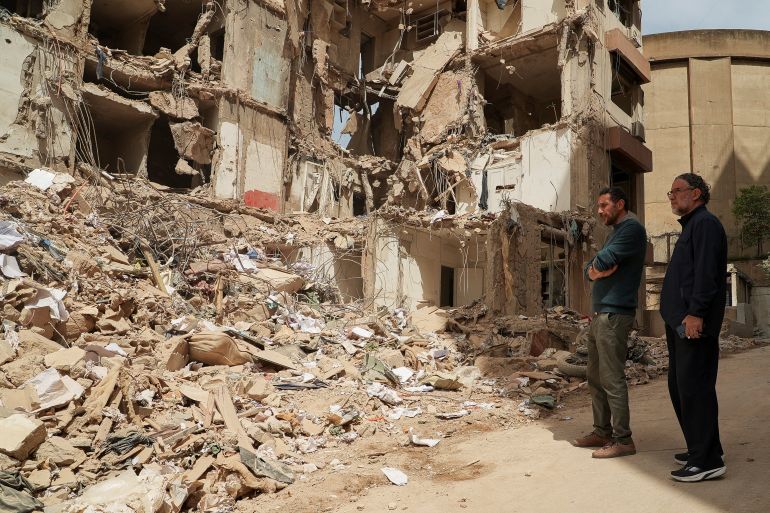
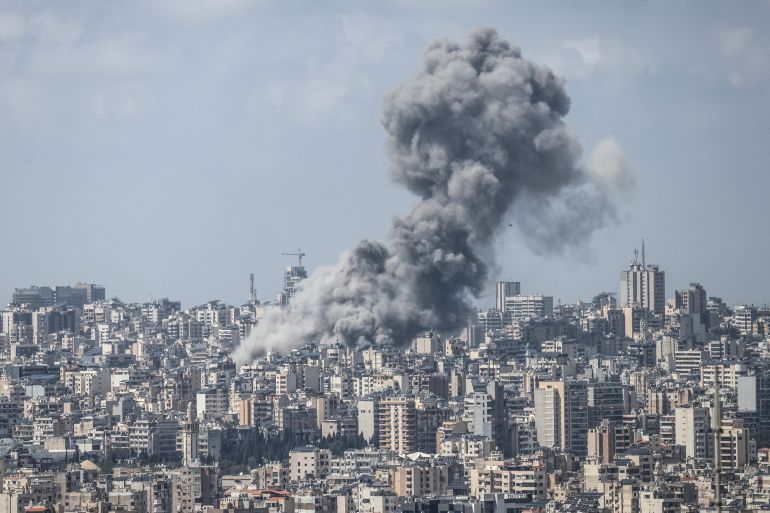
Iran insists on the inclusion of Lebanon in any agreement, arguing that ongoing Israeli strikes there, which have caused significant casualties and displacement, are inseparable from the wider conflict. On April 14, the US convened a trilateral meeting in Washington with the ambassadors of Israel and Lebanon, described as “productive” but yielding no ceasefire or follow-up agreement.
Washington maintains that any Lebanon deal must be separate from US-Iran negotiations. However, Andrabi aligned Pakistan with Iran on this issue, stating, “Peace in Lebanon is essential for US-Iran peace talks,” and noting encouraging signs of improvement on the Israel-Lebanon front.
Yousuf believes a Lebanon ceasefire would be an important confidence-building measure for Iran, signaling US seriousness for a second round. Yet, he emphasized that **Iran’s nuclear program remains the core challenge**.
**Grace Wermenbol**, a former US national security official, noted that Washington’s approach to Lebanon depends on Trump’s willingness to pressure Israel. “A clear pathway to a cessation of hostilities in Lebanon exists,” she said. “The question is whether Trump will be willing to apply the pressure necessary on Israel to halt its military offensive and allow the Lebanese government to continue its military disarmament efforts.”
The **Strait of Hormuz** presents another major obstacle. The waterway, crucial for global oil transit, has been effectively blocked by Iran since early in the war, with exceptions for countries with individual deals. The US imposed its own naval blockade on the strait starting Monday, targeting Iran-linked vessels.
Wermenbol highlighted the Strait of Hormuz as the primary issue in negotiations, crucial for easing oil prices and restoring market confidence. She suggested that Tehran appears to be betting Washington will eventually back down, as there is no easy military solution, necessitating a diplomatic deal.
#USIranTalks #PakistanDiplomacy #MiddleEastPeace #Ceasefire #IslamabadProcess #RegionalSecurity #StraitOfHormuz #NuclearDeal #LebanonCrisis #DiplomaticEfforts


Leave a Reply