

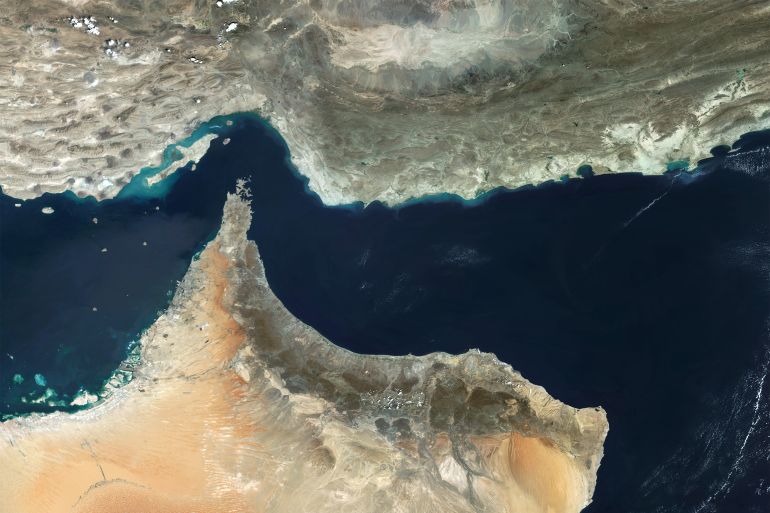
According to analysts, former United States President Donald Trump’s decision to blockade the Strait of Hormuz, following the conclusion of talks between Washington and Tehran in Islamabad without a resolution, represents a significant escalation in the conflict surrounding Iran.
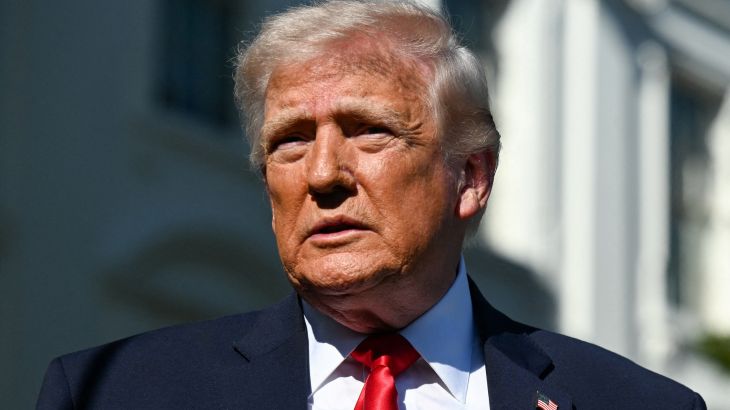
In a social media post on Sunday, Trump announced that the US Navy “will begin the process of BLOCKADING any and all Ships trying to enter, or leave, the Strait of Hormuz.” This blockade reportedly commenced at 10 am Washington, DC, time (14:00 GMT) on Monday.
Trump’s statements have sparked concerns regarding the stability of the two-week ceasefire between the US and Iran, which was announced just last week.
Chris Featherstone, a political scientist at the University of York, informed Al Jazeera that Trump’s threat to blockade the Strait of Hormuz is “absolutely an escalation” in the US and Israel’s conflict with Iran. Featherstone suggested that Trump is leveraging the blockade threat as a negotiation tactic to pressure Iran into complying with US objectives, asserting that Iran holds “no cards.”
What could the blockade look like? Here’s what we know:
The US is threatening a blockade similar to the situation that arose after the US and Israel initiated strikes on Iran on February 28. At that time, Iran effectively took control of the Strait of Hormuz, a crucial choke point for the global energy market. Prior to the conflict, 20 percent of the world’s oil and liquefied natural gas (LNG) supplies were transported through this strait.
Following the Pakistan-brokered ceasefire, Tehran confirmed it would permit shipping through the Strait of Hormuz for the duration of the two-week agreement, alleviating disruptions that had caused global oil and gas prices to surge. However, it remained unclear whether Iran was collecting passage fees during this ceasefire period. During the conflict, only a limited number of ships from countries considered friendly to Iran, or those that paid tolls, were granted safe passage.
After weekend talks in Pakistan failed to yield a deal, Trump reiterated his threat to blockade the Strait of Hormuz and accused Iran of “extortion.” He added that the US Navy would intercept and interdict ships in international waters that had paid Iran a toll to traverse the strait. Subsequently, the US military stated it would block all maritime traffic entering and exiting Iranian ports, including those in the Gulf and the Gulf of Oman.
The US military’s Central Command (CENTCOM), responsible for operations in the Middle East, informed Reuters that the US military would enforce a blockade in the Gulf of Oman and the Arabian Sea east of the Strait of Hormuz, applicable to all vessels regardless of flag. CENTCOM warned that “Any vessel entering or departing the blockaded area without authorisation is subject to interception, diversion and capture,” while clarifying that “The blockade will not impede neutral transit passage through the Strait of Hormuz to or from non-Iranian destinations.”
Iran’s armed forces, however, declared the US “imposition of restrictions on the movement of vessels in international waters is an illegal act and amounts to piracy.”
Jason Chuah, a professor of maritime law at City St George’s, University of London, and the Maritime Institute of Malaysia, told Al Jazeera that Washington’s actions would not constitute a classic blockade but rather a case of “sanctions with warships doing the bidding of President Trump.” He described it as “much more like a steady pattern of stopping, boarding and seizing vessels thought to be linked to Iran, essentially sanctions enforcement at sea.”
Is this legal under international maritime law?
Chuah highlighted the legal complexities of such a blockade by the US. He noted that while the United States is not a party to the United Nations Convention on the Law of the Sea, fundamental rules regarding freedom of navigation and passage through key waterways are widely accepted as customary international law, binding all states. He explained that legally defining something as a blockade typically falls under the law of armed conflict at sea, which assumes an actual armed conflict, a declared and effective blockade, and even-handed application to neutral ships. This framework sets a high bar for the lawfulness of blockades.
Chuah further stated that even if Trump uses sanctions as a justification, it doesn’t fully resolve the legal issues. He clarified that “Even quite robust domestic sanctions don’t automatically give you the right under international law to stop foreign ships on the high seas without consent or backing from the United Nations Security Council. At best, sanctions may justify why you act but not always where you can act.”
Will other countries join the US in the blockade?
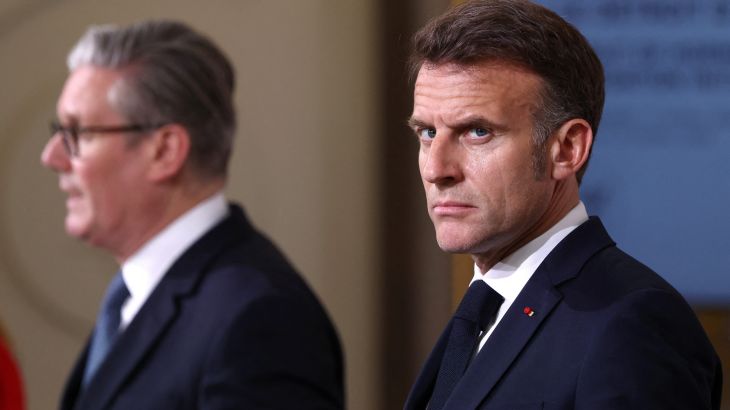
To date, only the United Kingdom has explicitly stated it will not participate in Trump’s blockade of Iranian ports. British Prime Minister Keir Starmer, in an interview with BBC 5 Live on Monday, emphasized his focus on reopening the Strait of Hormuz “as quickly as possible” to mitigate global energy price increases. He affirmed, “We’re not supporting the blockade, and all of the marshalling diplomatically, politically and capability, … that’s all focused, from our point of view, on getting the strait fully open.”
Meanwhile, China has urged all parties to remain calm. Ministry of Foreign Affairs spokesperson Guo Jiakun stated that ensuring the safety, stability, and unimpeded flow through the critical waterway serves the common interests of the international community, adding that China is prepared to collaborate with all sides to safeguard energy security and supplies.
Featherstone observed that a notable aspect of the US-Israel conflict with Iran has been the reluctance of many US allies, including the UK, to become involved. He suggested that given the blockade would occur amidst ceasefire negotiations, risking their collapse, it is improbable that allies would want to engage now. He also pointed out that the US administration has not clearly outlined the purpose of this potential blockade, which allies would likely want to understand before committing and risking potential repercussions.
How could a US blockade hurt Iran?
Despite Iran’s familiarity with US sanctions and its continued functioning during the conflict, such a blockade could inflict further damage on its economy. The unified command of the Iranian armed forces reportedly stated that ports in the Gulf and the Sea of Oman are “either for everyone or for no one,” according to state broadcaster IRIB. IRIB quoted Iran’s military as asserting that “The Armed Forces of the Islamic Republic of Iran consider defending the legal rights of our country a natural and legal duty and, accordingly, exercising the sovereignty of the Islamic Republic of Iran in the territorial waters of our country is the natural right of the Iranian nation.” The statement added that “Enemy-affiliated vessels” would not be permitted passage through the Strait of Hormuz, while other vessels would be allowed, subject to Tehran’s regulations. It reiterated that “The criminal US’s imposition of restrictions on the movement of vessels in international waters is an illegal act and amounts to piracy,” and warned that if the security of its ports is threatened, no port in the region “will be safe.”
Reporting from Doha, Qatar, Al Jazeera’s diplomatic editor James Bays noted that Washington’s blockade might aim to impact the Iranian economy, which has shown resilience despite the conflict by maintaining its oil supply through the Strait of Hormuz. Bays characterized it as “almost a race to the damage on Iran’s economy, a country that’s had sanctions since 1979, that’s very economically resilient although it has deep economic problems.” Featherstone added that while Iran is accustomed to US economic pressure, the blockade would significantly hinder its ability to rebuild after the extent of the US and Israeli strikes.
What will happen to Iranian mines in the strait?
On Wednesday, the Islamic Revolutionary Guard Corps (IRGC) released a map of the Strait of Hormuz outlining a safe route for ships to follow, avoiding mines it has laid. This map appears to direct vessels further north towards the Iranian coast, away from the traditional route closer to the coast of Oman. The IRGC stated that all vessels must use this new map due to “the likelihood of the presence of various types of anti-ship mines in the main traffic zone.”
In his Truth Social post on Sunday about the blockade, Trump stated that US forces would begin clearing the mines Iran has placed in the strait, suggesting that NATO countries like the UK would assist. However, on Monday, Starmer told BBC 5 Live that while the UK possesses “minesweeping” capabilities, it would not engage in “operational matters.” Japan, meanwhile, indicated it has not yet decided whether to deploy its Self-Defence Forces for minesweeping operations in the Strait of Hormuz. Chief Cabinet Secretary Minoru Kihara urged progress towards a comprehensive understanding between the US and Iran, emphasizing that “What is most important is that de-escalation, including securing the safety of navigation through the Strait of Hormuz, is actually achieved.”
What does Trump’s blockade mean for shipping in the strait?
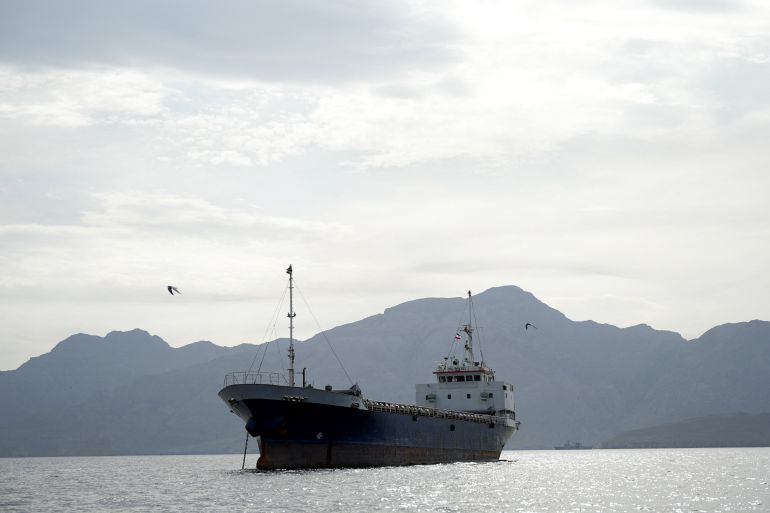
During the US-Israel conflict with Iran, Tehran permitted a limited number of ships from countries it considers “friendly nations,” such as India, China, Japan, Turkiye, and Pakistan, to pass through the strait. Some vessels that paid a toll to Iran were also allowed passage. At least two tolls are believed to have been paid in Chinese yuan, possibly as a strategy to weaken the US dollar and circumvent US sanctions. China, which purchases 80 percent of Iran’s oil, already pays Tehran in yuan. On Friday, Iran announced it was considering a proposal to charge future tolls in its own currency, the rial.
Chuah warned Al Jazeera that the effects of Washington’s blockade of Iranian ports would quickly impact shipping from India, China, Japan, Turkiye, and other nations. He explained, “You don’t have to be Iranian to get caught up in it [the blockade]. If there’s any Iranian link in the cargo, financing or ownership chain, you’re suddenly in the risk zone.” He predicted a likely rise in insurance premiums, making global banks apprehensive, and a fragmentation of the global tanker market into separate risk tiers. “The moment interdictions begin, neutral shipping starts to feel a lot less neutral,” he added.
Chuah also expressed concern about the broader implications of such a blockade, stating, “If major powers start routinely stopping ships based on who they’re linked to rather than where they are or what they’re doing, that chips away at the stability of the whole system. The real issue isn’t just Iran – it’s what this does to the rules everyone else relies on.”
#StraitOfHormuz #Iran #USForeignPolicy #Geopolitics #MaritimeSecurity #OilPrices #InternationalLaw #MiddleEast #Trump #Blockade



Leave a Reply