

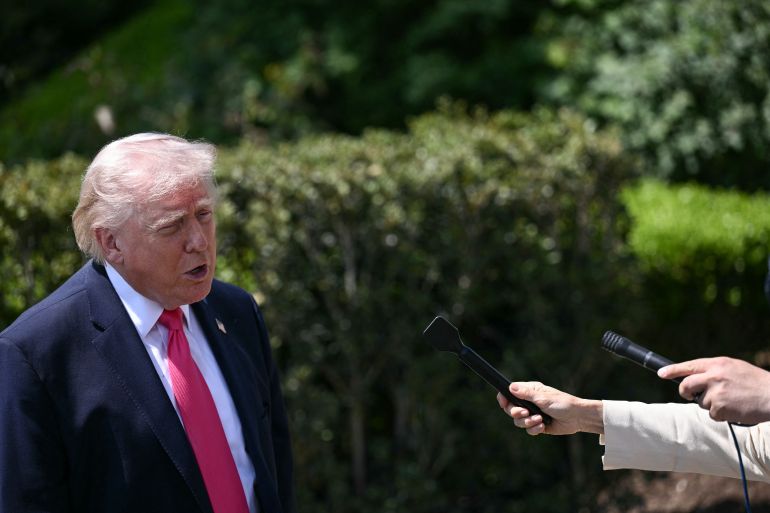
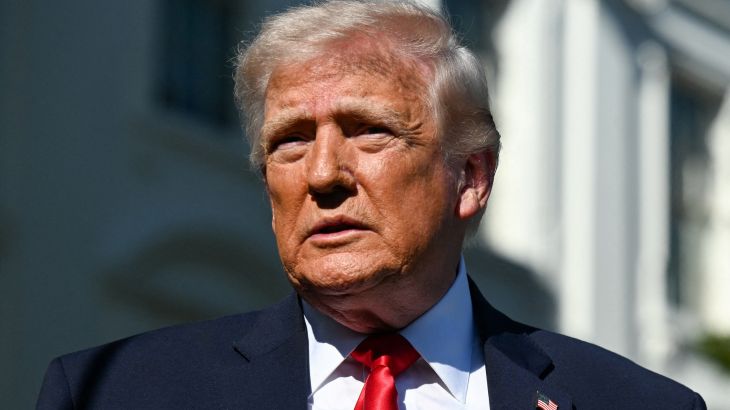
Islamabad, Pakistan – United States President Donald Trump offered his most optimistic assessment yet of the situation with Iran on Thursday, stating from the White House South Lawn that a deal was “very close.” He told reporters, “We’re very close to making a deal with Iran,” adding that they had “totally agreed to that [no nuclear weapons]. They’ve agreed to almost everything.” Trump further claimed that Iran had agreed to surrender its stockpile of enriched uranium and “nuclear dust” from underground facilities, suggesting a deal could be reached “over the weekend.” He even hinted at a personal visit to Islamabad if an agreement were signed there.
Iran Presents a Different Picture
Iran’s Ministry of Foreign Affairs, however, painted a contrasting picture. Spokesperson Esmaeil Baghaei confirmed that messages were being exchanged via Pakistan but was unequivocal on the issue of enrichment, stating that Iran “based on its needs, must be able to continue enrichment.” No Iranian official has publicly confirmed agreeing to surrender the country’s enriched uranium stockpile, maintaining Tehran’s long-standing position that enrichment is a sovereign right.
Asif Durrani, a former Pakistani diplomat and ambassador to Tehran, dismissed the idea of a significant gap between the two sides. He told Al Jazeera, “There are no gaps, really. If Trump has read the NPT, he would know that every country has the right to access nuclear technology for peaceful purposes.” He emphasized that Iran has repeatedly stated it does not seek nuclear weapons but civil nuclear use within the frameworks of the NPT (Treaty on the Non-Proliferation of Nuclear Weapons) and the JCPOA (Joint Comprehensive Plan of Action).
Seyed Mojtaba Jalalzadeh, an international relations analyst, suggested the reality is more complex than public statements indicate. He advised against “simplistic binaries such as ‘one side is lying’,” explaining that the discrepancy reflects the “complex, multilayered, and still unfinished nature of the negotiations.” Jalalzadeh believes Trump’s talk of “total agreement” likely represents a maximalist interpretation of the negotiating process. It remains unclear whether Trump’s remarks signal genuine backchannel progress or are a pressure tactic ahead of the April 22 ceasefire deadline.
Pakistan’s Diplomatic Orchestra
Pakistan has emerged as a central mediator in these complex negotiations. On Thursday, Pakistan’s army chief, Field Marshal Asim Munir, engaged in high-level meetings in Tehran, including with Iranian Parliament Speaker Mohammad Bagher Ghalibaf and President Masoud Pezeshkian. Simultaneously, Prime Minister Shehbaz Sharif pursued a parallel diplomatic track, meeting Gulf leaders before attending the Antalya Diplomacy Forum in Turkiye.
Both Washington and Tehran have acknowledged Pakistan’s crucial role. White House spokesperson Karoline Leavitt praised the Pakistanis as “incredible mediators” and the “only mediator in this negotiation,” indicating that any further in-person talks would likely occur in Islamabad. However, Durrani cautioned that Pakistan’s role has limits, primarily facilitating discussions and offering suggestions, with the ultimate outcome dependent on the political will of the two primary parties.
Hardline Signals and US Posture
Amidst diplomatic movements, Iran’s hardline establishment has also conveyed strong messages. Mohsen Rezaei, a military adviser to Supreme Leader Mojtaba Khamenei, expressed opposition to extending the ceasefire, stating Iran’s preparedness for a “long war.” Major-General Ali Abdollahi, commander of Iran’s Khatam al-Anbiya Central Headquarters, attributed the conflict to adversaries’ “miscalculation” of Iran’s public support and military strength, reaffirming Iran’s readiness for “comprehensive defense.” Jalalzadeh interpreted this messaging as significant but not necessarily destabilizing, viewing it as a means of applying pressure and managing domestic opinion.
On the US side, Secretary of Defense Pete Hegseth reinforced Washington’s coercive posture, stating that the US naval blockade of Iranian ports would continue “as long as it takes” and that Washington remained “locked and loaded” on Iran’s energy infrastructure.
The Lebanon Factor and Shifting Goalposts
A potential breakthrough emerged on the Lebanon front, with Trump announcing a 10-day ceasefire between Israel and Lebanon. Iran has consistently linked any agreement with the US to the situation in Lebanon, with Iranian Parliament Speaker Ghalibaf stating that a ceasefire in Lebanon “is as important to Iran as a ceasefire in Iran itself.” Grace Wermenbol, a former US national security official, noted this as an important first step but questioned its durability, drawing parallels to ceasefires in Gaza and Yemen.
Initially, US objectives were sweeping, with Trump demanding “UNCONDITIONAL SURRENDER” and a 15-point proposal calling for an end to Iran’s nuclear program, curbing missile capabilities, and halting support for regional proxy groups. However, discussions have since narrowed, focusing primarily on enrichment limits, monitoring mechanisms, and Iran’s highly enriched uranium stockpile. The US has proposed a 20-year enrichment freeze, while Iran has countered with a five-year offer.
Sahar Khan, an independent analyst, suggests this shift is less dramatic than it appears, largely returning to the JCPOA status quo. She explained that Iran might accept “zero enrichment” if it means producing its own nuclear fuel and maintaining centrifuges, reducing dependence on external suppliers. Durrani attributed the shift to changing realities, suggesting Israel’s “shock” and the US’s realization of Iran’s “endurance” have influenced the current approach, especially given US reluctance to deploy ground troops.
As the April 22 deadline looms, the possibility of a second round of talks in Islamabad and the minimum understanding both sides might accept remain uncertain. Khan believes any agreement may hinge on “deliberate ambiguity,” allowing both sides to claim a “win” for their respective publics.
#IranUSNegotiations #NuclearDeal #PakistanDiplomacy #DonaldTrump #IranNuclearProgram #MiddleEastPeace #CeasefireTalks #InternationalRelations #TehranWashington #DiplomaticEfforts

Leave a Reply