


In the weeks following the launch of strikes on Iran by the US and Israel, a significant battle for the narrative surrounding the conflict’s progress has unfolded within the heart of American military power.
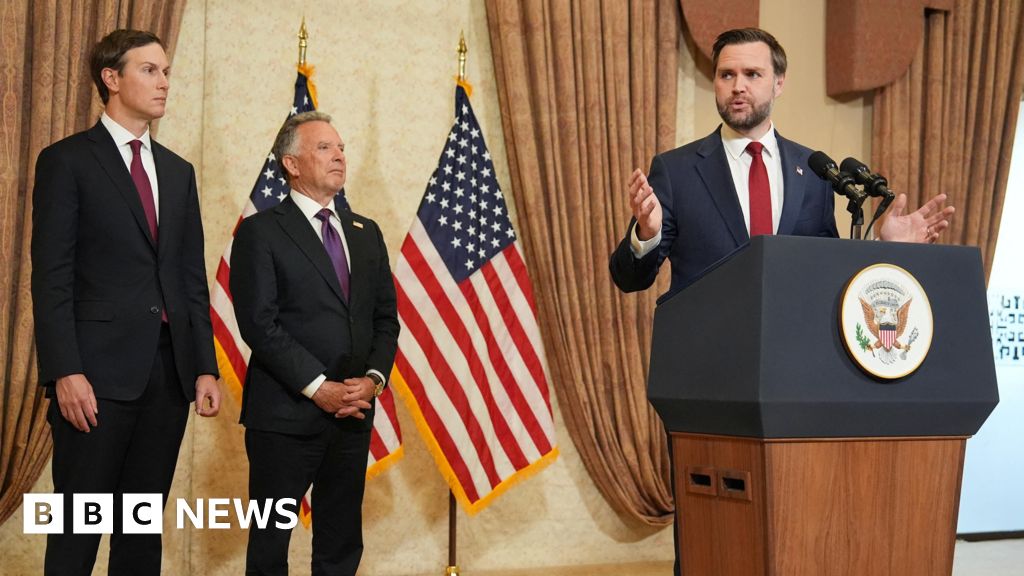
Since the initial stages, US Defence Secretary Pete Hegseth, a former Army National Guard Major and Fox News pundit, has delivered press briefings from the Pentagon. From his first updates outlining America’s war aims to the most recent, which followed a two-week truce announcement, Hegseth has brought a distinctive, TV-style monologue to the Pentagon podium.
These briefings have often been characterized by strong assertions of American military supremacy. Hegseth notably declared on Wednesday that the US had achieved “a capital V military victory” and, at another briefing, stated the US had inflicted “death and destruction from the sky all day long.” However, understanding the true progress of the war and its impact on the US requires a deeper examination. With a fragile ceasefire currently in place and already facing tests, what can be definitively said about US achievements, and at what cost?
Limited Progress on the Nuclear Issue
President Trump’s primary war objective was to prevent Iran from developing a nuclear weapon, an ambition Iran has consistently denied pursuing. This objective, however, has also been a long-standing focus of US-led diplomatic efforts. Trump had previously expressed concerns that the 2015 Obama-brokered global nuclear deal with Iran – the Joint Comprehensive Plan of Action (JCPOA) – was insufficient.
During his first term, Trump effectively withdrew the US from the JCPOA by reimposing sanctions on Iran, despite Iran’s compliance with the agreement. This decision prioritized force over diplomacy, setting a pattern of alternating diplomatic outreach and military action with Tehran, which ultimately culminated in the current conflict.
As the tenuous ceasefire holds, there is little evidence of significant progress for the Trump administration on the nuclear issue. Last June, Trump claimed Iran’s nuclear capabilities were already “obliterated” by bombing raids on sites in Isfahan, Fordow, and Natantz. Yet, after an additional five weeks of conflict, Iran reportedly maintains its stockpile of near-weapons-grade enriched uranium, believed to be stored in gas cylinders under rubble.
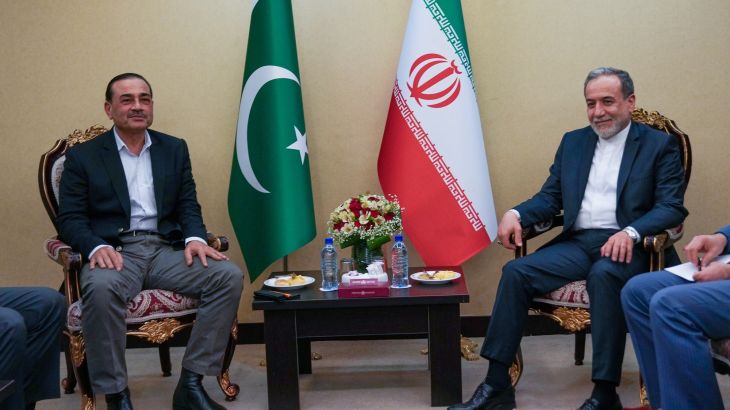
Rafael Grossi, head of the global nuclear watchdog IAEA, indicated in the third week of the war that there could ultimately be no military solution to Iran’s nuclear ambitions. While Trump has stated the US will now work “with Iran” to “dig up and remove all of the deeply buried… Nuclear Dust,” Tehran remains firm on this issue. This will be a decisive point in the upcoming negotiations between the US and Iran in Islamabad. Some analysts suggest that, with a leadership potentially more suspicious than before, Tehran might become more, not less, determined to seek nuclear capability as a deterrent against further US attacks.
Unmet Objectives: Leadership and Arsenal
When Trump announced the war via social media, his stated objectives included a call for Iranians to take control of their government once the US-Israeli bombing ceased, aiming for leadership change. Within days, he demanded the leadership’s “unconditional surrender,” which has not occurred. Although Israel reportedly killed senior figures, including Supreme Leader Ayatollah Ali Khamenei, his son, Mojtaba, was subsequently named as his successor. Trump commented that the new leadership was less “radicalized and far more intelligent” than its predecessors, reportedly hoping to replicate an outcome similar to his actions in Venezuela. However, there is currently no evidence of such a shift in Tehran.
Regarding Iran’s arsenal, top Trump officials claim the US has destroyed its conventional capabilities, asserting the “obliteration” of its missiles, launchers, drones, arm factories, and navy. However, leaked intelligence assessments have disputed these claims, suggesting Iran still possesses approximately half of its pre-war arsenal. The BBC has stated it has not been able to independently verify either assertion. Regardless, the Trump administration’s stated aims have reportedly evolved since the war’s outset, with the US-Israeli objective of leadership change failing to materialize.
The Cost of War
The conflict has come at a significant human and financial cost for the US. Thirteen US service members have been killed, and hundreds more wounded. Munition supplies, including a large number of Tomahawk missiles, are reported to have been expended at a rapid rate, with an estimated war expenditure exceeding a billion dollars a day. Despite these costs, US officials maintain that unmatched military skill and technological prowess have enabled an aerial campaign completed ahead of schedule, forcing a capitulation by Iran.
Domestically, the war has also incurred a political cost for Trump. Polling has consistently indicated that only a minority of Americans approve of the conflict. While Trump’s standing in Congress has largely been divided along partisan lines, with Republicans generally supporting him, some have openly opposed his social media threats to destroy an entire civilization. Influential figures within his MAGA movement, such as podcast host and journalist Tucker Carlson, have sharply diverged from his stance. On Sunday, as Trump escalated threats against Iranian infrastructure, Marjorie Taylor Greene, a former staunch supporter, stated: “This is not making America great again, this is evil.” These internal fractures within Trump’s movement show few signs of healing.
Democrats, meanwhile, have expressed outrage at Trump’s escalating threats and insults towards US allies. They have urged the administration to provide answers regarding whether a US missile was responsible for a strike on a school in Minab on the first day of the war, which reportedly killed at least 168 people, including 110 children. If confirmed, this would represent one of the worst instances of civilian casualties from a US strike in the Middle East in a generation. The Pentagon has stated it is investigating but has released no findings nearly six weeks later. This week, several lawmakers called for his cabinet to invoke the 25th Amendment. The administration, however, argues that Trump’s threats compelled Iran to back down, with Press Secretary Karoline Leavitt stating: “Never underestimate President Trump’s ability to successfully advance America’s interests and broker peace.”
A clearer verdict on this may emerge from American voters in November. The global economic fallout from the closure of the Strait of Hormuz has already led to higher petrol and diesel prices for Americans, which is expected to translate into “sticker shock” at grocery stores. Anger over increasing costs is predicted to make this year’s midterm elections challenging for Trump’s party, potentially costing Republicans control of the House of Representatives and possibly the Senate – a steep price to pay. Trump was compelled to address the looming economic crisis as Iran employed insurgency tactics in response to a conventional aerial war, shifting his war aim to the need to reopen a strait that was open when the conflict began.
Strained Alliances
As Iran asserted control over the Strait of Hormuz, Trump’s response fluctuated. He initially demanded allies help reopen the strait, then claimed the US did not need their assistance, only to later call for their help again and label longstanding allies “cowards” for their perceived inaction. NATO’s already fragile cohesion, exacerbated by Trump’s previous actions, has been further strained by the Iran conflict. Trump has renewed his criticisms of the alliance, which avoided formal involvement. Following talks at the White House, NATO Secretary General Mark Rutte described the conversation as “very frank.”
The president may believe that overwhelming American military superiority will secure America’s long-term role as a superpower. However, European nations are reportedly exploring ways to “derisk” from what they increasingly perceive as an unpredictable and unreliable protector. This situation presents a potential economic and strategic advantage for China, causing dismay among Trump’s critics in Washington.
The true costs of this war are still being tallied, and if the current ceasefire or delicate negotiations falter, these costs could escalate significantly.
#USForeignPolicy #IranConflict #MiddleEastCrisis #NuclearDeal #TrumpAdministration #WarCosts #Geopolitics #StraitOfHormuz #NATOAllies #InternationalRelations

Leave a Reply